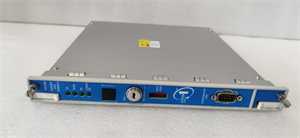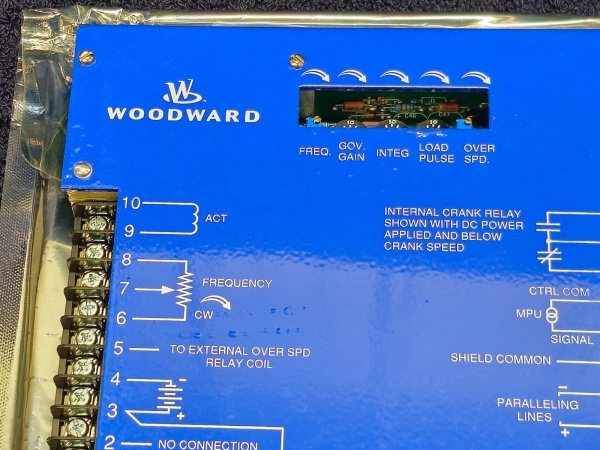
Description
Hard Numbers: Technical Specifications
(Note: The following specifications are compiled from typical 5458-050 operational parameters. Please consult the official Woodward documentation for exact project engineering.)
- Part Number: 5458-050
- Architecture: Triple Modular Redundant (TMR)
- I/O Type: Analog Input/Output
- Signal Processing: High-precision 16-bit resolution
- Redundancy Voting: 2oo3 (2-out-of-3) voting logic for continuous operation
- Power Supply: 24 VDC nominal (18–32 VDC operating range)
- Communication: MicroNet TMR backplane interface
- Operating Temperature: -40°C to +70°C (-40°F to +158°F)
- Hot-Swap Capable: Yes, allows replacement without system shutdown
- Certifications: CE, UL, and CSA compliant
- MTBF: Rated for 100,000+ hours in typical applications
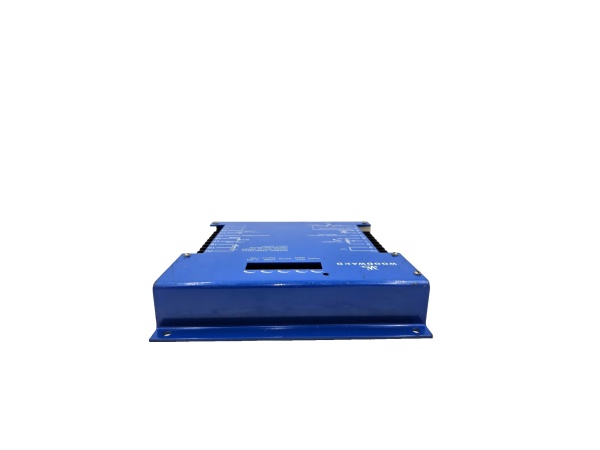
The Real-World Problem It Solves
In critical infrastructure like nuclear power plants, offshore oil rigs, or large-scale power generation, a single point of failure can lead to catastrophic downtime, massive financial losses, or even physical disasters. Standard “simplex” electronic modules leave too much to chance—if a transistor fails or a wire loosens, the entire turbine could trip offline.
The Woodward 5458-050 is engineered specifically to eliminate this risk. By utilizing a Triple Modular Redundant (TMR) architecture, it processes critical analog signals (like temperature, pressure, and vibration) through three independent channels simultaneously . If one channel fails or drifts out of spec due to electrical noise or component aging, the module’s internal logic automatically “votes” it out of the equation, relying on the remaining two healthy channels to maintain seamless control . This ensures that maintenance can be performed proactively—often via hot-swapping the faulty module while the machinery is still running—without ever interrupting the mission-critical process .
Where you’ll typically find it:
- Combined Cycle Power Plants: Managing Heat Recovery Steam Generators (HRSG) and balancing plant-level controls .
- Gas & Steam Turbine Control: Acquiring real-time vibration and temperature data to prevent overspeed or thermal stress failures .
- Offshore Platforms: Withstanding harsh marine environments to provide continuous control of compression and power systems .
Hardware Architecture & Under-the-Hood Logic
Unlike standard I/O modules that rely on a single signal path, the 5458-050 is built on a robust TMR architecture designed to override failures in real-time.
- Triple-Channel Independence: The module consists of three identical, isolated sub-circuits. Each channel independently reads the field analog signals (e.g., a 4-20mA temperature transmitter) and processes the data using high-precision 16-bit analog-to-digital converters .
- 2oo3 Voting Logic: The processed data from all three channels is fed into a voting algorithm. In a perfect state, all three channels agree. If one channel detects a fault or its reading deviates significantly from the other two, the logic discards the faulty data and operates solely on the consensus of the remaining two (“2-out-of-3”) channels .
- Hot-Swappable Backplane Interface: The module connects to the MicroNet TMR chassis via a specialized backplane. This interface is designed to maintain active communication and power to the remaining modules even when one module is physically removed. This allows technicians to replace a failed unit in seconds without dropping the turbine off the grid .
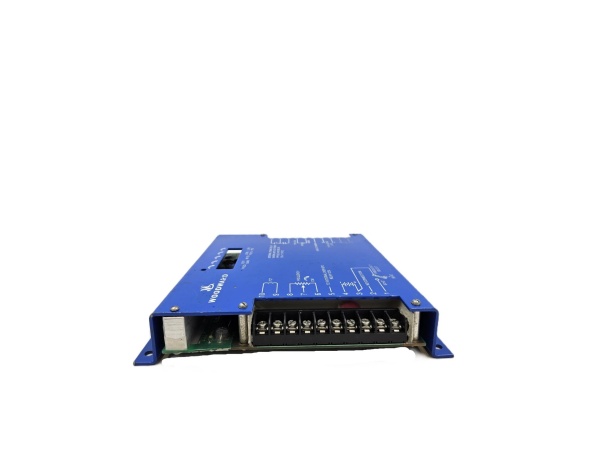
Field Service Pitfalls: What Rookies Get Wrong
Neglecting Termination Resistor Configuration (The “Ghost” Fault)
When integrating the 5458-050 into a MicroNet TMR chassis, proper backplane termination is critical. Rookies often forget to configure the chassis termination resistors or place them in the wrong slots.
- The Glitch: Without correct termination, the high-speed backplane communication between the 5458-050 and the CPU modules becomes unstable. This leads to intermittent “Loss of Communication” faults, causing the system to unnecessarily trip into failsafe mode.
- Field Rule: Always verify the MicroNet chassis layout drawing. Ensure termination resistors are installed exactly as specified by Woodward’s system integration guidelines, typically at the physical ends of the backplane .
Improper Analog Signal Grounding (The “Floating” Reference)
The 5458-050 handles highly sensitive 4-20mA and voltage signals. Rookies often connect the analog input shields to earth ground at both the field instrument end and the module end.
- The Danger: This creates a “ground loop.” Because industrial environments have varying potential differences across large machinery, current will flow through the shield, inducing noise onto the analog signal. The 5458-050 will pick up this noise, leading to erratic readings and potential false turbine trips.
- Quick Fix: Connect the cable shield to earth ground at the module (5458-050) end only. Ensure the field device end is properly isolated or grounded according to the specific instrument’s manual .
Mixing Simplex and TMR Modules (The Compromise)
In an attempt to save costs or utilizing leftover inventory, rookies might try to install a standard (simplex) I/O module in a chassis designed for TMR operation alongside 5458-050 modules.
- The Consequence: The MicroNet TMR system expects redundant data to perform its 2oo3 voting logic. Introducing a simplex module breaks the redundancy chain. The system will flag a configuration mismatch, and you will lose the fault-tolerant benefits for that specific control loop.
- Field Rule: Never mix simplex and TMR modules in the same critical control loop. If the application requires TMR for safety or uptime, every module in that voting chain must be a TMR-rated unit like the 5458-050 .
Commercial Availability & Pricing Note
Please note: The listed price is for reference only and is not binding. Final pricing and terms are subject to negotiation based on current market conditions and availability.