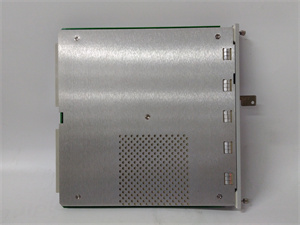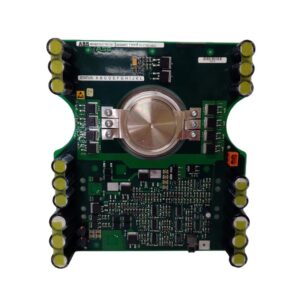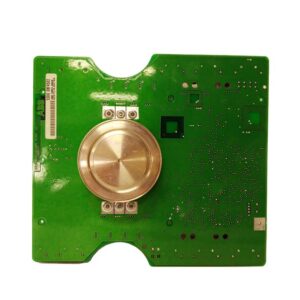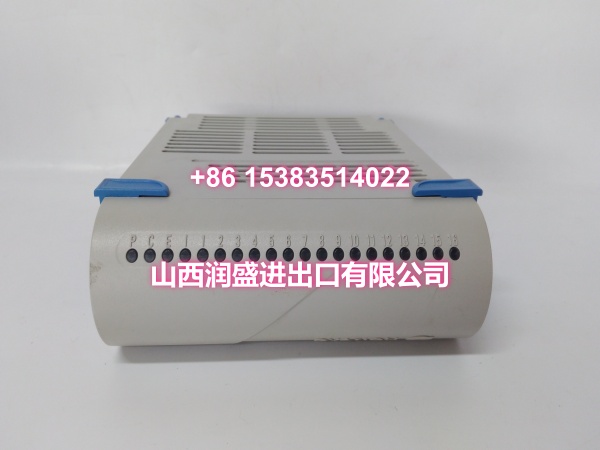
Description
Product Core Brief
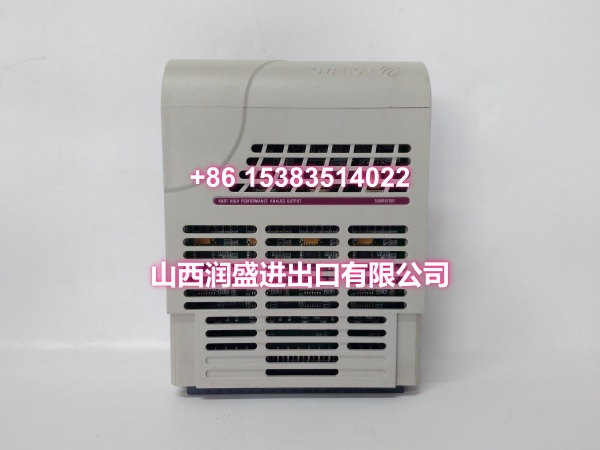
- Model: 5X00167G01
- Brand: Westinghouse / Emerson Ovation lineage
- Common Description: 16 channel isolated 4-20mA analog input card with HART pass through and cold junction support
- Platform Note: Often listed as V5 or V5.5 platform hardware, not cross compatible with V6
- Typical Use: Boiler feed water control valve feedback acquisition and other high accuracy analog collection points
- Condition: New Original / New Surplus / Refurbished, verify carefully before PO
Important caution. Many trading listings label this part only as a generic PLC input and output module or automation module, with almost no technical detail. Some supplier pages even mix it into drive controller lists. Confirm the nameplate and your rack drawing before buying.
Product Introduction
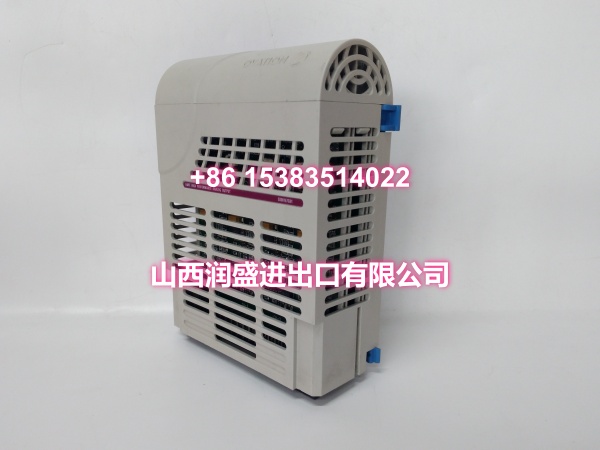
5X00167G01 is generally sold as an Ovation analog input card that isolates field 4-20mA signals and passes them to the controller, with HART transparency on many configurations. In plant terms, it is the hardware that decides whether your feed valve feedback is truth or noise.
Its value is stability under bad cabinet conditions. Isolation blocks ground potential differences, and HART pass through keeps diagnostics available to maintenance without rewiring. When a loop drifts slowly, most engineers blame the transmitter first. The card and its base are usually the second and third suspects, and skipping them wastes days.
Key Technical Specifications
| Parameter | Value |
|---|---|
| Part Number | 5X00167G01 |
| Platform | Ovation DCS, Westinghouse and Emerson heritage |
| Common Function | Isolated 4-20mA analog input |
| Channels | 16 channels in most supplier descriptions |
| Signal Support | 4-20mA with HART pass through, cold junction support listed by some sources |
| Platform Generation | Commonly listed as V5 or V5.5 hardware, not for V6 racks |
| Typical Application | Boiler feed water control valve feedback and auxiliary analog collection |
| Firmware Dependency | Must match controller OS version, one source cites FW 5.5.0.x under V5.5.1 |
| Common Failure Mode | Channel drift, dead opto isolation, open loop not reported |
| Storage | Anti-static bag, dry, away from conductive dust and salt spray |
Specs above reflect supplier and market descriptions, not a confirmed factory datasheet. Always validate against your Ovation hardware manual.
Quality Control Process
I run a different bench routine on AI cards than on controllers. No image flashing, no battery swap.
- Nameplate and version verification. Photograph the label and match platform generation to your rack before anything else.
- Edge connector and housing inspection. Look for oxidation on the fingers and burn marks near the input isolation section.
- Span check with a process calibrator. Inject 4, 8, 12, 16 and 20mA and log every channel, not a sample.
- Zero drift recheck after thermal soak. Warm the card gently and watch for drift beyond your acceptance limit.
- Open loop test. Break the circuit and confirm the diagnostic fires. A silent card hides broken wires for months.
- HART pass through check. Connect a HART communicator through the loop and confirm you can talk to the transmitter.
- Insulation test with a Megger. Verify channel to logic isolation still holds.
- Anti-static bagging with desiccant. Label the box with platform generation and firmware version.
One habit I dropped years ago: trusting a card because ten of sixteen channels read fine. One dead channel usually shows up during a trip, never during a friendly test.
Replacement Pitfall Guide
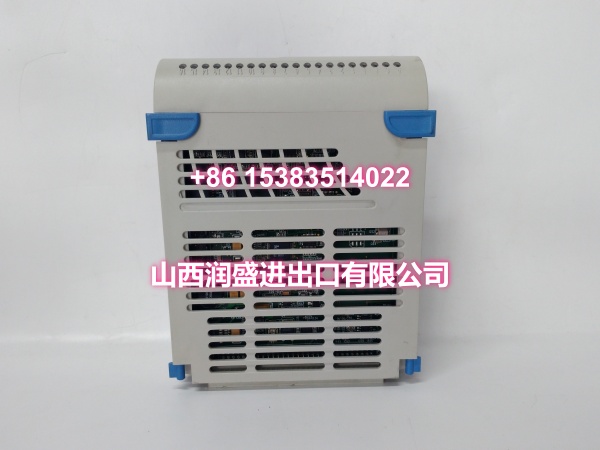
❗ Mixing platform generations. V5 and V6 cards can look similar while backboard slot depth and finger spacing differ, and forcing a card in has shorted backplane buses. Check the rack model first.
❗ Ignoring firmware matching. Firmware must line up with the controller OS. Flashing the wrong version can stop the card from registering at all. Ask the supplier for a written firmware compatibility confirmation.
❗ Buying a repacked used card as new. Refurbished units often have aged opto couplers and worn relay contacts that no visual check will catch. Ask for serial traceability and factory seal photos.
❗ Confusing it with 1C series hardware. Classic Ovation 4-20mA input paths use pairs like 1C31224G01 with 1C31227G01. If your rack runs that architecture, 5X00167G01 is not a drop in fix.
❗ Chasing the card before the loop. Drifting readings often come from transmitter drift, wet terminal blocks, or a shield grounded at both ends. Test the field side first.
❗ Weak warranty wording. A plain one year promise means little. Define scope, response time and failure criteria, such as treating AI zero drift above a set percentage of full scale as a defect.
Keep these in mind and you’ll cut 90% of rework time.
Compatibility Matrix & Benchmarks
| Original Model | Replacement / Alternative | Compatibility Level | Migration Notes |
|---|---|---|---|
| 5X00167G01 | Same part, refurbished | Direct | Run full 16 channel span check and open loop test |
| 5X00167G01 | 1C31224G01 with 1C31227G01 | Needs Adaptation | Classic EMOD plus PMOD pair, different base and wiring |
| 5X00167G01 | 5X00106G01 | Needs Adaptation | Listed as high performance HART analog input, confirm base and configuration |
| 5X00167G01 | Ovation V6 I/O card | Not Compatible | Hardware generation and backboard differ |
| 5X00167G01 | Third party isolated AI module | Needs Adaptation | Loses native Ovation registration and diagnostics |
Benchmark references
- Acceptance criterion: injected current tracks the calibrator within about 0.5 percent across the span on every channel.
- Drift target: zero drift stays inside your plant limit after a thermal soak, commonly around plus or minus 0.1 percent of full scale in strict procurement terms.
- Diagnostic target: open loop alarm fires within seconds of breaking the input circuit.
Procurement Notes
Market pricing is inconsistent. Listings have shown figures around 600 to 699 US dollars from trading companies, around 668 RMB per unit from one domestic supplier, and around 999 to 1000 RMB from others. Those numbers reflect individual listings, not verified original supply.
Some older Ovation models have seen reduced production batches and unstable lead times, which pushes buyers toward unofficial channels and raises version mismatch risk. Ask for nameplate photos, serial traceability, customs documents for imported stock, and a written firmware compatibility confirmation before paying.