Description
Key Technical Specifications
-
Model Number: 1C31189G01
-
Manufacturer: Westinghouse (now Emerson Ovation)
-
Function: Speed detector input module – converts speed sensor signals to digital RPM and 4-20 mA
-
Sensor Types: Pulse, sine wave, encoder, proximity probe
-
Measurement Range: 0-100 000 RPM (16-bit low-res) or 200 Hz – 51 200 Hz (32-bit high-res)
-
Accuracy: ≤ 0.1 % of reading
-
Output Signal: 4-20 mA current loop (isolated) & digital RPM word over Ovation I/O bus
-
Response Time: ≤ 2 ms
-
Power Supply: 12-24 VDC (module) or 24 VDC field loop
-
Communication: PROFIBUS-DP slave (9600 – 384 kbps) or RS-485 Modbus-RTU (jumper-selectable)
-
Isolation: 2 kV channel-to-bus basic
-
Operating Temperature: –40 °C…+85 °C
-
Protection: IP67 (module), reverse-polarity, short-circuit protected outputs
-
Dimensions / Weight: 130 × 100 × 70 mm, 0.5 kg
-
Status: Factory discontinued – new & tested spares available

5X00070G01
Field Application & Problem Solved
In the field the biggest headache is getting an accurate RPM signal from a magnetic pick-up on a gas-turbine shaft without running copper cables all the way back to the rack. The 1C31189G01 solves that by living in the junction box: it converts the raw sine or pulse train to a rock-steady 4-20 mA loop and pushes the digital RPM word over PROFIBUS-DP. You’ll typically find one per compressor or generator on Frame-7/9 peakers—swap time is under two minutes with the unit on turning gear. Core value: it collapses a speed sensor isolator, 4-20 mA source, and field-bus interface into one 0.5 kg module you can bolt to the skid without pulling new cable.
In the field the biggest headache is getting an accurate RPM signal from a magnetic pick-up on a gas-turbine shaft without running copper cables all the way back to the rack. The 1C31189G01 solves that by living in the junction box: it converts the raw sine or pulse train to a rock-steady 4-20 mA loop and pushes the digital RPM word over PROFIBUS-DP. You’ll typically find one per compressor or generator on Frame-7/9 peakers—swap time is under two minutes with the unit on turning gear. Core value: it collapses a speed sensor isolator, 4-20 mA source, and field-bus interface into one 0.5 kg module you can bolt to the skid without pulling new cable.
Installation & Maintenance Pitfalls (Expert Tips)
Sensor Wiring Must Be Shielded – Ground at Module Only
The 50 kHz carrier rides on the raw pick-up. Run unshielded pair and you’ll pick up VFD noise that shows up as ±200 RPM jitter. Use shielded twisted pair, ground the shield at the module end only, and keep the run under 100 m or you’ll chase phantom overspeed trips.
The 50 kHz carrier rides on the raw pick-up. Run unshielded pair and you’ll pick up VFD noise that shows up as ±200 RPM jitter. Use shielded twisted pair, ground the shield at the module end only, and keep the run under 100 m or you’ll chase phantom overspeed trips.
24 V Polarity Reversed = Dead Module
The module is protected but will not start if +/– are swapped. Always meter before you land the power leads; reverse polarity blows the on-board fuse and the node never comes online.
The module is protected but will not start if +/– are swapped. Always meter before you land the power leads; reverse polarity blows the on-board fuse and the node never comes online.
PROFIBUS Address Must Match Host – Or You’ll Scan Air
The DP address is set by dipswitches on the base. If you replace the base and forget the address the master polls nothing and you’ll chase “comm-loss” that isn’t there. Photo the old switch settings before you pull the module.
The DP address is set by dipswitches on the base. If you replace the base and forget the address the master polls nothing and you’ll chase “comm-loss” that isn’t there. Photo the old switch settings before you pull the module.
Spare Lead-Time Is 6-8 Weeks – Keep One on the Shelf
Factory stock is gone; new & tested spares are available but not overnight. If you crack a layer or burn the RS-485 transceiver you’ll be down until the part arrives—keep one in stores or you’ll discover the weakness during the next grid event.
Factory stock is gone; new & tested spares are available but not overnight. If you crack a layer or burn the RS-485 transceiver you’ll be down until the part arrives—keep one in stores or you’ll discover the weakness during the next grid event.
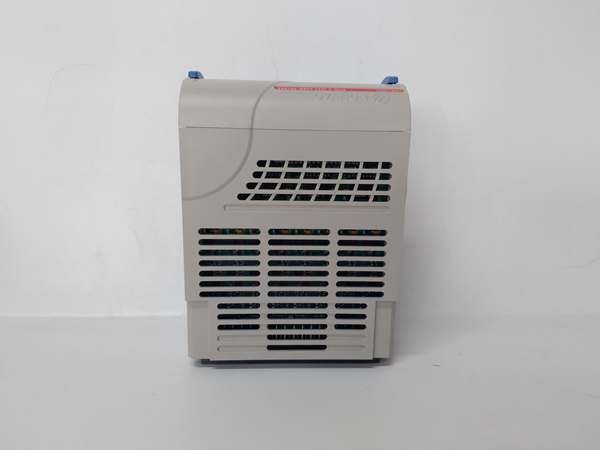
5X00070G01
Technical Deep Dive & Overview
Internally the module is a mixed-signal ASIC bolted to a 2 kV isolation barrier. The front end conditions the raw pick-up (sine or pulse), the DSP calculates RPM every 2 ms, and the DAC drives the 4-20 mA loop while the PROFIBUS chip pushes the digital word. No firmware to reload—pure hardware—so you can hot-swap it: unplug the old module, land the sensor and bus cables exactly where they came from, snap the DB9 in, and the DCS sees RPM again in under ten seconds.
Internally the module is a mixed-signal ASIC bolted to a 2 kV isolation barrier. The front end conditions the raw pick-up (sine or pulse), the DSP calculates RPM every 2 ms, and the DAC drives the 4-20 mA loop while the PROFIBUS chip pushes the digital word. No firmware to reload—pure hardware—so you can hot-swap it: unplug the old module, land the sensor and bus cables exactly where they came from, snap the DB9 in, and the DCS sees RPM again in under ten seconds.