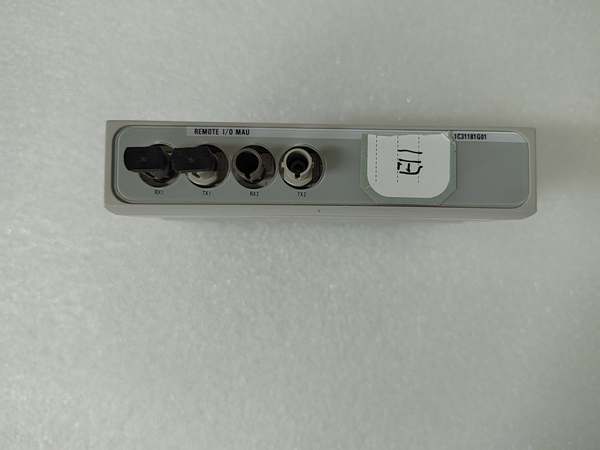
Description
Key Technical Specifications
-
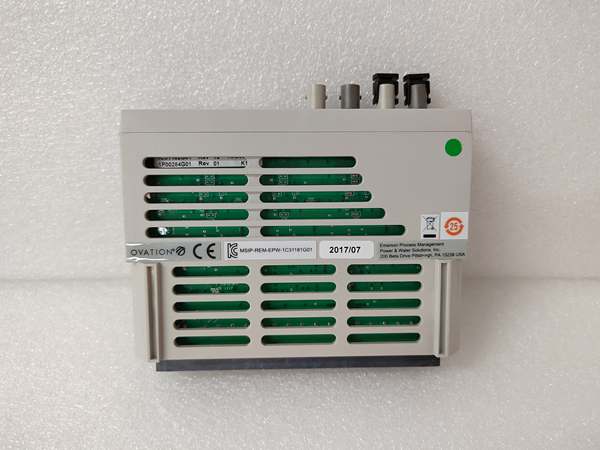
Model Number: 1C31181G01
-
Manufacturer: Emerson (formerly Westinghouse)
-
Function: Remote I/O master attachment unit – provides 24 VDC power and 30 kHz carrier to downstream remote I/O personalities
-
Power Supply: 24 VDC (±10 %), 5 W typical
-
Internal Carrier: 30 kHz ±2 % (back-plane & fiber communication)
-
I/O Capacity: 12-bit personality slot (supports up to 4 remote I/O nodes)
-
Isolation: 2 kV basic module-to-bus; transformer-coupled carrier
-
Communication: RS-485 / RS-232 on-board, optional Modbus-TCP/Ethernet
-
Operating Temperature: –40…+70 °C (module)
-
Protection Degree: IP20 (module), IP67 field connector option
-
Dimensions / Weight: 120 × 80 × 35 mm, 0.3 kg typical
-
Certifications: CE, UL, RoHS
-
Status: Factory discontinued – new & tested spares available

1C31181G01
Field Application & Problem Solved
In the field the biggest headache is getting both 24 VDC power and the 30 kHz carrier out to remote I/O nodes—flow meters, valve positioners—without losing the carrier in noisy cabinets or pulling separate panels. The 1C31181G01 solves that by living in the remote node cabinet: it splits 24 V into branch circuits, transformer-couples the 30 kHz carrier to each personality, and still gives you hot-swap capability. You’ll typically find one per remote pump house or reactor building on Frame-7/9 peakers—swap time is under two minutes with the unit on turning gear. Core value: it collapses a 24 VDC power-distribution block, a 30 kHz carrier repeater, and a 12-bit I/O master into one 0.3 kg plug-in card you can bolt to the skid without rewiring the plant.
In the field the biggest headache is getting both 24 VDC power and the 30 kHz carrier out to remote I/O nodes—flow meters, valve positioners—without losing the carrier in noisy cabinets or pulling separate panels. The 1C31181G01 solves that by living in the remote node cabinet: it splits 24 V into branch circuits, transformer-couples the 30 kHz carrier to each personality, and still gives you hot-swap capability. You’ll typically find one per remote pump house or reactor building on Frame-7/9 peakers—swap time is under two minutes with the unit on turning gear. Core value: it collapses a 24 VDC power-distribution block, a 30 kHz carrier repeater, and a 12-bit I/O master into one 0.3 kg plug-in card you can bolt to the skid without rewiring the plant.
Installation & Maintenance Pitfalls (Expert Tips)
24 V Polarity Reversed = Dead Node
The board is protected but will not start if +/– are swapped. Always meter before you land the power leads; reverse polarity blows the on-board fuse and the whole remote I/O drops off-line.
The board is protected but will not start if +/– are swapped. Always meter before you land the power leads; reverse polarity blows the on-board fuse and the whole remote I/O drops off-line.
Carrier Transformer Must Be Grounded – Or the 30 kHz Dies
The 30 kHz sine rides on the module transformer. If you forget the PE bond the SNR drops 10 dB and the main rack sees “module not responding.” Torque the PE lug to 1 Nm and megger it after every lightning season.
The 30 kHz sine rides on the module transformer. If you forget the PE bond the SNR drops 10 dB and the main rack sees “module not responding.” Torque the PE lug to 1 Nm and megger it after every lightning season.
Hot-Swap Only with Field Power Off – Contacts Are Live
The board is hot-swappable but the 24 V field terminals are exposed. If you pull it while a coil is energized you’ll arc the stab pins. Open the field breaker first or you’ll weld the back-plane connector.
The board is hot-swappable but the 24 V field terminals are exposed. If you pull it while a coil is energized you’ll arc the stab pins. Open the field breaker first or you’ll weld the back-plane connector.
Spare Lead-Time Is 6-8 Weeks – Keep One on the Shelf
Factory stock is gone; new & tested spares are available but not overnight. If you crack a layer or burn the transformer you’ll be down until the part arrives—keep one in stores or you’ll discover the weakness during the next grid event.
Factory stock is gone; new & tested spares are available but not overnight. If you crack a layer or burn the transformer you’ll be down until the part arrives—keep one in stores or you’ll discover the weakness during the next grid event.
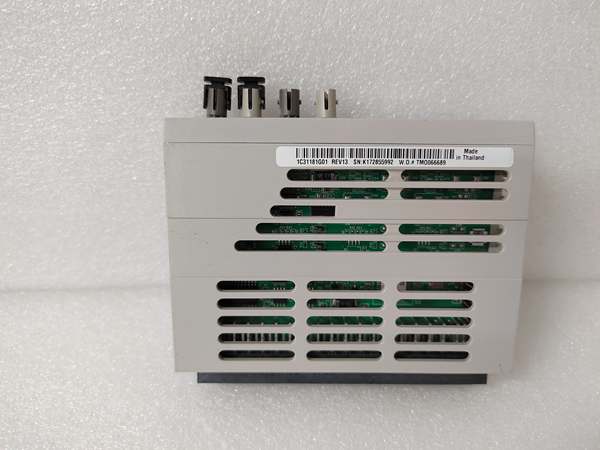
1C31181G01
Technical Deep Dive & Overview
Internally the board is a 30 kHz Wien-bridge oscillator bolted to a 2 kV isolation barrier. The 24 VDC input feeds both the oscillator and the field-power bus; the transformer couples the carrier to each I/O personality so the remote node appears as a transparent extension of the main rack. Lose the 24 V rail and the whole remote I/O goes dark; lose the carrier and the CPU throws “REMOTE I/O NOT RESPONDING.” No firmware to reload—pure hardware—so you can hot-swap it: pull the old card, land the 24 V and carrier leads exactly where they came from, snap the DIN-rail latch, and the DCS sees the remote node again in under ten seconds.
Internally the board is a 30 kHz Wien-bridge oscillator bolted to a 2 kV isolation barrier. The 24 VDC input feeds both the oscillator and the field-power bus; the transformer couples the carrier to each I/O personality so the remote node appears as a transparent extension of the main rack. Lose the 24 V rail and the whole remote I/O goes dark; lose the carrier and the CPU throws “REMOTE I/O NOT RESPONDING.” No firmware to reload—pure hardware—so you can hot-swap it: pull the old card, land the 24 V and carrier leads exactly where they came from, snap the DIN-rail latch, and the DCS sees the remote node again in under ten seconds.