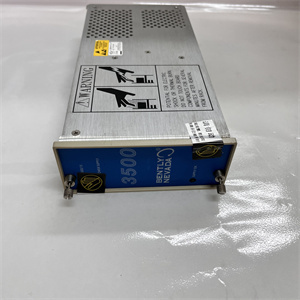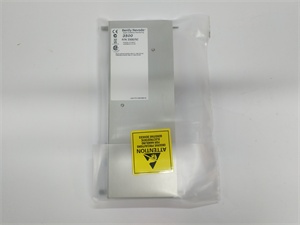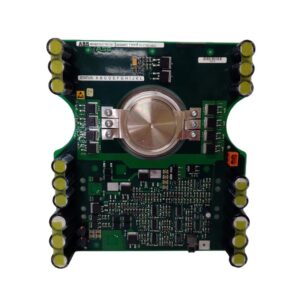
Description
Product Core Brief
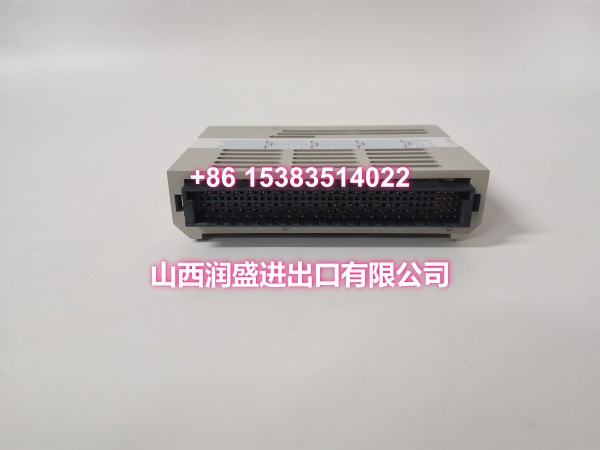
- Part: 1C31161G02
- Brand: Westinghouse / Emerson Ovation
- Most consistent identification: RTD input electronic module, listed in Ovation I/O module tables alongside the 1C31164G01 or 1C31164G02 personality module
- Common assembly: RTD EMOD plus RTD personality module plus correct I/O base
- Core function: Conditions and converts RTD resistance signals into digital data the Ovation controller can use for temperature measurement and protection
- Condition: New Surplus / New Old Stock, varies by lot
Important correction. Reseller pages are messy on this part. One lists it as a Reliance Electric board or a Master Isolated Ref Receiver, another lists the brand as Siemens, and several just dump it into a generic Westinghouse spare list with no function at all. The Ovation I/O module table is the more reliable reference, and it groups 1C31161G01 and G02 as the electronic module for RTD input with the 1C31164G01 or G02 personality module. Confirm against your own Ovation I/O reference manual before buying.
Product Introduction
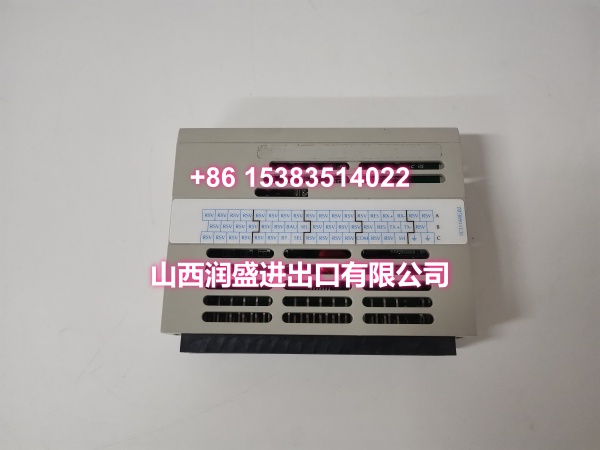
Westinghouse 1C31161G02 is the electronic half of an Ovation RTD input subsystem. The personality module handles the field connection and conditioning, and the electronic module passes converted data to the controller so temperature can feed control logic, efficiency calculations, and trip protection.
For system integrators, RTD failures are dangerous because they often look like sensor drift instead of card failure. A bad channel can read low and hide a bearing or winding over temperature, or read high and force an unnecessary trip. Holding the correct EMOD plus personality module and base turns a long loop trace into a quick swap during an outage window instead of a forced shutdown or a blind run.
Key Technical Specifications
| Parameter | Value |
|---|---|
| Function | RTD input electronic module |
| Host System | Ovation DCS, power, steel, water applications |
| Personality Module | 1C31164G01 or 1C31164G02 on Ovation I/O module tables |
| Signal Type | RTD resistance input through matched personality module |
| Point Count | Depends on build and configuration, verify in Ovation documentation |
| Mounting | Ovation I/O base with matched personality module and terminal block |
| Status Indication | Module LEDs plus controller diagnostics where configured |
| Power Source | Backplane or auxiliary supply depending on rack design |
| Environment | Conditioned control room cabinet, low dust, non condensing |
| Documentation | Ovation I/O reference manual and module combination lists |
| Sourcing Risk | Legacy part, date code and revision vary widely |
Do not trust copied specs claiming Modbus TCP, Ethernet communication, VME bus, tower crane tilt monitoring, or stainless enclosures for this part. Those come from unrelated listings and do not match Ovation RTD hardware.
Quality Control Process
RTD channels get blamed for sensor and wiring faults, so we verify the full stack.
- Documentation cross check. We confirm the EMOD to PMOD pairing against Ovation I/O documentation instead of trusting a reseller spare list.
- Label and revision audit. Silk screen, revision, and date code must match, and refurbished stickers get rejected.
- Edge connector and pin inspection. Pushed or corroded pins cause intermittent reads that look like a failing RTD. Checked under magnification.
- Rail short check. A Fluke multimeter confirms no short across backplane supply paths before power up.
- Mate test with known good PMOD. We install with a confirmed 1C31164 variant and correct base, then verify the stack reports healthy instead of fault.
- Resistance simulation. We feed known resistance values with a process calibrator across the range and confirm the controller reads the matching temperature with no jumps.
- Open sensor check. We break the loop to confirm the module and controller actually flag an open RTD instead of holding a stale value.
- ESD and moisture packaging. Anti-static shielding bag, desiccant, humidity indicator, rigid box.
Replacement Pitfall Guide
❗ Buying only the EMOD. Ovation splits function between electronic module and personality module, and a missing or wrong PMOD gives dead or garbage reads no matter how good the board is.
❗ Assuming G02 drops in for G01. Revision differences can change conditioning, range handling, or base fit. Confirm in the Ovation I/O reference manual before install.
❗ Ignoring lead wire configuration. Two wire, three wire, and four wire RTD connections behave very differently, and the wrong arrangement adds lead resistance error that looks like slow sensor drift.
❗ Skipping common mode and grounding review. RTD loops running near power cabling or sharing poor grounds pick up noise that reads as unstable temperature. Keep shields grounded on the DCS side unless the design says otherwise.
❗ Confusing RTD with TC input. Thermocouple builds use different personality modules such as the 1C31116 series, and swapping them gives completely wrong temperature with no obvious fault alarm.
❗ Overlooking open RTD fail behavior. Confirm whether the controller holds last value, goes bad, or drives a trip on an open sensor. That decision matters more than the board label on protection loops.
❗ Trusting random listing brands. Listings showing this as Siemens, Reliance Electric, or a generic isolated receiver are copy paste errors and should not drive your purchase.
Compatibility Matrix & Benchmarks
| Original Setup | Replacement Option | Compatibility Level | Migration Notes |
|---|---|---|---|
| 1C31161G02 | Same part, later date code | Direct | Confirm revision, base, and paired PMOD |
| 1C31161G01 | 1C31161G02 | Needs Verification | Revision differences must be confirmed in Ovation documentation |
| 1C31161G02 with 1C31164G01 | 1C31161G02 with 1C31164G02 | Needs Verification | Check range, conditioning, and terminal layout |
| RTD EMOD and PMOD set | 1C31116 series TC personality build | Not Recommended | Different signal type, wrong temperature readings |
| Legacy Ovation RTD | Modern Ovation I/O | Needs Adaptation | Database, scaling, and lead configuration review |
| Aging Ovation rack | Remote I/O with RTD support | Needs Adaptation | Communication, grounding, and open sensor handling review |
- Real temperature reliability depends on lead configuration, shielding, and open sensor fail behavior far more than on the EMOD part number.
- If your rack is obsolete and RTD spares keep getting harder to find, migrating critical temperature and protection loops to modern I/O often costs less than years of surplus hunting plus unplanned trips.