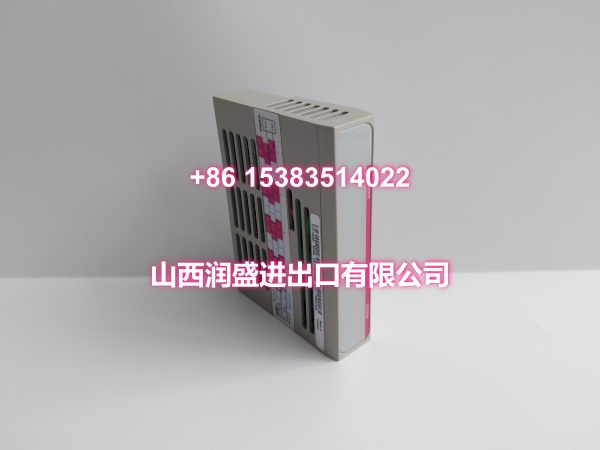
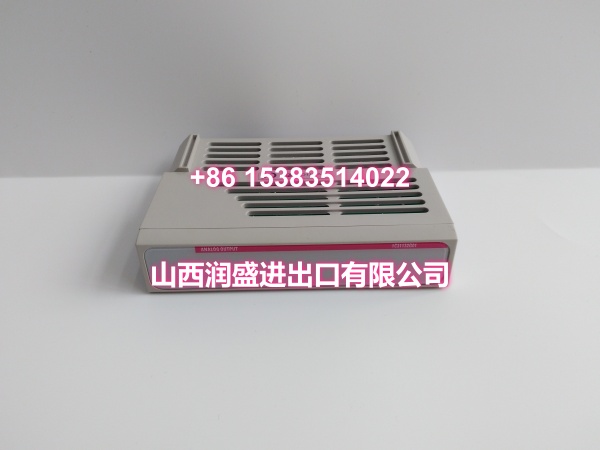
Description
Product Core Brief
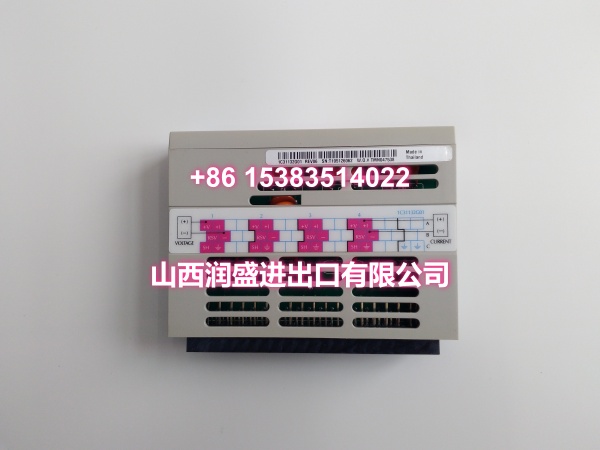
- Model: 1C31132G01
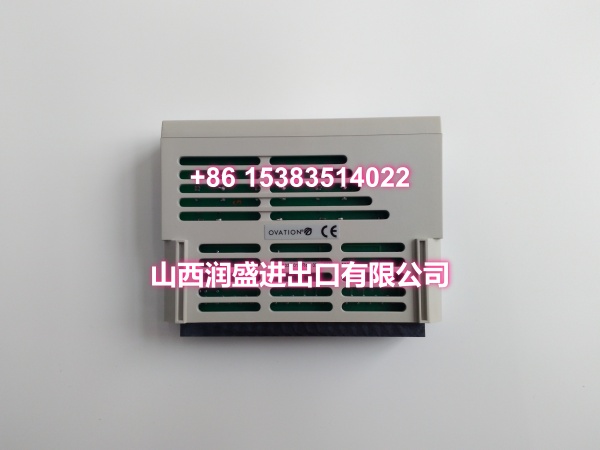
- Brand: Westinghouse / Ovation platform lineage
- Series: Ovation analog output personality module family
- Core Function: Adapts the analog output electronic module to field wiring and signal conditioning requirements at the I/O base.
- Product Type: Analog Output Personality Module (PMOD)
- Key Specs: Analog output interface | Pairs with AO EMOD such as 1C31129G03 | Commonly listed around 24V operation
- Condition: New Original / New Surplus (demand label photos before PO)
Product Introduction
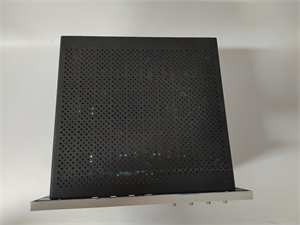
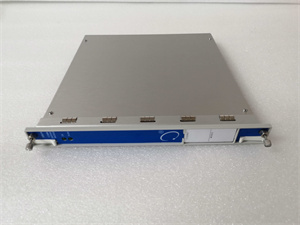
Westinghouse 1C31132G01 is an Ovation analog output personality module. It sits with the AO electronic module and conditions the signal path to the field device, usually a valve positioner or control element.
It does not run control logic. Its worth shows when a loop reads open or drifts and the EMOD tests fine. Swapping the right personality unit often fixes the loop in one maintenance window, instead of a full cabinet hunt.
Key Technical Specifications
| Parameter | Value |
|---|---|
| Part Number | 1C31132G01 |
| Platform | Ovation DCS, Westinghouse heritage hardware |
| Module Class | Analog output personality module (PMOD) |
| Function | Field interface and signal conditioning for AO loops |
| Common Paired EMOD | 1C31129G03, 0-20mA AO electronic module with diagnostics |
| Related EMODs | 1C31129G02 0-10VDC AO, 1C31129G04 0-20mA AO without diagnostics |
| Typical Field Load | Control valve positioners and current loop devices |
| Listed Voltage | Around 24V in many supplier listings |
| Active Control Logic | None, no firmware or CPU onboard |
| Common Failure Mode | Corroded clamps, cracked housing, open loop to field device |
| Storage | Anti-static bag, dry, away from conductive dust |
Quality Control Process
I do not treat this like a controller card. There is no firmware image, no battery, no RAM dump.
- Clamp and housing inspection. Look for discoloration near the output path and hairline cracks on mounting tabs.
- Continuity trace with a Fluke multimeter. Probe from each screw terminal through to the mating edge connector pins.
- Loop simulation test. Inject a known current with a process calibrator and confirm the output path follows without drops.
- Insulation check using a Megger. Verify no short between the signal group and rack ground.
- Anti-static bagging with desiccant. Label the box with the paired EMOD so nobody installs the wrong combo later.
One correction I keep making myself: people call a dead loop an EMOD failure. Half the time it is corrosion inside the personality unit clamp.
Replacement Pitfall Guide
❗ Confusing the PMOD with the EMOD. 1C31132G01 is the personality side, while 1C31129G03 is the analog output electronic module with diagnostics. Buying only one may not clear the fault.
❗ Ignoring voltage and power scheme. Many listings show around 24V, but field powered versus locally powered designs change wiring completely. Confirm against your loop drawing, not a supplier spreadsheet.
❗ Assuming any AO EMOD will mate. A 0-10VDC module and a 0-20mA module are not interchangeable at the field device. Wrong pairing gives you a stuck valve and a confused operator.
❗ Creating ground loops through the shield. Moving the shield ground from cabinet side to field side can inject noise into the control signal. Keep the original single-point grounding.
❗ Skipping the positioner check. A drifting AO loop is often a failing valve positioner, not the card. Test the field device before spending on hardware.
Keep these in mind and you’ll cut 90% of rework time.
Compatibility Matrix & Benchmarks
| Original Model | Replacement / Successor Model | Compatibility Level | Migration Notes |
|---|---|---|---|
| Westinghouse 1C31132G01 | 1C31129G03 | Needs Adaptation | That is the paired AO EMOD with diagnostics, not a swap |
| Westinghouse 1C31132G01 | 1C31129G02 | Needs Adaptation | 0-10VDC AO output, different field device requirements |
| Westinghouse 1C31132G01 | 1C31129G04 | Needs Adaptation | 0-20mA AO without diagnostics, loses fault reporting |
| Westinghouse 1C31132G01 | 5X00058G01 | Needs Adaptation | HART analog output path, check comms and configuration |
| Westinghouse 1C31132G01 | Refurbished same part | Direct | Run continuity and loop injection before install |
Benchmark references
- Acceptance criterion: injected current tracks the calibrator within about 0.5 percent across the span, with no open loop alarm.
- Repair target: restore the AO loop inside one maintenance window when the paired EMOD tests clean.
A note for procurement. Plenty of listings mislabel this part as a communication IC or a valve controller, which is wrong. Ask for label photos, the paired EMOD number, and any test record before you commit to a purchase.