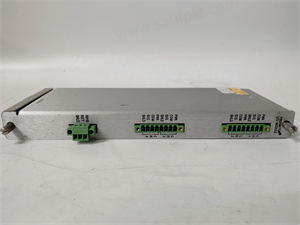
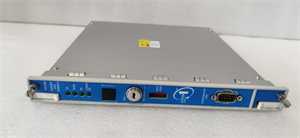
Description
Product Core Brief
- Model: AI3351
- Brand: TRICONEX (Schneider Electric)
- Series: Tricon SIS (Safety Instrumented System)
- Core Function: Acquires and conditions analog field signals for safety-critical control
- Product Type: Analog Input (AI) Module
- Key Specs: 8 channels | TMR (2oo3) | SIL3 | 16-bit | ±0.1% FS accuracy
- Status: Active, New Original Available
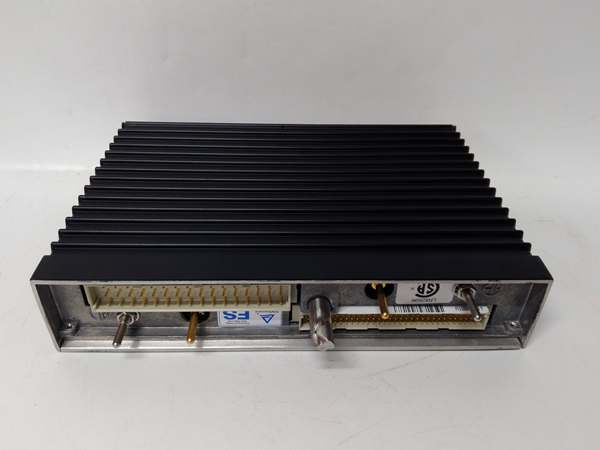
AI3351
Key Technical Specifications
- Channels: 8 isolated, software-configurable
- Signal Types: 4–20mA (active/passive), 0–10V, ±5V, ±10V, J/K/E/T/R/S/B/N thermocouples, Pt100/Pt1000 RTDs
- Resolution: 16-bit
- Accuracy: ±0.1% full scale; TC cold 端补偿 ±0.2℃
- Update Rate: 100ms per channel (16Hz)
- Isolation: 1500VDC channel-to-backplane
- Power: 24VDC backplane, ~5W
- Operating Temp: -40℃ to +70℃
- Safety Rating: SIL3 (IEC 61508), TÜV/FM/ATEX certified
- Redundancy: Triple Modular Redundancy (TMR), 2oo3 voting
- Dimensions: 267 × 107 × 302mm
- Weight: ~3kg
Product Introduction
TRICONEX is a safety-critical analog input module for Tricon SIS platforms, designed to acquire high-integrity process signals in hazardous industries. It converts field sensor data (mA/V/TC/RTD) into digital values for safety logic solvers.
The unit’s TMR architecture eliminates single points of failure, while 16-bit precision and low drift ensure reliable data for ESD and safety interlocks. It supports hot-swap on Tricon v10+ systems, minimizing downtime during replacement.
QA & Testing SOP (Transparency Building)
- Incoming Inspection: Verify OEM part number, hologram, and serial number against TRICONEX databases; check for bent pins, cracked casing, or burned connectors; cross-reference lot codes for counterfeit prevention.
- Live Testing: Insert into certified Tricon test chassis; establish comms handshake via TriStation; run 24-hour load test with 4–20mA signal simulation; log all channel data and fault diagnostics.
- Electrical Testing: Use Fluke 115 to verify 24VDC draw; measure isolation resistance >10MΩ between field and logic sides; confirm chassis ground <0.1Ω.
- Firmware/Config Backup: Record exact firmware revision (e.g., v5.2.1); photograph DIP switch settings; save channel configuration files to secure server.
- Final QC & Packaging: Apply anti-static bag and tamper-evident QC tag; include test report and calibration certificate; ship in climate-controlled, shock-absorbent packaging.
Installation Pitfalls & Guide (Engineer to Engineer)
- ❗ Firmware Rev Mismatch: Mismatched firmware between the module and chassis causes comms timeouts and data corruption. Always match the exact revision (e.g., v5.2.1) to the chassis; never mix v4 and v5 firmware.
- ❗ DIP Switch/Jumper Errors: Incorrect switch settings (e.g., TC vs. RTD mode) lead to dead channels or erratic readings. Photograph the old module’s switches before removal; set new module identically.
- ❗ Wiring Incompatibilities: Field wiring pinouts changed between and older 3351 models. Using old terminal blocks causes short circuits. Verify pinout against the latest TRICONEX manual.
- ❗ Power Draw Changes: The module draws ~5W; under-sizing the backplane power supply causes voltage drops and random resets. Calculate headroom for at least 20% additional load.
- ❗ ESD Dangers: Unprotected handling destroys internal TMR circuitry (costing $2000+). Always use grounded ESD wrist straps and anti-static mats; never touch backplane connectors.
4-Step Replacement Guide:
- Pre-install: Power down the chassis (if non-hot-swap); wear ESD protection; verify firmware and switch settings.
- Removal: Release the front latch; pull the module straight out (do not twist).
- Install: Align rails; push firmly until the latch clicks; torque terminal blocks to 0.8Nm.
- Power-on Test: Restore power; check LED status (green = healthy); run TriStation diagnostics to confirm all channels read correctly.
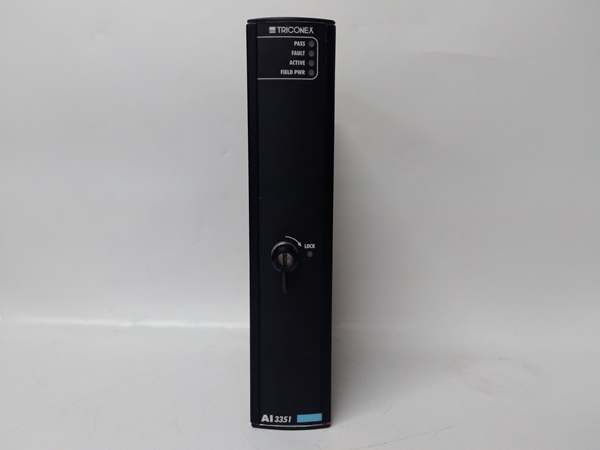
AI3351
FAQ
Q: What is the price range for this unit?A: New original units typically range from 2800–3500 USD; pricing varies by region, lead time, and warranty terms. Surplus or refurbished units cost less but carry shorter warranties.
Q: Does it support hot-swapping?A: Yes, on Tricon v10+ chassis with compatible backplanes. Hot-swap is not supported on v9 or older systems; doing so risks backplane damage and system shutdown.
Q: What warranty comes with the module?A: New original units include a 12-month OEM warranty covering manufacturing defects. Extended 3–5 year warranties are available via Schneider Electric.
Q: Is the module obsolete? What’s the replacement?A: The module is not EOL; it remains the standard AI for Tricon SIS. No direct replacement exists; always source the exact model for compatibility.
Q: Will I lose configuration when replacing?A: No, channel configuration is stored in the chassis, not the module. Firmware must match the chassis; configuration automatically downloads on power-up.
Q: Can it be used in hazardous areas?A: Yes, it carries ATEX/IECEx certification for Zone 2 hazardous locations when installed per manufacturer guidelines.
Q: What calibration is required?A: Annual calibration using a certified 7.5-digit calibrator is recommended. The module holds calibration for 12 months under normal operating conditions.