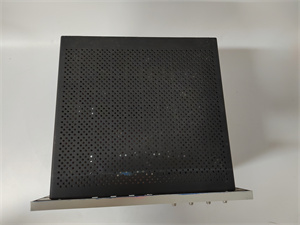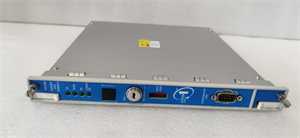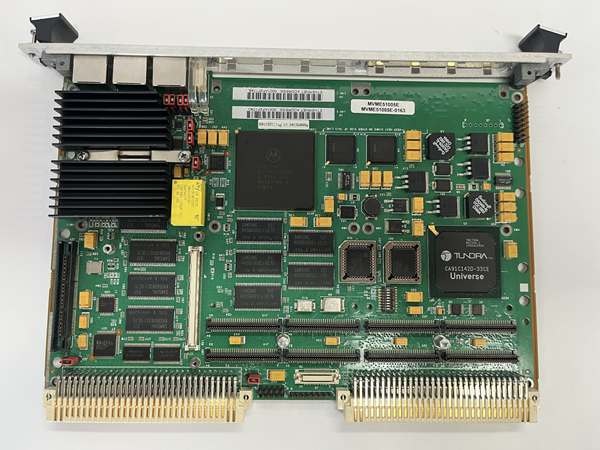
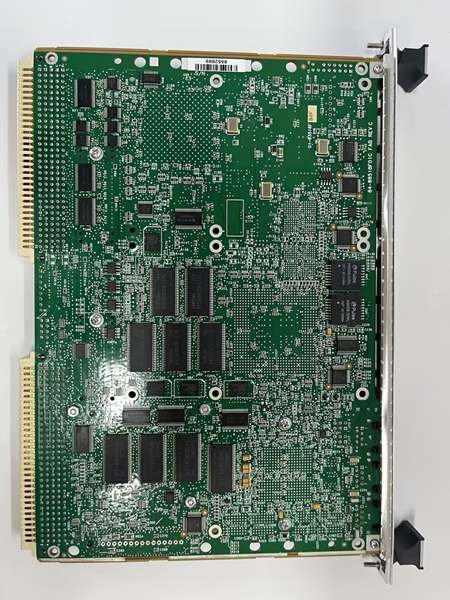
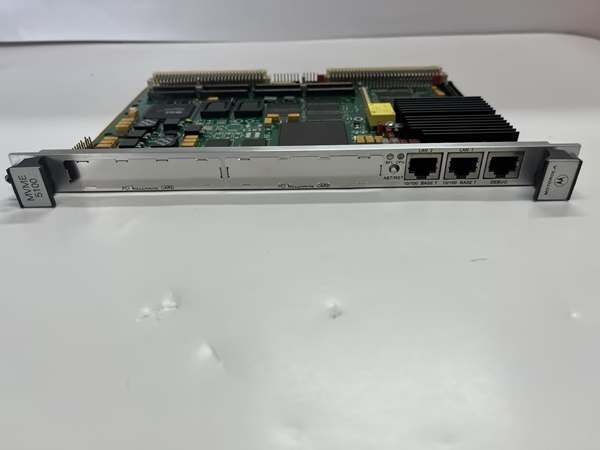
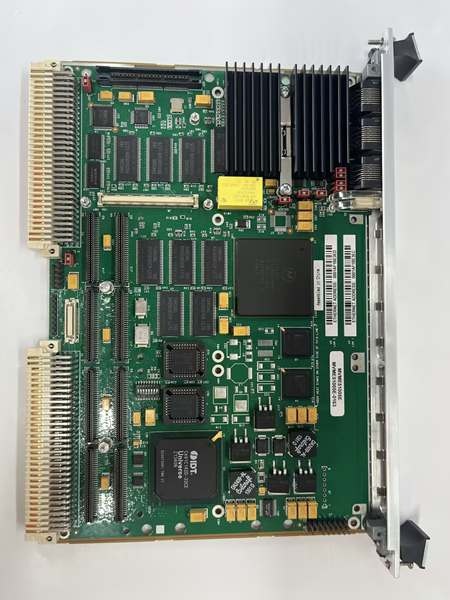
Description
Hard-Numbers: Technical Specifications
-
Processor: PowerPC 750 (G3), 450 MHz (32-bit, 1.8V core, 1.0V I/O)
-
L2 Cache: 512 KB backside cache (2:1 core ratio, 225 MHz)
-
Memory: 256 MB SDRAM (PC-100, ECC, soldered BGA—no DIMM slots)
-
VME Interface: VME64x (ANSI/VITA 1.1-1997), D64 block transfer, 80 MB/s burst
-
PCI Bus: 32-bit/33 MHz PCI (Motorola Hawk ASIC), 2x PMC slots (conduction-cooled retainers)
-
Ethernet: 2x 10/100BASE-TX (Intel 82559, RJ-45, magnetic isolation)
-
Serial Ports: 2x RS-232 (front panel DB-9, 16550-compatible)
-
SCSI Interface: Ultra2 LVD SCSI (NCR 53C896, 80 MB/s, P2 connector)
-
Operating Temperature: -40°C to +71°C (full operation), -55°C to +85°C storage
-
Isolation Rating: 1500V DC (Ethernet), 500V DC (serial), 1000V (VME P1/P2)
-
Power Draw: 24W typical, 34W max (+5V/±12V/3.3V VME rails)
-
Vibration/Shock: 20G RMS random vibration (10-2000 Hz), 50G half-sine shock (MIL-STD-810F Method 514/516)
-
Flash Storage: 8 MB boot flash (soldered), 128 KB NVRAM (battery-backed, 10-year life)
-
Dimensions: 6U x 160mm (VME standard, P1/P2/P0 connectors, 0.8″ card extractor with wedge locks)

Motorola MVME51005E-0163
The Real-World Problem It Solves
The standard MVME5100 dies in tracked vehicles when fans ingest sand, or on ships when salt fog shorts out DIMM sockets. The 51005E-0163 strips out every moving part and every socketed component. SDRAM is soldered down. Cooling is pure conduction through the card edge and faceplate. It’s for systems where “mean time to repair” is measured in months, not hours, and the nearest replacement part is on another continent.
Where you’ll typically find it:
-
Marine Corps tactical vehicles: Command and control computers in LAV-25s and AAVs; survives 140°F ambient in desert compartments and -40°F arctic starts.
-
Shipboard fire control: Mk 99 missile system directors; conduction-cooling handles 95% humidity and direct bilge splash without gaskets.
-
Deployed avionics test: F/A-18 intermediate-level test sets in expeditionary airfields; no fans to draw in JP-8 fumes or dust.
Bottom line: It’s the 5100 architecture hardened to outlast the platform it’s installed in.
Hardware Architecture & Under-the-Hood Logic
Same Hawk ASIC and PowerPC 750 core as the commercial MVME5100, but every reliability weak point is eliminated. The SDRAM is BGA-soldered to the board—no gold fingers, no retention clips, no vibration-induced contact resistance. Heat flows from the 750 die through thermal interface material to an aluminum heat spreader that spans the entire board, then to wedge locks and the faceplate.
-
Power-on sequence: VME rails stabilize → Hawk ASIC releases CPU reset → 750 fetches boot vector from soldered boot flash → Initializes soldered SDRAM controller → Runs POST.
-
Thermal path: 750 die → thermal pad → internal copper slug → aluminum heat spreader → top/bottom wedge locks → chassis card guides → ambient. Faceplate provides additional radiative surface.
-
Memory subsystem: Soldered SDRAM runs at 100 MHz with ECC; Hawk manages memory controller. No SPD EEPROM to corrupt, no DIMM seating issues.
-
VME/PCI bridging: Hawk handles VME64x D64 cycles and 33 MHz PCI arbitration. PMC slots share PCI bus; conduction-cooled retainers clamp mezzanine thermal bars to main board spreader.
-
Boot options: Default boot from soldered 8MB flash; alternative boot via SCSI (P2) or network (Ethernet) if flash corrupted. NVRAM stores environment variables and MAC addresses.
Motorola MVME51005E-0163
Field Service Pitfalls: What Rookies Get Wrong
Assuming Commercial 5100 Spares Compatibility
The 5E board looks identical to a standard 5100, but the soldered SDRAM and conduction-cooled PMC slots make it physically and electrically distinct. A commercial 5100 with DIMMs won’t survive the vibration, and a 5E board won’t accept standard PMC mezzanines.
-
Field Rule: Verify the “5E” suffix in the part number before swapping. Check that spare PMC modules have conduction-cooled thermal bars (thicker, with retention screws). Standard PMCs will seat but won’t conduct heat—expect thermal shutdown within 10 minutes under load. The Hawk ASIC is the same, so firmware images are compatible, but always verify thermal solution integrity after any mezzanine swap.
Neglecting Wedge Lock Maintenance
Those aluminum wedge locks are the entire thermal solution. Dirt, corrosion, or improper torque creates hot spots that trigger thermal throttling or CPU shutdown. Sand infiltration from desert deployments jams the wedges.
-
Field Rule: Clean wedge locks with isopropyl alcohol and lint-free wipes during every inspection. Apply MIL-PRF-81322 grease sparingly to threads—no grease on thermal contact surfaces. Torque to 8-10 in-lb using a calibrated driver; uneven torque warps the board and breaks thermal contact. If the board extracted hard, inspect card guide rails for burrs or foreign object damage.
Ignoring NVRAM Battery Life
That 128KB NVRAM holds boot environment variables, network config, and sometimes cryptographic keys. The lithium cell is rated for 10 years, but high-temperature deployments (persistent +60°C+) cut that in half. Sudden “boot hang” or “MAC address 00:00:00:00:00:00” errors usually mean dead NVRAM.
-
Quick Fix: NVRAM is socketed (Dallas DS1746W or similar) on most 5E revisions—replaceable if you can source the exact part. Before replacement, dump NVRAM contents via monitor commands (if board boots) or JTAG. After replacement, re-enter MAC address and boot parameters manually; they’re not stored elsewhere. In arctic deployments, cold reduces battery voltage—temporary NVRAM corruption below -30°C is known; warm the board to 0°C before assuming cell failure.