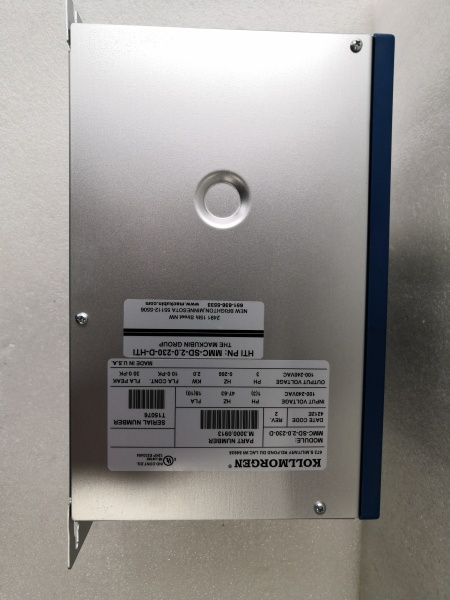
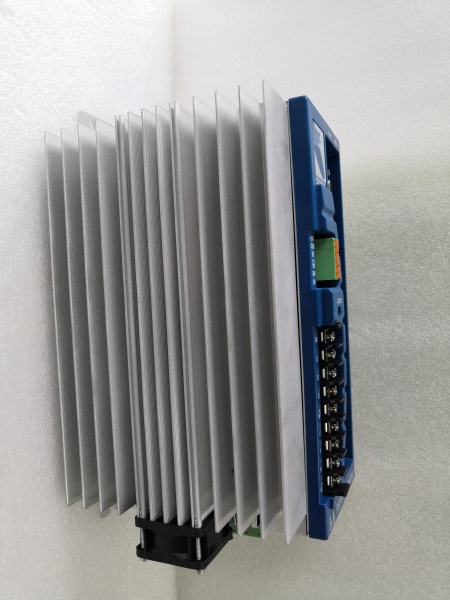
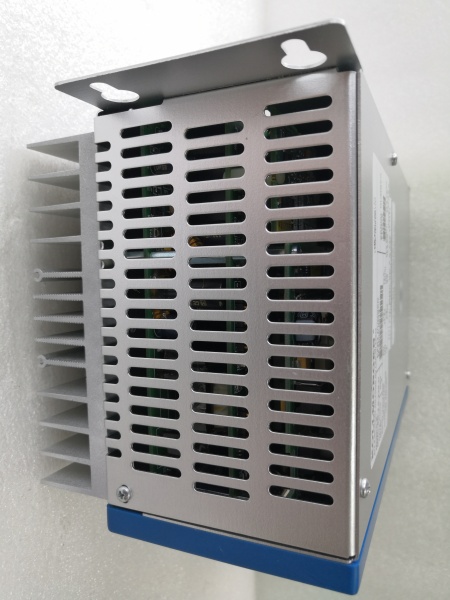
Description
Hard-Numbers: Technical Specifications
- Continuous Power Output: 2.0 kW (2.7 HP)
- Input Voltage: 200-240VAC, single-phase, 50/60Hz
- Output Current: 8.5A continuous, 17A peak
- Output Voltage: 0-230VDC (bus)
- Control Modes: Torque, Velocity, Position (with external controller)
- Feedback Support: Encoder, Resolver, Hall sensors
- Switching Frequency: 16 kHz PWM (standard), 8 kHz option
- Operating Temperature: 0°C to +50°C (32°F to +122°F)
- Protection Rating: IP20 (indoor cabinet mount)
- Isolation: Reinforced isolation per EN 61800-5-1
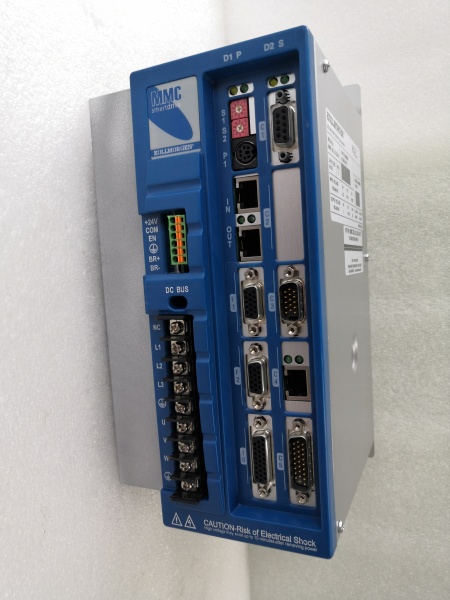
- Diagnostics: 7-segment display, 4 status LEDs

KOLLMORGEN MMC-SD-2.0-230-D
The Real-World Problem It Solves
Machine builders need a drive that delivers enough punch for mid-range motion tasks without requiring expensive three-phase power or swallowing half the cabinet real estate. The MMC-SD-2.0-230-D gives you 2kW of servo performance from a standard wall outlet, keeping both power requirements and panel footprint minimal.
Where you’ll typically find it:
- Labeling machines with 200W-500W servos on each axis
- Conveyor belt metering drives in food processing
- Pick-and-place units on small assembly cells
The bottom line: It puts servo-grade motion control where you’d normally settle for a VFD—perfect when you need precision but not industrial-grade power.
Hardware Architecture & Under-the-Hood Logic
This drive follows the classic analog servo topology but modernizes the power stage with IGBT switching. The front-end rectifies AC input to DC bus, then a three-phase inverter stage drives the motor windings using pulse-width modulation. Control logic runs on a dedicated DSP that processes feedback and command signals independently of the power stage.
Signal flow breaks down like this:
- Command signal (±10V analog or step/dir) enters through the front connector
- The DSP reads feedback (encoder/resolver) and calculates error
- Current loop executes at PWM frequency, adjusting output to maintain torque
- Velocity and position loops run slower (typically 1-4 kHz) for smooth motion
- Protection circuits monitor for overcurrent, overtemperature, and ground faults
- Status information drives the 7-segment display and LED indicators
KOLLMORGEN MMC-SD-2.0-230-D
Field Service Pitfalls: What Rookies Get Wrong
Input Voltage ConfusionThis model is rated for 230VAC single-phase only, but I’ve seen techs wire it to three-phase or 480V sources. The input rectifier will survive a brief overvoltage, but the bulk capacitors will blow spectacularly at higher voltages.
- Quick Fix: Always verify supply voltage with a multimeter at the drive terminals, not just at the disconnect. Label the breaker clearly—don’t rely on wire color.
Missing Regenerative ResistorApplications with rapid deceleration dump energy back into the DC bus. Without a dynamic brake resistor, the bus voltage climbs until the drive faults or the capacitors fail.
- Field Rule: If your cycle has aggressive 终止s or vertical loads, measure DC bus voltage during deceleration. Anything approaching 400VDC on a 230V drive means you need external braking resistance.
Analog Signal Ground LoopsThe ±10V command input is referenced to drive logic ground. If your controller has a different ground potential, you’ll get erratic motion or uncontrollable oscillation.
- Quick Fix: Use differential wiring for the command signal if possible, or install an isolation amplifier. Never lift the safety ground—fix the reference properly with a signal conditioner.