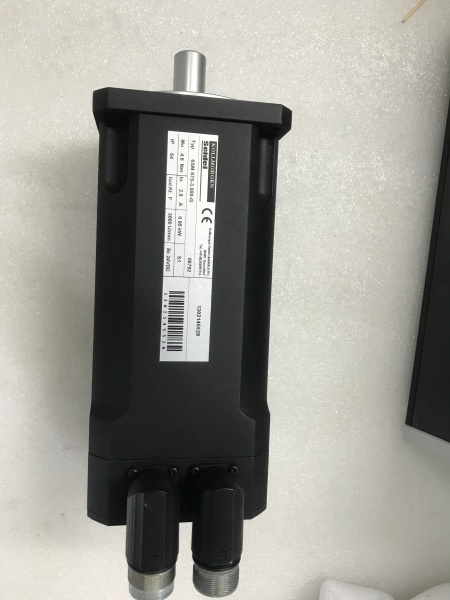
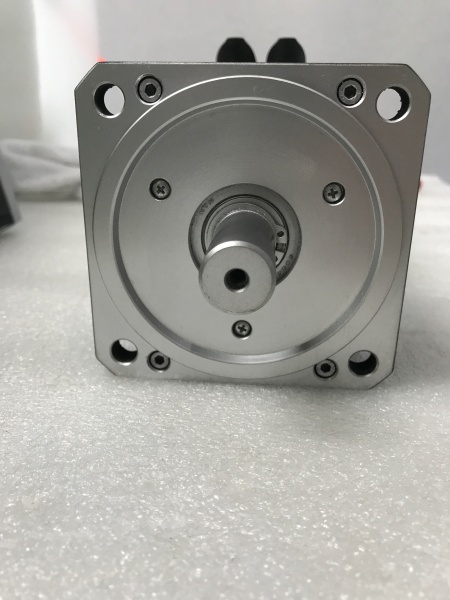
Description
Hard-Numbers: Technical Specifications
-
Motor Type: Brushless permanent magnet synchronous servo (3-phase, 6-pole)
-
Rated Speed: 3000 RPM
-
Rated Power: 0.94 kW (1.26 hp)
-
Rated Torque: 3.0 Nm (approximate, at rated speed)
-
Peak Torque: 4.6 Nm (short-term overload capacity)
-
Standstill Torque: 3.8 Nm (holding torque at zero speed)
-
Rated Current: 2.8 A RMS
-
Standstill Current: 2.8 A RMS (corresponds to standstill torque)
-
Peak Current: 8.4 A RMS (corresponds to peak torque)
-
Torque Constant (K_T): ~1.07 Nm/A (line-to-line)
-
Voltage Constant (K_E): ~111 mV/min (line-to-line back-EMF)
-
Winding Resistance (R_20): ~8.5 Ω (line-to-line, cold, estimated)
-
Winding Inductance (L): ~45 mH (line-to-line, estimated)
-
Rotor Inertia: 0.38 × 10⁻⁴ kg·m² (0.38 kg·cm², without brake)
-
Brake Inertia: 3.6 kg·cm² (0.36 × 10⁻³ kg·m²)
-
Mechanical Time Constant: ~3.0 ms
-
Thermal Time Constant: 20 minutes (winding), 45 minutes (housing)
-
Insulation Class: F (155°C) with Class B temperature rise (80K)
-
Protection Class: IP65 (dust-tight, low-pressure water jet protected)
-
Vibration Class: N (per DIN EN 60034-14)
-
Mounting: IEC 57mm square flange, 14mm keyed shaft (optional smooth shaft)
-
Shaft Load: 530 N radial (max at shaft end), 170 N axial
-
Holding Brake: Spring-applied, electrically released disc brake
-
Brake Torque: 12 Nm (sufficient to hold vertical loads)
-
Operating Voltage: 24 VDC
-
Power Consumption: 18 W (holding), 3.8A inrush current to release
-
Release Time: 30-60 ms
-
Clamping Delay: 10-20 ms
-
Weight: ~1.1 kg added to motor
-
-
Feedback Device: Resolver (standard) or incremental encoder (optional)
-
Operating Temperature: 0°C to +40°C (ambient, derate above 40°C)
-
Storage Temperature: -20°C to +70°C
-
Weight: 5.5 kg (12.1 lbs) with brake
-
Dimensions: 57 × 57 mm flange, ~220 mm length (with brake)
-
Compatible Drives: Kollmorgen Servostar CD/S300/S600, Digifas series, third-party 400V-class servo amplifiers

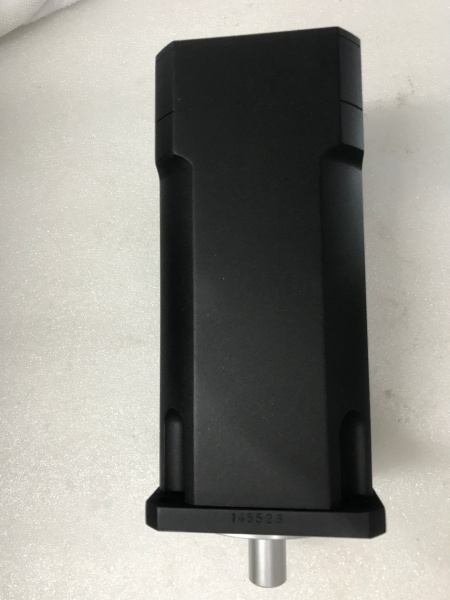
Kollmorgen 6SM57S-3.000-G
The Real-World Problem It Solves
Vertical axes and indexing conveyors need motors that can hold position during power loss without external brakes, accelerate fast enough for high-cycle-rate production, and fit into tight machine frames. The 6SM57S-3.000-G eliminates the “external brake complexity” headache by integrating a 12 Nm spring-applied brake directly into the motor housing. It handles the messy reality of gravity-loaded Z-axes, pallet stops on conveyors, and emergency stops where mechanical holding is mandatory for safety compliance.
Where you’ll typically find it:
-
Vertical pick-and-place units in packaging machinery with gravity-drop risk
-
Indexing conveyor systems requiring precise stop-and-hold positioning
-
Automated storage and retrieval systems (AS/RS) with vertical lift axes
-
Rotary indexing tables with brake-hold during dwell periods
This motor keeps your axes safe when power drops—no external brake cylinders, no pneumatic systems to fail, just integrated spring-applied holding with fast electrical release.
Hardware Architecture & Under-the-Hood Logic
The 6SM57S-3.000-G isn’t just a motor with a brake bolted on—it’s an integrated electromechanical system where the brake shares the motor’s thermal environment and shaft alignment. The 6-pole design provides smoother torque ripple than 4-pole alternatives, while the high brake torque (12 Nm vs. 3.8 Nm motor standstill) ensures safety margin for vertical loads. The brake is spring-applied (failsafe) and electrically released, requiring 24VDC to allow motion.
Internal Construction:
-
Stator Assembly: Laminated steel core with distributed 3-phase windings, vacuum-impregnated for thermal conduction and mechanical integrity
-
Rotor Assembly: Surface-mounted NdFeB rare-earth magnets on steel hub, banded for high-speed retention (tested to 1.2× max speed)
-
Integrated Brake: Spring-applied disc brake with friction plates, electromagnetic release coil, and manual release lever (for maintenance)
-
Feedback Device: 2-pole resolver (10-bit resolution typical) or optical encoder mounted to rear shaft, isolated from brake heat
-
Thermal Protection: PTC thermistors embedded in windings (130°C trip) for drive-based overload protection
-
Bearing System: Sealed ball bearings (greased for life), rated for 20,000 hours at rated load and speed
Kollmorgen 6SM57S-3.000-G
Field Service Pitfalls: What Rookies Get Wrong
Assuming the Brake Holds Full Load During Emergency Stop
The 12 Nm brake torque is for static holding only—not for dynamic braking. Rookies rely on the brake to stop moving loads and watch the friction plates glaze over from overheating, reducing holding torque to dangerous levels.
-
Field Rule: The brake is a holding brake, not a stopping brake. Always decelerate the axis to zero speed via the servo drive before engaging the brake. Set the drive’s “brake engage delay” parameter to 50-100ms after zero speed confirmation. If you need emergency stopping, add a separate dynamic brake resistor to the drive or use a mechanical brake caliper. Inspect brake plates annually for glazing (shiny surfaces) or oil contamination; replace if friction coefficient drops below 0.3.
Ignoring the 3.8A Inrush Current on 24V Brake Supply
The brake coil draws 3.8A inrush current to release—far more than the 0.75A holding current. Rookies size the 24V power supply for holding current only, then watch the supply sag and the brake chatter or fail to release when the axis tries to move.
-
Quick Fix: Size the brake power supply for 3.8A inrush, not 0.75A holding. Use a supply with at least 5A capacity, or add a dedicated brake relay with a large capacitor (1000μF, 35V) to handle the inrush. Wire the brake through the drive’s brake output (which typically has current limiting and timing control) or use an external relay with a suppression diode (1N4007 or better). Check brake release time with a scope—if it’s >60ms from command to full release, your supply is sagging or the brake air gap has increased from wear.
Mixing Up the “S” and “M” Variants in Vertical Applications
The 6SM57S (this model) has lower rotor inertia (0.38 kg·cm²) but less continuous torque than the 6SM57M. Engineers substitute an S for an M in vertical lift applications and wonder why the motor overheats during the lift cycle or can’t hold the load thermally