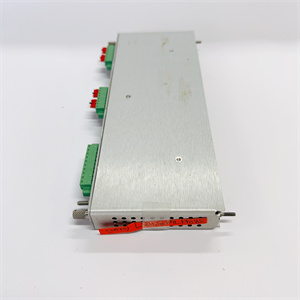
Description
Hard-Numbers: Technical Specifications
-
Protocol Support: PROFIBUS, Modbus TCP, EtherCAT, CANopen, RS-232/485 serial
-
Operating Voltage: 220 VAC ±10% (some sources indicate ±15% tolerance)
-
Output Frequency: 30 kHz (±0.5% or ±5% depending on configuration)
-
Processor: Embedded industrial CPU (ARM-based or x86 architecture, KEBA proprietary)
-
Memory: Flash memory for firmware, RAM for runtime (exact capacity varies by revision)
-
Programming Standard: IEC 61131-3 (LD, FBD, ST, IL, SFC)
-
I/O Capacity: Expandable via KEBA KeConnect I/O modules (DI, DO, AI, AO)
-
Communication Ports:
-
1× Ethernet (10/100 Mbps)
-
1× RS-232/485 serial
-
1× CAN bus interface
-
-
Operating Temperature: -25°C to +70°C (some variants 0°C to +60°C)
-
Storage Temperature: -40°C to +85°C
-
Protection Class: IP20 (control cabinet mounting), IP54/IP65 (some enclosed variants)
-
Physical Dimensions: 185 × 120 × 45 mm (7.3″ × 4.7″ × 1.8″)
-
Weight: 850 g (1.87 lbs)
-
Mounting: DIN rail or panel mount
-
Certifications: CE, UL, CSA (industrial control equipment)
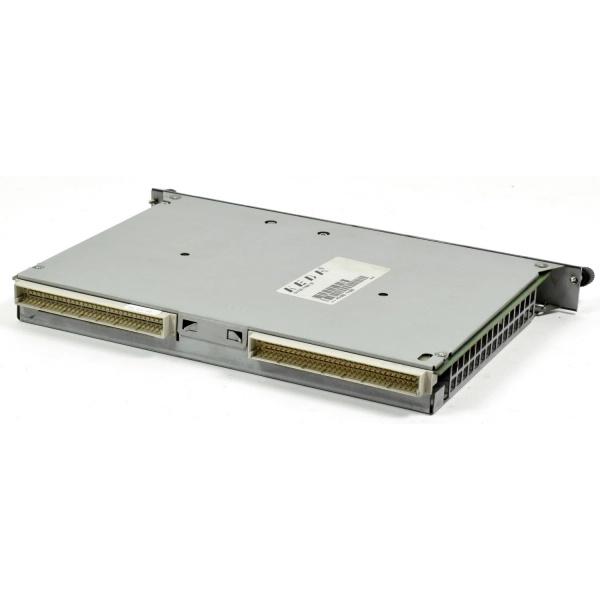
KEBA CU312/E
The Real-World Problem It Solves
Material handling systems and EV charging stations need compact, reliable controllers that can handle real-time FIFO sequencing and motion control without chewing up cabinet space or breaking the budget. The CU312/E eliminates the “too big, too expensive, too complicated” headache by packing IEC 61131-3 PLC functionality, high-speed counting, and multi-protocol networking into an 850-gram package that mounts on a DIN rail. It handles the messy reality of conveyor tracking, buffer management, and charging protocol negotiation without requiring a full-size rack-mounted PLC.
Where you’ll typically find it:
-
Automated storage and retrieval systems (AS/RS) managing FIFO inventory buffers
-
Electric vehicle charging pile controllers handling Mode 3 Type 2 connections
-
AGV (automated guided vehicle) navigation and task management systems
-
Compact packaging machinery with high-speed counting requirements
This controller keeps your material flow synchronized and your charging stations online—no oversized control cabinets, no proprietary programming headaches, just compact IEC-standard control.
Hardware Architecture & Under-the-Hood Logic
The CU312/E isn’t just a micro-PLC—it’s a distributed control node with dedicated FIFO management hardware and real-time kernel optimization. Based on the KEBA CompaqPAC architecture, it combines an industrial-grade CPU with expandable I/O connectivity through the KeConnect bus, allowing it to scale from simple charging control to complex material handling coordination without changing the base hardware.
Internal Signal Flow:
-
CPU Processing: ARM-based or x86 processor runs the KEBA runtime kernel with deterministic cycle times (typically 1-10 ms depending on program complexity)
-
FIFO Management: Dedicated hardware registers or software FIFO buffers track material flow sequences, buffer states, and queue positions for conveyor or charging applications
-
I/O Handling: Local digital/analog I/O processed directly; remote I/O via KeConnect bus modules (DI 240/B, DO 242/B, AI 240/A, etc.) extending up to 32 modules
-
Communication Stack: Integrated protocol handlers manage PROFIBUS DP slave/master, Modbus TCP client/server, and EtherCAT real-time Ethernet simultaneously
-
Motion Interface: High-speed outputs (30 kHz) drive stepper drives or frequency inverters for conveyor or positioning control
-
Power Management: Universal 220VAC input with internal switching supply generating isolated 24VDC for I/O and logic (external 24VDC backup supported)
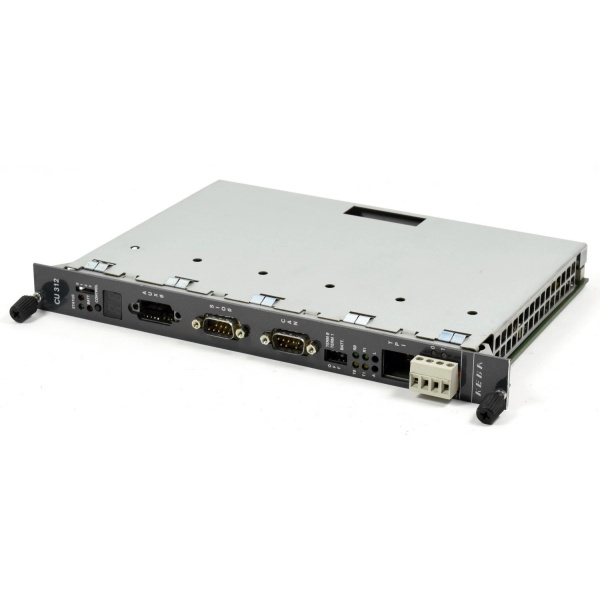
KEBA CU312/E
Field Service Pitfalls: What Rookies Get Wrong
Assuming “Mobile FIFO” Means It Handles AGV Navigation
The “Mobile FIFO” designation refers to the controller’s ability to manage First-In-First-Out buffer queues for material tracking, not autonomous vehicle navigation. Engineers try to use the CU312/E as a primary AGV guidance controller and wonder why it won’t handle SLAM algorithms or LiDAR processing.
-
Field Rule: The CU312/E manages AGV task queues, charging schedules, and I/O coordination—it does not perform path planning or obstacle avoidance. Pair it with a dedicated navigation controller (like a KEBA AR281 or third-party AGV controller) for positioning. Use the CU312/E for the “what to do” logic, not the “where to go” calculations.
Ignoring the 30 kHz Output Frequency Limit on High-Speed Counters
The 30 kHz output frequency sounds fast until you’re trying to track a high-resolution encoder on a rapid traverse conveyor. Rookies connect 5000 PPR encoders to 3000 RPM motors and expect the CU312/E to keep up, then blame “missed counts” on noise when it’s actually pulse frequency overload.
-
Quick Fix: Do the math first. At 3000 RPM (50 RPS) with 5000 PPR, you’re generating 250,000 pulses per second—way beyond the 30 kHz limit. Either reduce encoder resolution (switch to 500 PPR), add a prescaler gearbox, or use a dedicated high-speed counter module (like KEBA DI 260/A with 5 kHz interrupt inputs). Check the “High-Speed Counter Status” byte in the runtime diagnostics—if the overflow bit is set, you’re losing pulses.
Mixing Up CU312/E and CU313 Without Checking I/O Expansion
The CU313 is the larger sibling with more onboard I/O and memory. Engineers order the CU312/E to save money, then try to attach 20 KeConnect I/O modules and wonder why the bus won’t initialize or cycle times blow out to 100ms.
-
Field Rule: The CU312/E supports up to 8-12 KeConnect I/O modules depending on firmware revision; the CU313 handles 32+. Check your I/O count before ordering. If you need more than 128 digital points or 32 analog channels, step up to the CU313 or add a KEBA bus coupler (like the BC 315) for distributed I/O. Monitor the “Bus Cycle Time” in the KEBA development environment—if it climbs above your target scan time, you’ve overloaded the controller.