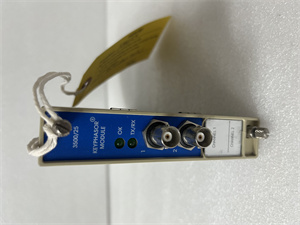
Description
Key Technical Specifications
| Parameter | Value |
|---|---|
| Input Voltage | 24V DC (±10%) or via Backplane (5V DC) |
| Operating Temp | -20°C to +60°C (-4°F to 140°F) |
| Storage Temp | -40°C to +85°C |
| Analog Inputs (AI) | Multi-channel (Supports 4-20mA, RTDs, Thermocouples) |
| Analog Outputs (AO) | Multi-channel (Supports 4-20mA, ±10V) |
| Digital I/O (DI/DO) | Configurable multi-channel support |
| Communication | High-speed Backplane Bus (PDH/VME64x), Optional Ethernet |
| Isolation | 1500Vrms min (Field-to-Logic), Channel-to-Channel Isolation |
| Mounting | Mark VI / Mark VIe Rack-mountable |
| Compliance | CE, UL 508, RoHS |
IS210MACCH2A
Product Introduction
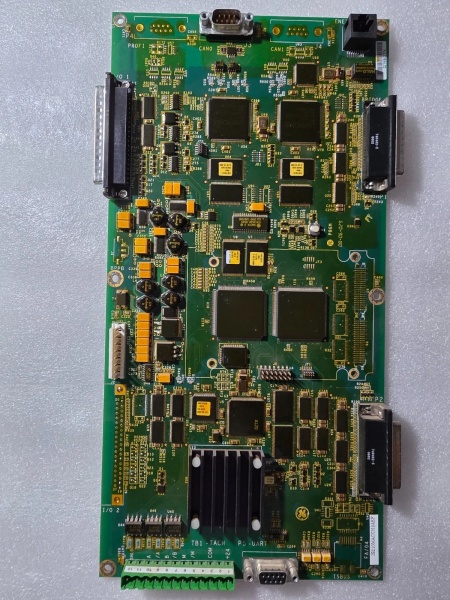
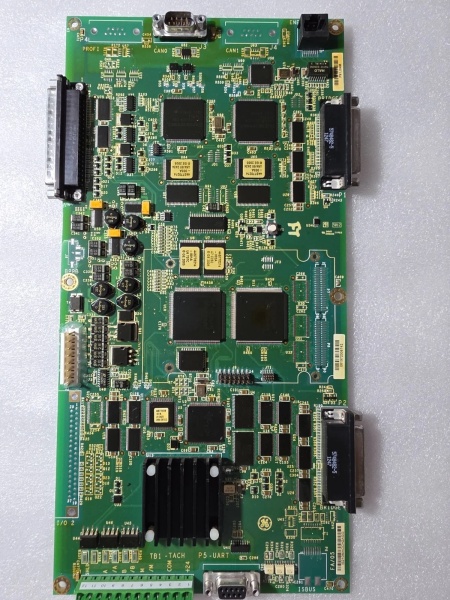
The IS210MACCH2A is a high-performance Machine Interface Controller (MAC) and multi-function I/O module engineered for GE’s renowned Speedtronic Mark VI and Mark VIe turbine control platforms. Serving as the critical nerve center for field communications, this module seamlessly bridges the gap between the central control processor and a wide array of field devices, including sensors, transmitters, and actuators.
Designed to operate flawlessly in the extreme conditions of power generation and heavy industrial environments, the IS210MACCH2A handles precise acquisition of analog and digital signals, along with reliable control signal output for mission-critical components like fuel valves, inlet guide vanes (IGVs), and auxiliary equipment. Its high reliability, exceptional accuracy, and robust design make it an indispensable component for maintaining optimal turbine performance and minimizing costly downtime.
Key Selling Points & Differentiators
- Versatile Multi-Function I/O: Integrates multiple Analog Inputs (AI), Analog Outputs (AO), Digital Inputs (DI), and Digital Outputs (DO) into a single, compact unit. This eliminates the need for multiple specialized modules, saving valuable cabinet space and simplifying system wiring.
- High-Precision Signal Processing: Delivers highly accurate data acquisition with excellent resolution for analog signals (supporting 4-20mA, RTDs, Thermocouples, ±10V), ensuring the controller receives precise, real-time data for critical decision-making.
- Robust Noise Immunity & Isolation: Features comprehensive channel-to-channel and field-to-logic electrical isolation. This protects the sensitive control system from transient voltages and effectively minimizes the impact of ground loops and electrical noise.
- Advanced Diagnostics & Hot-Swap Ready: Continuously monitors its own health and communication status. In a properly configured redundant rack, the module supports hot-swapping, allowing for quick replacement without shutting down the entire turbine control system.
- Rigorous Validation & Testing: Every refurbished unit undergoes a stringent 24-hour dynamic burn-in test within a live Mark VI/VIe rack simulator. We validate all I/O channels, signal accuracy, and communication integrity under load. Includes a serialized test report and a 12-month warranty.
- Immediate Dispatch: We maintain a large stock of new surplus and tested refurbished units in our distribution centers, ready for 24-hour shipping to meet your urgent replacement needs.
FAQ
- What is the primary role of the IS210MACCH2A?
It acts as a Machine Interface Controller (MAC) and multi-function I/O module. It processes real-world signals from the field (like temperature, pressure, and valve positions) and converts them into digital data for the controller, while also executing control commands from the processor to drive field actuators.
- Is this module compatible with both Mark VI and Mark VIe systems?
Yes, the IS210MACCH2A is designed with backward and forward compatibility in mind, making it suitable for integration into both GE Speedtronic Mark VI and Mark VIe turbine control system architectures.
- What types of field signals can this module handle?
The module supports a wide variety of industrial signals, including 4-20mA analog inputs and outputs, RTDs, thermocouples, ±10V signals, and standard 24V DC digital inputs and outputs.
- Can I replace the module without powering down the entire rack?
If your Mark VI/VIe rack is configured with redundant controllers and supports hot-swapping, yes. However, you must always verify your specific system’s redundancy configuration and follow strict ESD safety protocols before attempting a live swap.
- How does the module protect against electrical noise and interference?
The IS210MACCH2A is designed with high-grade electrical isolation between input/output channels and the system logic. This galvanic isolation prevents electrical noise, transient spikes, and ground loops from affecting the module’s performance or damaging the backplane.

IS210MACCH2A
Quality Transparency SOP
- Incoming Verification: Serial number traceability and cross-referencing against GE databases. Comprehensive visual inspection under magnification for burnt components, cracked solder joints, or damaged edge connectors.
- Functional Bench Test: Mounted in a dedicated Mark VI/VIe test rig. Power-on self-test (POST) monitored via ToolboxST. All analog input channels are swept with precision calibrators, and output signals are verified under dummy loads.
- Stress Testing: Subjected to a continuous 24-hour dynamic load test, including simulated sensor feedback, rapid signal changes, and communication bus stress tests to validate processor stability and watchdog timer functionality.
- Firmware/Config Verification: Current firmware version recorded. All jumper and DIP switch configurations are documented and backed up.
- Final QC & Packaging: Final quality control sign-off completed and dated. Sealed in a custom anti-static bag with moisture absorption packets. Shipped in reinforced cardboard packaging with industrial-grade foam padding to prevent transit damage.
Transparency required: Test reports and video evidence of the bench tests are available upon request. We maintain a strict policy of never claiming “100% failure-free” as all industrial electronic components naturally degrade over time and under operational stress.
Technical Risk Avoidance
Signal Integrity & Ground Loops
Risk: In industrial environments, long sensor cables can pick up substantial electrical noise. If shielding is improperly grounded at both ends (creating a ground loop), it can inject AC noise into your DC control signals, leading to erratic readings or actuator movement.
Prevention: Ensure all shielded cables are grounded at only one point (typically the control panel side). Leverage the module’s built-in galvanic isolation by ensuring field power supplies are properly isolated from the main rack power.
Anecdote: A plant experienced random fluctuations in their turbine’s exhaust temperature readings. The issue was traced back to a thermocouple whose shield was grounded at both the sensor and the control rack, creating a ground loop that overwhelmed the analog input.
Electrostatic Discharge (ESD) During Handling
Risk: The IS210MACCH2A contains highly sensitive CMOS and processor components. Touching the module’s edge connector or components without proper grounding can silently damage the internal circuitry, leading to intermittent failures weeks later.
Prevention: Never handle the module outside of an ESD-safe workstation. Always wear a grounded anti-static wrist strap and handle the board strictly by its plastic edges or metal mounting brackets.
Anecdote: A technician replaced a faulty I/O module without wearing a wrist strap. The new module worked initially but failed catastrophically three weeks later during a critical grid synchronization event, resulting in a forced turbine trip.
Incorrect Wiring & Overloads
Risk: Accidentally connecting high voltage (e.g., 120V AC) to a 24V DC digital input channel, or exceeding the current rating of an analog output, will cause immediate and permanent damage to the module’s internal components.
Prevention: Always double-check the system wiring diagrams and use a multimeter to verify field wiring continuity and correct voltage levels beforeconnecting the module to the live system.
Anecdote: An electrician mistakenly wired a 120V AC relay into a 24V DC input card. The resulting overvoltage instantly fried the input buffer chips, requiring a complete module replacement and causing an 8-hour delay in plant startup.
Practical Summary: Treat the as a vital bridge between your digital controller and the physical world. Protect it from ESD, ensure your field wiring is free of ground loops and incorrect voltages, and always take the time to re-validate your I/O signals after installation. Keep the serialized test report on file for audit trails and warranty claims.