Description
Key Technical Specifications
| Parameter | Value |
|---|---|
| Input Voltage | 9-16V DC (Nominal 12V DC) |
| Operating Temp | 0°C to +60°C (Standard), up to +65°C (Extended) |
| Storage Temp | -40°C to +85°C |
| Status Indicators | 1 Green LED (4 modes), 1 Red LED (7 modes) for diagnostics |
| Watchdog Timer | Integrated hardware watchdog for fault recovery |
| Communication | Internal I/O pack bus, compatible with IONet upstream |
| Software Support | ToolboxST integration for tagging and configuration |
| Mounting | Daughterboard mounted on UCPA base/terminal board |
| Dimensions | 138mm x 86mm x 56mm (approx) |
| Weight | 0.2kg – 0.3kg (approx) |
Product Introduction
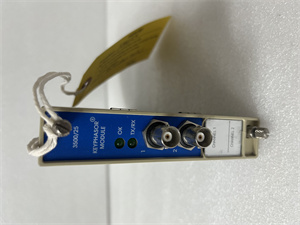
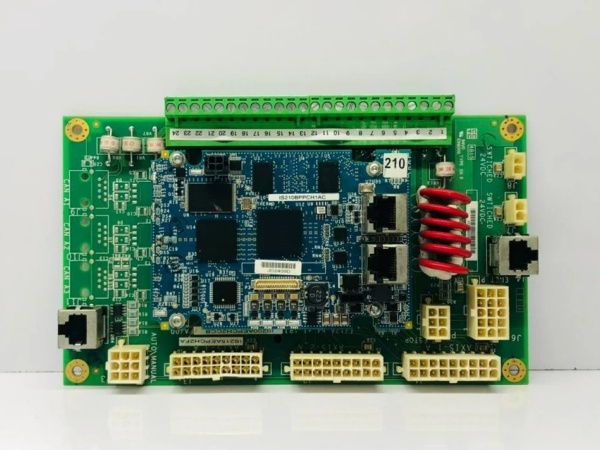
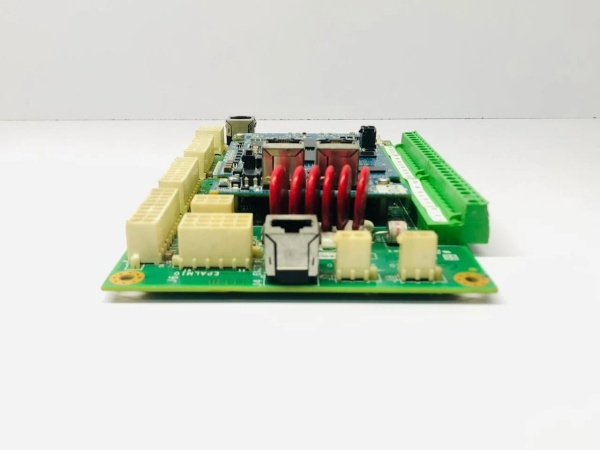
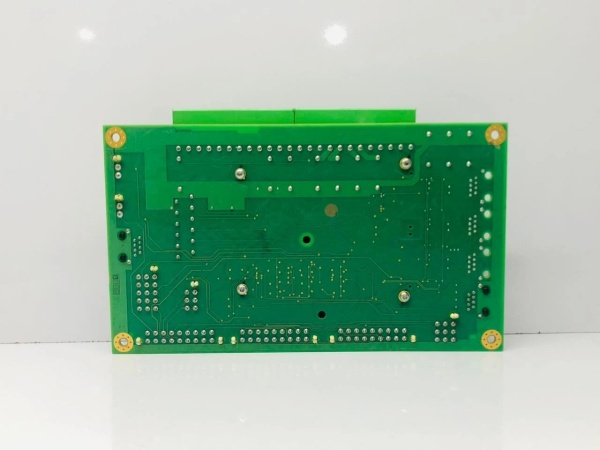
The is a critical processing engine designed for GE’s Mark VIe Speedtronic control platform. Unlike base power supplies or analog input cards, this module functions as a sophisticated I/O pack processor daughterboard, typically mounted inside a UCPA housing. It offloads intensive data processing tasks from the main controller, handling complex signal conditioning, local alarm generation, and high-speed data transfer to the central control unit.
Control systems engineers and turbine specialists rely on the “H1AC” variant for its robust processing capabilities and seamless integration into distributed I/O architectures. It supports advanced diagnostics, automatically reports faults via its multi-mode LEDs, and ensures system integrity through a built-in hardware watchdog timer. Whether deployed in gas turbine auxiliary systems, steam turbine protection schemes, or complex compressor stations, the delivers the deterministic performance required for mission-critical industrial automation.
Key Selling Points & Differentiators
- Advanced Local Processing: Frees up main controller resources by handling local I/O scanning, signal validation, and preprocessing at the pack level.
- Enhanced Diagnostics & Status: Features a sophisticated status indication system (Green/Red LEDs with multiple blink/fault codes) for rapid field troubleshooting without specialized tools.
- Seamless Integration & Reconfiguration: Fully compatible with ToolboxST for online monitoring and supports automatic hardware key reconfiguration when swapping between BPPC and older BPPB I/O packs.
- Rigorous Validation: Every refurbished unit undergoes a 24-hour dynamic burn-in test within a live Mark VIe rack simulator to validate processor stability and communication handshakes. Includes a 12-month warranty.
- Not recommended for: Direct substitution in legacy Mark VI systems utilizing older non-Mark VIe compliant I/O pack bases (verify UCPA base compatibility).
- Immediate Dispatch: New surplus and tested refurbished units are stocked in our Houston, TX warehouse for 24-hour shipping.
FAQ
- Its main function is to act as the central processing unit (CPU) for a UCPA I/O pack. It manages data acquisition from field devices, executes local control algorithms or diagnostics, and communicates this data back to the main Mark VIe controller via the IONet backbone.
- How do I interpret the LED status indicators on the module?
The module features a green and a red LED. The green LED typically indicates normal operation, while the red LED signals specific faults. Together, they provide 11 distinct status combinations (4 green modes, 7 red modes) to help technicians quickly identify issues like communication loss, power faults, or hardware failures.
- Is this module compatible with my existing Mark VIe rack?
Yes, provided your system utilizes a compatible UCPA I/O pack baseboard. The “H1AC” hardware revision is fully supported by current ToolboxST versions. Always verify the hardware key in your controller’s project file before performing a hot-swap.
- What happens if the module encounters a software hang or glitch?
The onboard hardware watchdog timer will automatically reset the processor, preventing the I/O pack from entering an undefined state and ensuring the system either recovers quickly or fails safely according to your turbine’s protection logic.
- Does the 12-month warranty cover firmware corruption?
The warranty covers hardware failures under normal operating conditions. Issues arising from incorrect firmware uploads, ESD damage during handling, or physical stress are excluded.
- Can I mix this with older BPPB modules in the same rack?
Yes, Mark VIe systems allow for mixed I/O pack environments. The is designed to interoperate with older BPPB components, and in many cases, the system will automatically reconfigure the hardware keys upon detection.

IS210BPPCH1AC
Quality Transparency SOP
- Incoming Verification: Serial number traceability and cross-referencing against GE databases. Comprehensive visual inspection under magnification to check for micro-cracking on the PCB, corroded edge connectors, or damaged SMD components.
- Functional Bench Test: Mounted onto a dedicated UCPA baseboard within a live Mark VIe test rack. Power-on self-test (POST) is monitored via ToolboxST to ensure successful boot sequences.
- Stress Testing: Subjected to a continuous 24-hour dynamic load test, including simulated communication drops and reconnections to verify the hardware watchdog timer functionality.
- Firmware/Config Verification: Current firmware version recorded. All DIP switch, jumper, and onboard jumper configurations are documented and backed up.
- Final QC & Packaging: Final QC sign-off. Sealed in a custom anti-static bag with moisture absorption packets. Surrounded by industrial-grade foam shock protection. Affixed with a “QC Passed” label.
Transparency required: Test photos and video evidence of the bench test are available upon request. We never claim “100% failure-free” as industrial components operate under immense stress.
Technical Risk Avoidance
Electrostatic Discharge (ESD) Damage
Risk: The contains highly sensitive high-speed digital logic. Casual handling can destroy internal gate oxides, leading to latent failures where the module works initially but fails after a few weeks of thermal cycling.
Prevention: Always wear a grounded anti-static wrist strap and handle the module only by its edges. Work on a certified ESD-safe mat.
Anecdote: A technician handled a processor board without ESD protection. The board passed initial diagnostics but crashed intermittently two weeks later during a critical grid-peak demand period, causing a costly unplanned trip.
Improper Seating in Baseboard
Risk: The daughterboard connects to the UCPA base via high-density board-to-board connectors. Misalignment or insufficient insertion can cause bent pins, leading to permanent hardware damage or intermittent communication loss.
Prevention: Always visually inspect the mating connectors for debris or bent pins before installation. Apply even, firm pressure across the board until fully seated. Do not use excessive force.
Anecdote: An installer forced the module into the baseboard at an angle. This bent several critical data pins, destroying both the processor card and the $2,000 UCPA baseboard.
Watchdog Timer Misconfiguration
Risk: If the main controller fails to refresh the watchdog timer (due to network storms or severe processor lag), the will reset itself. If not properly accounted for in the turbine’s sequencing logic, this can cause unexpected I/O drops.
Prevention: Ensure your ToolboxST project has appropriate fault masking and time-delay logic configured to handle brief I/O pack resets without tripping the main turbine.
Anecdote: A network broadcast storm caused momentary communication delays. The BPPC watchdog timed out and reset. Because the turbine protection logic wasn’t configured to tolerate a 2-second I/O loss, it initiated an emergency shutdown.
Firmware/Hardware Key Mismatch
Risk: Swapping a failed BPPB with an H1AC without updating the ToolboxST hardware definition file will result in a hardware key mismatch, preventing the I/O pack from initializing.
Prevention: Always download the hardware key from the replacement module using ToolboxST before adding it to the active control rack, or pre-configure the controller to accept the new hardware key.
Anecdote: A night-shift operator swapped a faulty I/O pack but didn’t update the controller’s hardware profile. The next morning, the main processor rejected the new hardware key, forcing a manual restart and delaying plant startup by 6 hours.
Practical Summary: Treat the as a sensitive high-speed digital asset. Strictly adhere to ESD protocols, ensure perfect mechanical seating, and always synchronize the hardware key with your ToolboxST project file before installation. Keep the serialized test report on file for audit trails and warranty claims.