Description
Key Technical Specifications
| Parameter | Value |
|---|---|
| Input Voltage | 88-132V AC / 105-132V DC |
| Output Voltage | 24V DC Regulated |
| Output Current | 10A Continuous / 15A Peak |
| Operating Temp | -40°C to +70°C |
| Efficiency | >92% |
| Protection Features | Overvoltage, Undervoltage, Short-Circuit, Reverse Polarity, Transient Suppression (IEEE C62.41) |
| Functional Revision | 1B |
| Mounting | DIN Rail or Panel Mount |
| Communication | IONet / SPI Bus for Health Reporting |
| Dimensions | 30.5cm x 15.2cm x 5.1cm (approx) |
| Weight | 1.5kg (approx) |
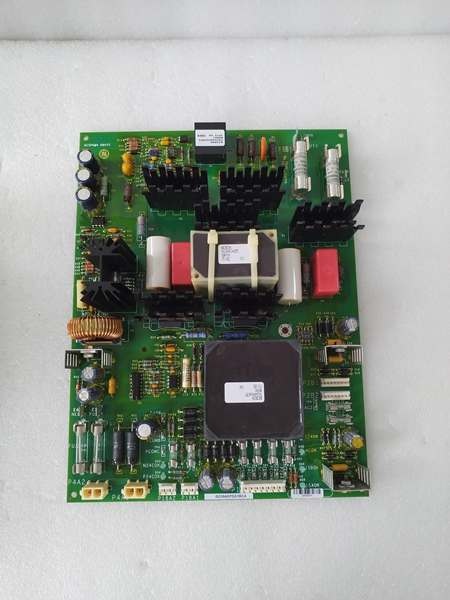
GE IS210AEPSG1AEC
Product Introduction
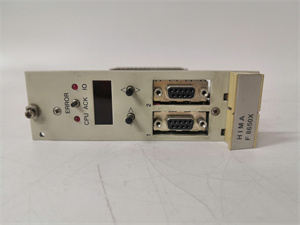
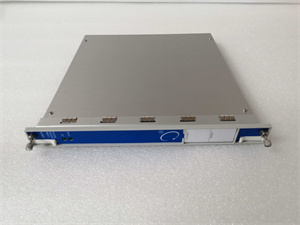
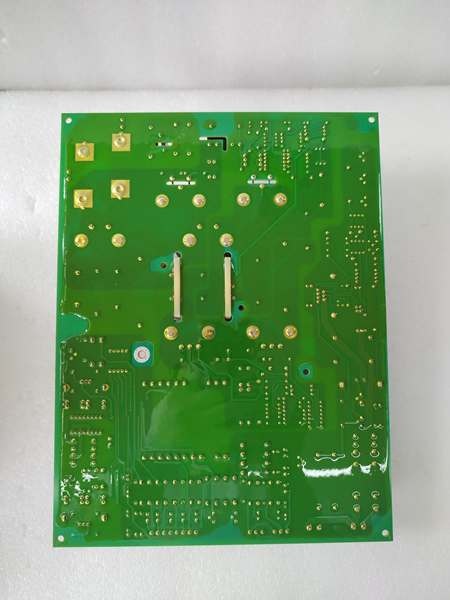
The IS210AEPSG1B represents a critical hardware refresh in the AE Power Supply series, designed to deliver stable, noise-free 24V DC power to GE Mark VIe turbine control systems. This unit integrates updated silicon and enhanced thermal management components compared to earlier revisions. It is widely deployed in power generation, oil & gas, and heavy industrial compression where control system stability directly impacts operational continuity.
Procurement teams specify this module when upgrading legacy control cabinets or replacing end-of-life “1A” units. The “1B” revision offers improved harmonic filtering and firmware compatibility with modern ToolboxST versions. It maintains deterministic output during grid fluctuations, effectively decoupling sensitive Mark VIe I/O processors and communication bridges from plant-wide electrical noise.
Key Selling Points & Differentiators
- Hardware Revision Stability: Incorporates the “1B” silicon updates, offering superior thermal derating performance in high-ambient temperature environments (+70°C max).
- Cross-Revision Compatibility: Fully interoperable with existing “1A” and “1AA” racks when matched with the correct firmware baseline. Simplifies phased modernization projects.
- Rigorous Test Protocol: Every refurbished unit is subjected to a 24-hour continuous burn-in test under varying loads. New surplus units are ESD-packaged and warrantied for 12 months.
- Not recommended for: Brand-new Mark VIe rack builds requiring the absolute latest “2A” or higher hardware keys. Verify your BOM before purchasing.
- Immediate Dispatch: New surplus and tested refurbished units are stocked in our Houston distribution center for 24-hour shipping.
FAQ
- Can the IS210AEPSG1B directly replace an older IS210AEPSG1A?
Yes, provided the firmware versions are compatible. The “1B” hardware is backward-compatible with “1A” racks. However, we recommend verifying the hardware key in your ToolboxST project file to prevent boot-up mismatch errors.
- What is the typical lead time if the unit is out of stock?
New surplus units typically have a 2-4 week lead time depending on customs clearance. Refurbished, tested units are usually available for immediate shipment within 24 business hours.
- How do I identify a failing power supply in my Mark VIe rack?
Common indicators include intermittent “Controller Lost” alarms, unexpected I/O module resets, or visible bulging on the electrolytic capacitors through the top vent. Check the controller diagnostics for “Undervoltage Lockout” events.
- Does the 12-month warranty cover firmware corruption?
The warranty covers hardware failures under normal operating conditions. It does not cover issues arising from incorrect firmware uploads, ESD damage during handling, or physical damage from improper installation.
- I am upgrading my ToolboxST software. Will this module still work?
The hardware is generally forward-compatible. However, significant ToolboxST upgrades may require a firmware flash. We recommend consulting your site’s lead controls engineer before performing software updates.
- What accessories come with the module?
Each unit ships with the original mounting hardware. Terminal blocks and connectors are included if originally part of the assembly. Contact sales if you require additional cabling.
- How is the module tested before shipment?
All units undergo the Quality Transparency SOP outlined below. We utilize a dedicated Mark VIe test rack to simulate real-world load conditions and verify I/O communication integrity.

GE IS210AEPSG1AEC
Quality Transparency SOP
- Incoming Verification: We establish source traceability and perform serial number cross-referencing against OEM databases. Our technicians conduct a rigorous visual inspection for burnt components, corroded pins, or damaged mounting tabs. All necessary accessories are accounted for.
- Live Bench Test: The unit is mounted on a dedicated test rack featuring a live Mark VIe controller. We perform a power-on self-check, followed by a communications handshake verification via the IONet protocol. We then execute a full-scale I/O simulation and subject the unit to a continuous 24-hour load test at maximum rated capacity. A comprehensive timestamped test report is generated.
- Electrical Tests: Insulation resistance is measured using a 500V megger (must exceed 10 MΩ). Ground continuity is strictly verified to prevent ground loop issues.
- Firmware Verification: The current firmware version is recorded, and all DIP switch and jumper configurations are documented and backed up.
- Final QC & Packaging: A final quality control sign-off is completed and dated. The module is sealed in an anti-static bag, surrounded by industrial-grade foam shock protection, and affixed with a “QC Passed” label.
Transparency required: Test photos and video evidence of the bench test are available upon request. We never claim “100% failure-free” as industrial components operate under immense stress.
Technical Risk Avoidance
Firmware Mismatch
Risk: Installing a “1B” unit with an incorrect firmware load into an older rack will cause a hardware key mismatch, preventing the Mark VIe controller from booting and forcing a system trip.
Prevention: Always read the firmware version from the failed unit before removal. Ensure the replacement unit’s firmware matches the rack’s baseline or is a verified upward-compatible version.
Anecdote: A technician swapped a faulty PSU with a unit containing newer firmware. The turbine refused to start, displaying a cryptic hardware key error, resulting in a 16-hour delay.
Mixed-Revision Instability
Risk: Populating a control rack with a mix of “1A” and “1B” power supplies without proper firmware alignment can cause subtle timing drifts in the IONet communication, leading to intermittent controller reboots.
Prevention: Standardize all power supplies in a rack to the same hardware and firmware revision whenever possible. If mixing is unavoidable, conduct a thorough burn-in test.
Anecdote: An engineer replaced one of two PSUs in a rack with a “1B” unit. Under heavy load, the slight variance in output ripple caused the secondary controller to lose synchronization.
Terminal Torque Variance
Risk: Loose power terminals create localized resistance, leading to thermal hotspots that can melt the terminal block or cause voltage drops severe enough to reset the connected I/O processors.
Prevention: Use a calibrated torque screwdriver. Torque 24V DC output terminals to exactly 0.5 Nm. Re-torque after 24 hours of operation.
Anecdote: A contractor tightened terminals by feel. Three weeks later, a loose connection caused a micro-fire near the terminal block, tripping the plant’s fire suppression system.
Power Budget Miscalculation
Risk: The 10A continuous rating is absolute. Connecting excessive I/O modules, solenoids, or communication bridges will trip the internal overload protection, cutting power to the entire rack.
Prevention: Calculate the worst-case current draw of all connected peripherals. Maintain a 20% safety margin (max 8A load). Use separate power supplies for high-draw actuators.
Anecdote: An integrator added multiple Profibus repeaters to a rack powered by a single AEPSG. The total draw hit 11A, causing the PSU to cycle on and off rapidly.
ESD Damage
Risk: The control logic and communication interface chips are highly sensitive to electrostatic discharge. Improper handling can cause latent failures that manifest weeks later as communication dropouts.
Prevention: Handle only by the metal mounting tabs or edges of the PCB. Always wear a grounded anti-static wrist strap when installing or configuring jumpers.
Anecdote: A mechanic placed a module on a non-conductive workbench. The static discharge from his clothing damaged the IONet transceiver. The module passed initial testing but failed in the live rack.
Practical Summary: Verify firmware compatibility before swapping. Torque terminals to spec. Respect the 10A power budget. Handle with strict ESD protocols. Keep the serialized test report on file for audit trails and warranty claims.