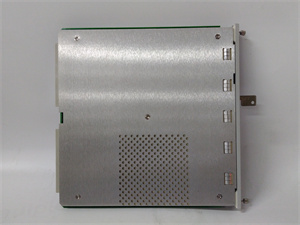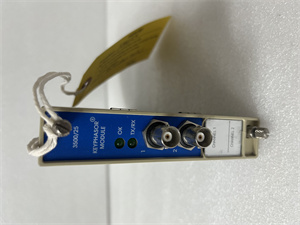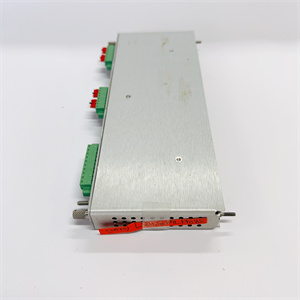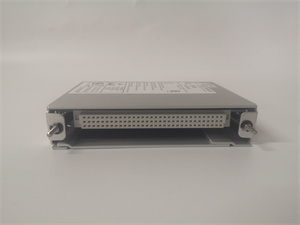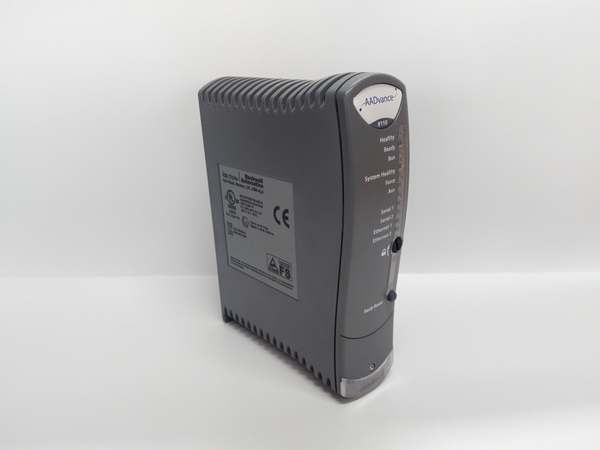
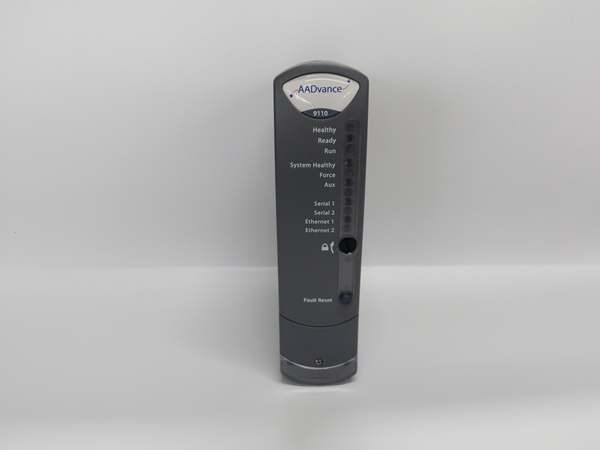
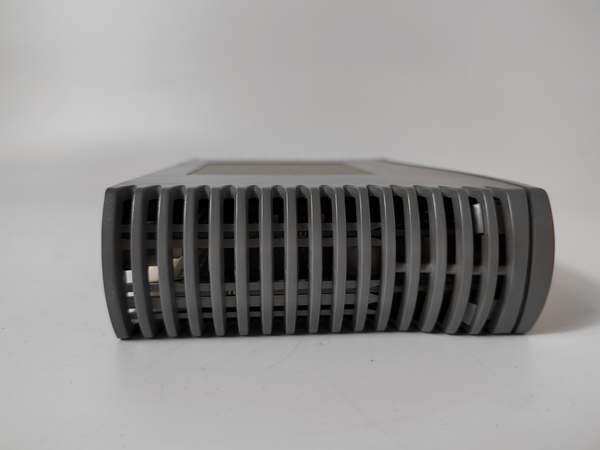
Description
Key Technical Specifications
- Model Number: T9110
- Manufacturer: ICS Triplex (Emerson)
- Redundancy Architecture: Triple Modular Redundancy (TMR) with majority voting logic
- Processor Speed: 800 MHz industrial-grade CPU (dual-core)
- Memory: 2 GB RAM (program/ data storage), 8 GB flash memory (configuration backup)
- Communication Interfaces: 2 x 10/100/1000 Mbps Ethernet ports (Trusted Network), 1 x RS-232 diagnostic port
- I/O Rack Support: Up to 8 Trusted I/O racks (local + remote)
- Operating Temperature: -40°C to 70°C (-40°F to 158°F)
- Power Supply: 20–32 VDC (redundant backplane-powered), 25 W typical power consumption
- Certifications: IEC 61508 SIL 3, ATEX, IECEx, FM, CSA
- Diagnostics: Continuous self-test, TMR leg health monitoring, communication link status, configuration mismatch detection
- Physical Form Factor: Single-slot rack-mounted, 266 mm (H) × 31 mm (W) × 303 mm (D), 1.3 kg (2.87 lbs)
- Hot-Swap Capability: Supported (no system shutdown for module replacement in redundant configuration)

ICS Triplex T9110
Field Application & Problem Solved
In high-risk industrial environments—refineries, chemical plants, and power generation facilities—the single biggest risk is a controller failure that disables the safety instrumented system (SIS). Legacy non-redundant controllers can trigger unplanned shutdowns costing $100k+ per hour, or worse, fail to respond to a hazard (e.g., a pressure spike in a reactor) leading to catastrophic events. This module solves that problem with its TMR architecture: three independent processor cores run the same safety logic simultaneously, vote on every output decision, and ignore faults in a single core. If one leg fails, the other two continue operating without interrupting the SIS—no downtime, no safety gaps.
You’ll find this module at the heart of two critical systems: first, refinery emergency shutdown (ESD) systems, where it processes signals from gas detectors, pressure transmitters, and flame sensors to trigger valve closures and pump shutdowns during a leak or fire. Second, in combined-cycle power plants, it controls boiler safety systems—monitoring water levels, flue gas temperatures, and turbine vibrations to prevent explosions or equipment damage. In both cases, the T9110 is the “brain” that turns sensor data into life-saving safety actions.
Its core value is high availability and regulatory compliance. Unlike dual-redundant controllers that require a failover (and a brief downtime window), the T9110’s TMR design eliminates failover delays entirely—it’s fault-tolerant, not just fault-resistant. It also stores redundant configuration backups in flash memory, so a power loss won’t erase critical safety logic. For plant operators, this means meeting SIL 3 compliance requirements without sacrificing production uptime—a win-win that’s hard to achieve with legacy controllers.
Installation & Maintenance Pitfalls (Expert Tips)
Configuration Backup is Non-Negotiable Before Swap
Rookies often yank a failed T9110 module and install a new one without backing up the configuration. This is a disaster— the new module will have a default configuration, and the SIS will go into a fault state that requires a full system reset. Always back up the controller configuration to a USB drive or the Trusted software server before any maintenance. When installing a replacement, restore the configuration before putting the module into service—this ensures the safety logic matches the plant’s current operating parameters.
TMR Leg Synchronization Can’t Be Rushed
After replacing a module, the new T9110 needs to sync its logic and memory with the other two TMR legs. Rookies will often force the module into “active” mode before synchronization is complete, which causes a configuration mismatch fault. Let the synchronization run its course— it takes 5–10 minutes, depending on the size of the safety program. Monitor the front-panel LEDs: when all three legs show a steady green “sync” light, the module is ready. Rushing this step will lead to unnecessary downtime.
Ethernet Port Termination Resistors Are Critical
The T9110’s Ethernet ports for the Trusted Network require 120-ohm termination resistors at the end of the network segment. A common mistake is forgetting these resistors or installing them in the middle of the segment—this causes signal reflection and intermittent communication drops between the processor and I/O racks. These drops are hard to trace because they’re not constant—they show up during peak production times when the plant can least afford them. Always verify termination resistor placement with a network tester before energizing the system.
Environmental Sealing Isn’t Optional in Corrosive Areas
In coastal refineries or chemical plants with high sulfur content, the T9110’s circuit boards will corrode if the rack isn’t properly sealed. Rookies often leave the rack door open for “easy access” during maintenance, exposing the module to corrosive gases. Use a NEMA 4X rack enclosure in these environments, and install a desiccant pack inside the rack to absorb moisture. Check the desiccant monthly—if it turns pink, replace it immediately. Corrosion-related failures are not covered under warranty, and they’re 100% preventable.
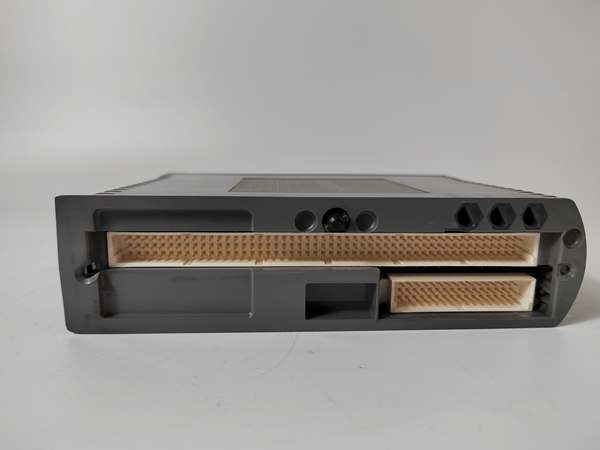
ICS Triplex T9110
Technical Deep Dive & Overview
The T9110 is the core processor module for the Trusted AAdvance SIS platform, built from the ground up for fault tolerance. At its heart are three identical industrial-grade CPU cores, each running a copy of the plant’s safety logic. The TMR voting logic compares the output of each core 1000 times per second—if one core produces a different result than the other two, it’s flagged as a fault and ignored. This means a single core can fail (due to a power surge, component wear, or software glitch) without affecting the SIS’s ability to respond to hazards.
The module’s dual-core CPU handles two critical tasks: running the safety logic and managing communication with the I/O racks. The safety logic runs on one core, while the other core handles data transfer to and from the Trusted Network—this separation prevents communication traffic from slowing down the safety program execution. The 8 GB flash memory stores redundant copies of the safety configuration, so even if the RAM is corrupted by a power spike, the module can restore the configuration on reboot.
The T9110 communicates with I/O racks via a proprietary, redundant backplane protocol that has a latency of less than 1 ms. This low latency is critical for ESD systems, where a 100 ms delay could mean the difference between a minor leak and a major explosion. The module’s built-in diagnostics continuously monitor each TMR leg’s health, logging faults with a 1 ms time stamp for root cause analysis. If a leg fails, the module sends an alarm to the plant’s HMI, but continues operating—maintenance can be scheduled during the next planned outage, not during a crisis.
Unlike general-purpose PLC CPUs, the T9110 is not designed for process control—it’s a safety-specific processor that only runs safety logic. This specialization is key to its SIL 3 certification: it doesn’t have unnecessary features that could introduce vulnerabilities. For field service engineers, this means the module is reliable, predictable, and easy to troubleshoot—qualities that are worth their weight in gold in high-risk industrial environments.