Description
Key Technical Specifications
- Excellent Fault-Tolerant and Safety Performance: The core advantage of this module lies in its TMR triple modular redundancy architecture. When a single channel or component fails, the system can still maintain normal operation without causing production interruptions or safety accidents. Its SIL 3 certification fully meets the safety requirements of safety-critical industrial scenarios. Meanwhile, it has strong anti-interference capabilities, with a surge voltage resistance of up to 4kV and noise suppression capacity of 500V/μs, which can effectively resist electrical interference in complex industrial environments.
- Stable Industrial – Level Environmental Adaptability: It has excellent environmental adaptability. Its working temperature can reach -40°C to +70°C, and the storage temperature ranges from -55°C to +85°C. It can work stably in extremely cold or high-temperature industrial sites such as outdoor oil extraction platforms and chemical plant workshops. In addition, it can operate normally in an environment with 5%-95% non-condensing humidity, which is applicable to various humid industrial scenarios such as water treatment plants.
- Flexible Configuration and Expansion Capabilities: Although there are differences in the number of channels in different data (such as 8, 32, 40 channels, etc.), it generally has multiple digital input channels that can simultaneously collect signals from multiple field sensors and switches. The module adopts a modular design, which is convenient for rack mounting. It can be seamlessly integrated with the ICS Triplex Trusted series system and supports flexible expansion according to the scale of industrial control systems to meet the needs of different project scales.
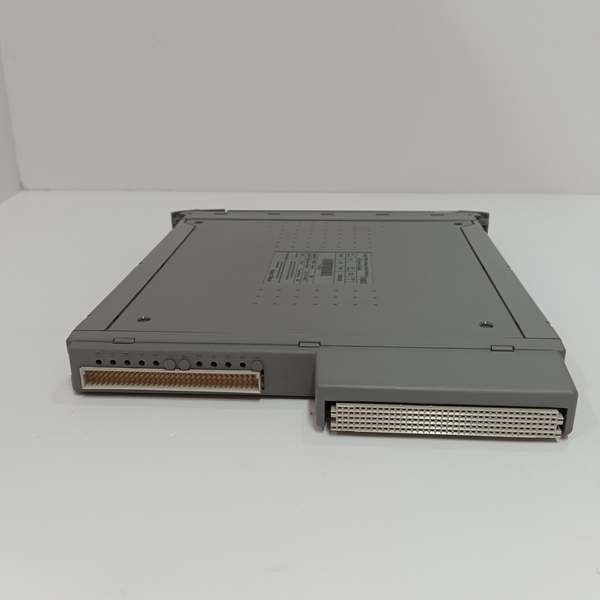
ICS Triplex T8480C
Field Application & Problem Solved
- Oil and Gas Field Emergency Shutdown System: In oil and gas exploitation and transportation sites, gas leakage and pipeline overpressure are common dangerous situations. The T8480C module can collect signals from gas sensors and pressure switches in real time. Its TMR architecture and SIL 3 safety performance ensure that there is no signal loss or transmission delay even if a channel fails. It can promptly transmit dangerous signals to the control center, triggering the emergency shutdown system to operate quickly and avoiding explosions and other major accidents.
- Thermal Power Plant Boiler Safety Control System: The boiler is the core equipment of a thermal power plant, and its operating status is related to the stability of power generation. The T8480C module can be used to collect digital signals such as the temperature of the boiler furnace and the opening degree of the safety valve. Its strong anti-interference ability can resist the electromagnetic interference generated by high-power equipment in the power plant. The accurate signal acquisition ensures that the control system can timely find abnormal conditions and adjust parameters or start protection measures, preventing boiler explosion and other accidents.
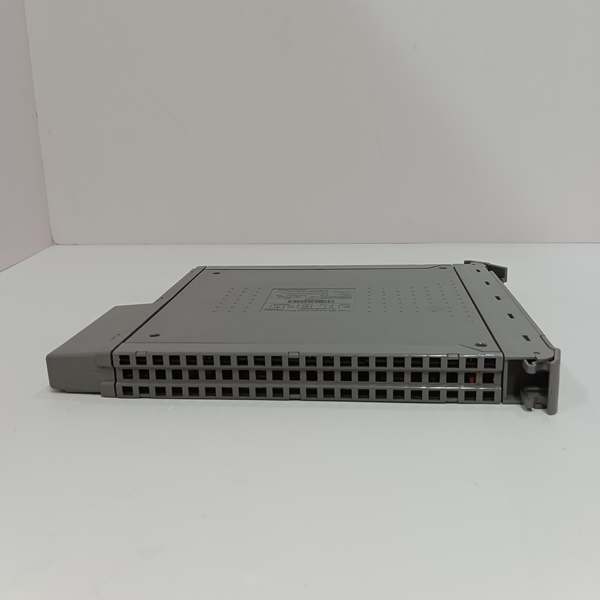
ICS Triplex T8480C
Installation & Maintenance Pitfalls (Expert Tips)
- Standardize Rack Installation: The module needs to be installed on the dedicated rack of the ICS Triplex Trusted series. During installation, the size of the rack should be matched according to the module dimensions (such as 144mm x 68mm x 25mm in some specifications). Avoid forced installation due to size mismatch, which may damage the module interface. At the same time, ensure that the installation is firm to prevent poor contact caused by equipment vibration during operation.
- Pay Attention to Voltage Matching: The module uses 24VDC as the operating voltage. When connecting the power supply, strictly confirm the voltage specification. Do not mistakenly connect it to 110V or 220V AC power supply, otherwise, the internal components of the module will be burned out. It is recommended to use a stable redundant power supply to further improve the stability of the module.
- Regularly Detect Isolation Performance: Long-term use will lead to the decline of the module’s insulation performance due to factors such as dust accumulation and component aging. It is necessary to regularly detect the isolation voltage of each channel. Once it is found that the isolation voltage cannot meet the standard requirements, the module should be cleaned or replaced in time to avoid signal distortion or module short circuit caused by insufficient isolation performance.