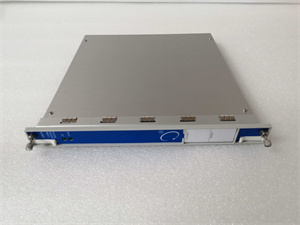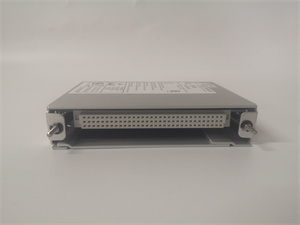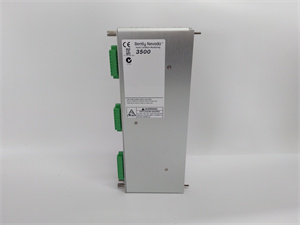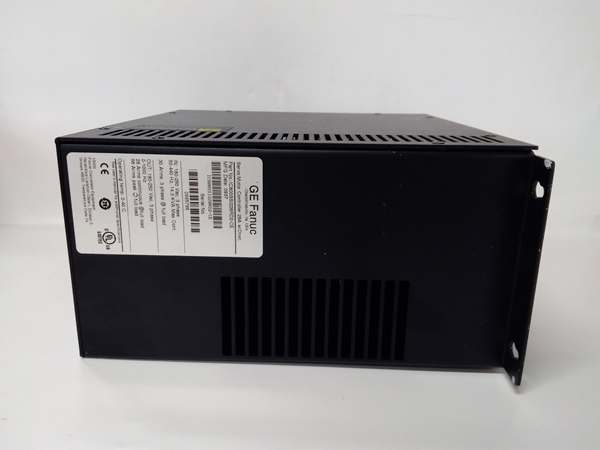
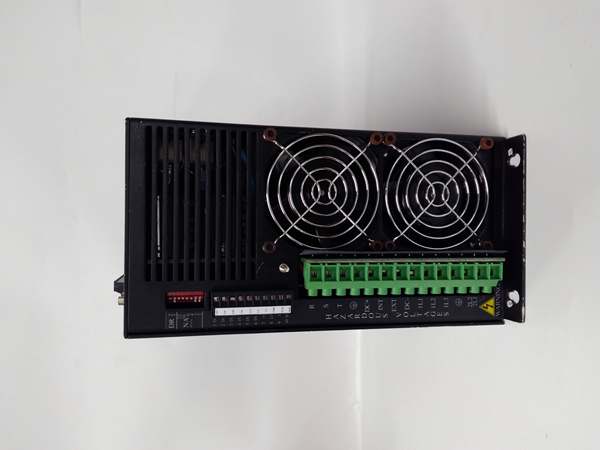
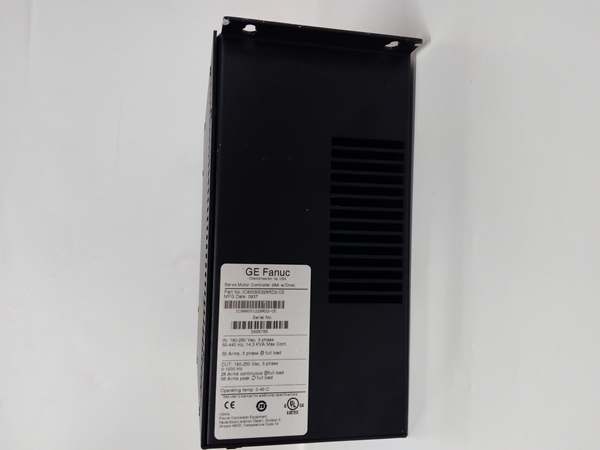
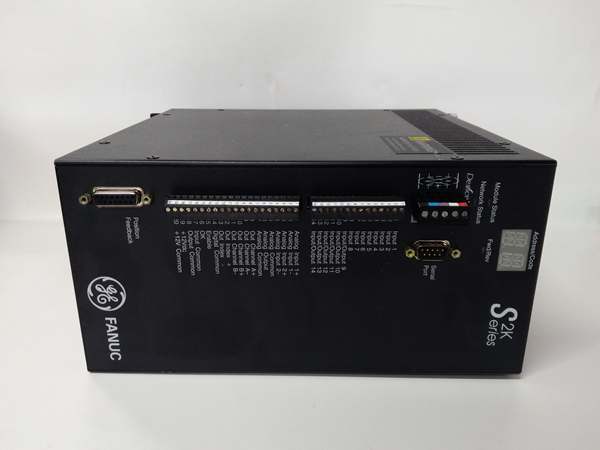
Description
Hard-Numbers: Technical Specifications
-
Rated Power: 228W
-
Input Voltage: 24VDC (primary)
, 230VAC variants available
-
Output Current: 9.5A continuous, 19A peak (2× overload)
-
Control Modes: Position, velocity, torque (programmable via Motion Developer software)
-
Position Resolution: 20-bit (1,048,576 counts/revolution)
-
Speed Resolution: 0.1 rpm
-
Communication: DeviceNet (primary), RS-232/RS-485 (configuration)
-
Motor Compatibility: GE Fanuc S-Series servo motors (30W-5kW range)
-
Feedback: Encoder-based (resolver optional), supports CMR/FRC configuration
-
Protection: Overcurrent, overvoltage, overtemperature, short circuit
-
Operating Temperature: -10°C to +60°C
, -40°C to +85°C (extended variants)
-
Protection Class: IP65 (dust/water resistant)
-
Dimensions: 190mm × 70mm × 30mm
or 100mm × 50mm × 20mm
(conflicting specs)
-
Weight: 1.5 kg
or 0.3 kg
(conflicting)
-
Programming: Motion Developer software (Windows-based)

GE IC800SSI228RD2
The Real-World Problem It Solves
You know the scenario: a packaging line that can’t maintain registration because the old stepper motor stalls under load, or a CNC machine with 12-bit position resolution that leaves visible tool marks on precision parts. The IC800SSI228RD2 eliminates these headaches with true servo control—20-bit resolution (1 million counts per revolution), closed-loop position feedback, and 19A peak current for rapid acceleration. Unlike simple VFDs, this is a full servo amplifier with embedded motion control, handling complex profiles (S-curve, trapezoidal) without burdening your PLC.
Where you’ll typically find it:
-
CNC machining centers controlling axis servos (X/Y/Z table positioning)
-
Robotic pick-and-place systems requiring precise path control
-
Packaging machinery (flow wrappers, cartoners) for registration and synchronization
-
Automated guided vehicles (AGVs) and material handling conveyors
Bottom line: It transforms imprecise open-loop motion into closed-loop servo control with enough resolution and torque response for high-speed, high-accuracy industrial automation.
Hardware Architecture & Under-the-Hood Logic
The IC800SSI228RD2 is a servo amplifier with built-in motion control intelligence. It’s not just a power stage—it contains the servo control algorithms, position/velocity loop closures, and communication protocol handlers. The controller receives high-level commands (move to position, run at velocity) via DeviceNet or internal programming, then handles the low-level current/torque control to the motor in real-time.
Signal flow and control logic:
-
Command Input: DeviceNet network or internal Motion Developer program sends target position/velocity profiles to the controller’s trajectory generator
-
Trajectory Planning: The embedded processor calculates S-curve or trapezoidal motion profiles with jerk limiting to minimize mechanical stress
-
Position Loop: Encoder feedback (20-bit resolution) compares actual position to commanded position; the PID servo loop calculates required velocity corrections
-
Velocity/Current Loop: Inner control loops regulate motor speed and torque current (9.5A continuous, 19A peak) through PWM switching of the IGBT output stage
-
Motor Drive: Three-phase PWM output drives the servo motor with variable voltage/frequency; current sensors provide closed-loop torque control
GE IC800SSI228RD2
Field Service Pitfalls: What Rookies Get Wrong
Treating This Like a VFD Rookies see “motor controller” and configure it like a variable frequency drive—ramp times, V/Hz curves, slip compensation. Servo control is fundamentally different. The IC800SSI228RD2 requires encoder feedback for closed-loop operation, and parameters like CMR (Control Motor Resolution) and FRC (Feedback Resolution Counts) must match the motor’s actual encoder lines
.
Field Rule: Never power up without the encoder connected. Use the MOTORSET command in Motion Developer to automatically calculate CMR and CMO (Control Motor Offset) parameters. Setting CMR=1 forces FRC=10000 for GE S-Series motors—verify this matches your encoder resolution or the position scaling will be wrong
.
Ignoring the DeviceNet MAC ID The controller ships with default DeviceNet MAC ID settings. Rookies install multiple units on the same network without changing IDs, causing communication collisions and “DeviceNet Offline” faults.
Quick Fix: Set unique MAC IDs (0-63) for each IC800SSI228RD2 before connecting to the DeviceNet trunk. Use the rotary switches or Motion Developer software—document the ID mapping on the cabinet door. Verify the network termination resistors (121Ω) are present at both ends of the DeviceNet trunk; missing terminators cause intermittent communication faults that look like servo tuning issues.
Forgetting Brake Wiring S-Series servo motors often have 24VDC holding brakes that must release before motion. Rookies wire the brake to the controller’s digital output without checking current capacity (brakes draw 0.5-1A), overloading the I/O.
Field Rule: The IC800SSI228RD2 has dedicated brake control outputs rated for motor brakes—use these, not general-purpose I/O. Verify brake voltage (24VDC) and current; if the brake doesn’t release, the motor will fault on “Following Error” or “Overcurrent” because it’s fighting the brake. Test brake operation manually before tuning the servo loops.