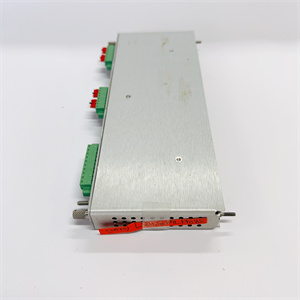
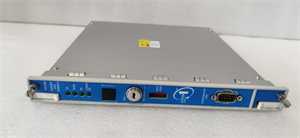
Description
Key Technical Specifications
- Model Number: 8U-TCNT01
- Manufacturer: Honeywell Process Solutions
- Counter Channels: 4 independent, isolated high-speed pulse input channels
- Max Input Frequency: 1MHz per channel (supports high-speed encoders and flow meters)
- Input Type: 24VDC sink/source configurable (edge-triggered: rising, falling, or both edges selectable)
- Input Voltage Range: 18–32VDC (operational); High = >15VDC, Low = <9VDC
- Power Supply: Dual redundant 24VDC inputs, 0.5A max total current draw
- Isolation Rating: 2500V AC (field-to-logic; 1-minute dielectric test); 500V AC (channel-to-channel)
- Hot-Swap Capability: Yes (supports module replacement without HC900 controller shutdown)
- Operating Temperature: -20°C to +60°C (-4°F to +140°F)
- Storage Temperature: -40°C to +85°C (-40°F to +185°F)
- Enclosure Rating: IP20 (rack-mounted for control cabinet installation)
- Certifications: UL 508, CSA C22.2 No. 142, CE, ATEX Zone 2 compliant
- Diagnostic Capabilities: Per-channel open-circuit, short-circuit, over-frequency, and under-voltage detection
Field Application & Problem Solved
In manufacturing plants, refineries, and material handling facilities running HC900 systems, the biggest challenge with pulse counting is accurately capturing high-speed signals from encoders or flow meters without missing pulses—this leads to incorrect speed, position, or flow rate measurements, which cause product defects or process inefficiencies. Legacy counter modules often max out at 100kHz, making them useless for high-speed equipment like 2000-RPM conveyor belts or turbine flow meters. The 8U-TCNT01 solves this with a 1MHz max input frequency, ensuring it captures every pulse even at extreme speeds.
You’ll find this module in HC900 racks controlling everything from bottle-filling line conveyors (measuring speed to ensure accurate filling) to refinery pipeline flow meters (tracking crude oil throughput) to robotic arm positioners (using encoder pulses to verify precise movements). Its core value is isolation—2500V field-to-logic isolation protects the HC900 controller from high-voltage surges common in industrial environments, while 500V channel-to-channel isolation prevents a shorted flow meter from taking down all four counter channels. Unlike basic counter modules, it also offers selectable edge triggering, so you can count rising edges for encoders or both edges for high-resolution flow measurements.
Another critical problem it addresses is hot-swap capability. In continuous processes like automotive part manufacturing, you can’t shut down the HC900 controller to replace a failed counter module—doing so would halt the production line and cost thousands per minute. The 8U-TCNT01 lets you swap the module while the system runs, with the HC900 holding the last counted value to avoid process disruptions. This feature is a lifesaver during unplanned outages or scheduled turnarounds.

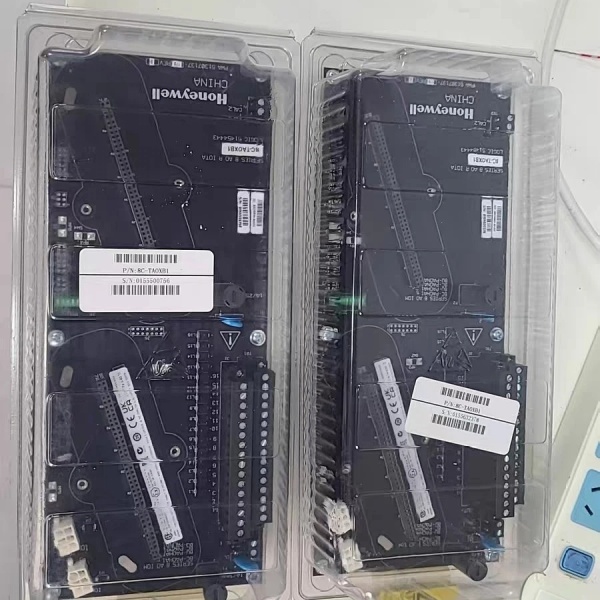
Honeywell 8C-TAOXB1 51307137-175
Installation & Maintenance Pitfalls (Expert Tips)
Edge Trigger Configuration Must Match the Sensor Type
Rookies often leave the edge trigger set to “rising only” for sensors that output pulses on both edges (e.g., quadrature encoders), which cuts the measurement resolution in half. For example, a quadrature encoder that outputs 1000 pulses per revolution (PPR) will only register 500 PPR if you count rising edges alone—this leads to inaccurate robotic arm positioning or conveyor speed measurements. Always match the edge trigger setting to the sensor’s output: use “both edges” for quadrature encoders and “rising edge” for single-output flow meters. Configure this via the HC900 Configuration Software before commissioning.
Cable Shielding Is Mandatory for High-Speed Signals
Pulse signals above 100kHz are extremely susceptible to EMI from nearby VFDs, motors, or high-voltage cables. Using unshielded cable for the 8U-TCNT01’s inputs will cause pulse dropout or false counting—this shows up as erratic flow rate readings or conveyor speed fluctuations on the HMI. Use 22-gauge shielded twisted-pair cable, ground the shield at the module end only (never both ends), and keep the cable at least 12 inches away from VFD wiring. I’ve fixed a refinery’s flow measurement loop that was under-reporting throughput by 20%—the issue was unshielded cable picking up noise from a nearby pump VFD. A shielded cable swap solved the problem instantly.
Redundant Power Inputs Require Separate Fused Circuits
A common mistake is connecting both redundant power inputs to the same 24VDC circuit breaker. If the breaker trips, the module goes offline, and all four counter channels stop counting—this leads to lost process data or uncontrolled equipment speeds. Split the power inputs across two independent, fused circuits: one from the HC900 rack’s power supply and one from a standalone 24VDC unit. During commissioning, test power failover by tripping the primary breaker— the module should continue counting without missing a pulse or triggering a diagnostic fault.
Don’t Ignore Over-Frequency Diagnostic Alerts
The 8U-TCNT01 will trigger an over-frequency alert if the input signal exceeds 1MHz. Techs often dismiss this as a “sensor glitch,” but it usually indicates a problem with the equipment—e.g., a conveyor belt running faster than its rated speed due to a failed speed regulator. Ignoring this alert can lead to equipment damage (e.g., a conveyor belt tearing) or safety hazards (e.g., a robotic arm moving too quickly and colliding with a workpiece). Set up an HMI alarm for over-frequency faults that triggers a process slowdown or shutdown if the condition persists for more than 5 seconds.
Technical Deep Dive & Overview
The Honeywell 8U-TCNT01 is an intelligent high-speed counter module designed for the HC900 Hybrid Control System, optimized for accurate pulse counting in harsh industrial environments. At its core, each of the four channels uses a dedicated high-speed counter chip and optocoupler to achieve 1MHz frequency capture and 2500V field-to-logic isolation. The optocouplers block high-voltage transients from reaching the module’s logic circuit, while the counter chips use hardware-based counting (not software polling) to eliminate pulse dropout even at maximum frequency.
The module’s sink/source and edge trigger configurations are handled via firmware—no physical DIP switches to misconfigure—and settings are stored in non-volatile memory, so they survive power cycles. The dual redundant power inputs feed into a built-in power management circuit that switches between primary and secondary supplies in less than 1ms, ensuring uninterrupted counting during power glitches.
Its diagnostic engine is a standout feature: it monitors each channel for open circuits, short circuits, under-voltage, and over-frequency conditions. Diagnostic data is sent to the HC900 controller in real time, with clear fault messages displayed on the HMI (e.g., “Channel 3: Over-Frequency >1MHz”). Unlike basic counter modules, it doesn’t require external test equipment to troubleshoot—you can identify faulty sensors or wiring from the control room.
In the field, this module’s strength is its reliability and precision. It has no moving parts to wear out, and its hardware-based counting ensures accuracy even in high-EMI environments. With proper installation (shielded cable, correct edge trigger settings, redundant power), it runs for 8–10 years without unplanned failures. For HC900 users, it’s the go-to counter module for any application where high-speed pulse counting and diagnostic visibility are non-negotiable.