Description
Hard-Numbers: Technical Specifications
- Channel Count: 64 digital input points, organized as 8 groups of 8
- Input Voltage Range: 24 VDC nominal (contact sense, negative true)
- Isolation Rating: 1000V DC channel-to-backplane galvanic isolation
- VME Bus Protocol: VMEbus Rev C.1, A16/A24 addressing, D08/D16 slave
- Input Filter: Jumper-selectable no filter / 10ms debounce per bank
- Operating Temperature: 0°C to +60°C (industrial standard)
- Onboard Diagnostics: No dedicated BIT; status read via VME bus registers
- Power Draw: 6.5W typical, 1.3A @ 5 VDC backplane power
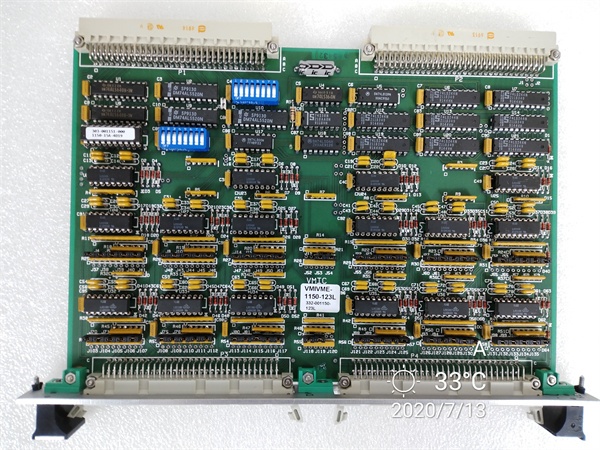
- Connector Type: Dual front-panel 50-pin ribbon connectors for field wiring
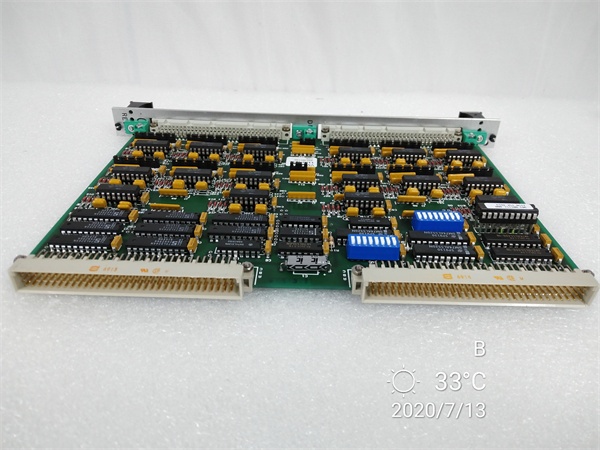
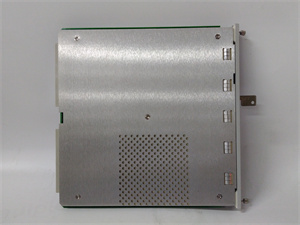
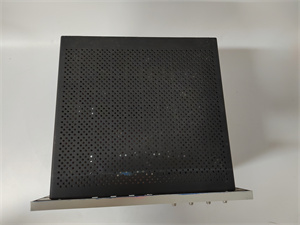
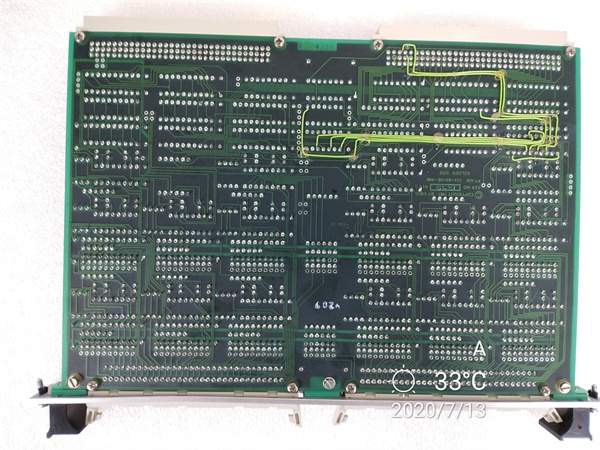
GE VMIVME-1150
The Real-World Problem It Solves
Unisolated input cards fail fast in power plants and refineries where 24VDC contact signals ride on noisy, ungrounded cables. Ground loops and common-mode voltage cause false trips and unplanned downtime.
Where you’ll typically find it:
- GE Mark VI/VIe turbine control racks for E-stop, valve limit, and auxiliary contact inputs
- Fossil power plant balance-of-plant cabinets for pump, fan, and breaker status monitoring
- Refinery process DCS racks for interlock and safety system discrete sensing
Bottom line: It delivers 64 isolated inputs in a single VME slot to eliminate external signal conditioners and ground loop issues.
Hardware Architecture & Under-the-Hood Logic
This board is a VMEbus slave with no local processor, relying on optocoupler arrays to isolate field noise from the control backplane.
- Field contact closures apply 24VDC to individual optocoupler LEDs.
- Opto outputs switch to pull-down logic, creating a clean 5V digital state.
- Buffered states feed into 8×8 input register banks, grouped by jumper settings.
- VME bus controller reads register data via polling; no interrupt support.
- Jumper banks configure filter time and input polarity (negative true standard).
Field Service Pitfalls: What Rookies Get Wrong
Incorrect Jumper Polarity & Filter SettingsNew techs mix polarity (true/false) and filter settings across banks. Mismatched jumpers cause floating inputs, missed pulses, and erratic status updates.
- Field Rule: Set all banks to match field wiring (negative true, 10ms filter standard); label jumper settings on card edge.
Overlooking Ribbon Connector Crimp QualityPoorly crimped 50-pin ribbon cables work loose from vibration. Intermittent connections cause random channel dropouts that mimic controller faults.
- Quick Fix: Use only high-quality, strain-relieved ribbon cables; torque connector screws to 0.5Nm and tie cables to cabinet rails.
Ignoring Common-Mode Voltage BuildupUnbalanced field grounds push common-mode voltage across unshielded cables. Over time, this degrades optocouplers and leads to no-load channel failure.
- Field Rule: Use twisted, shielded cable; bond shield at cabinet end only; never mix grounding systems between field and cabinet.
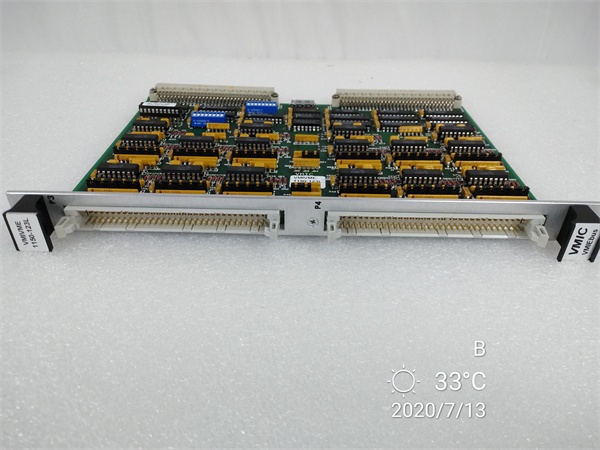
GE VMIVME-1150
Commercial Availability & Pricing Note
Please note: The listed price is for reference only and is not binding. Final pricing and terms are subject to negotiation based on current market conditions and availability.