
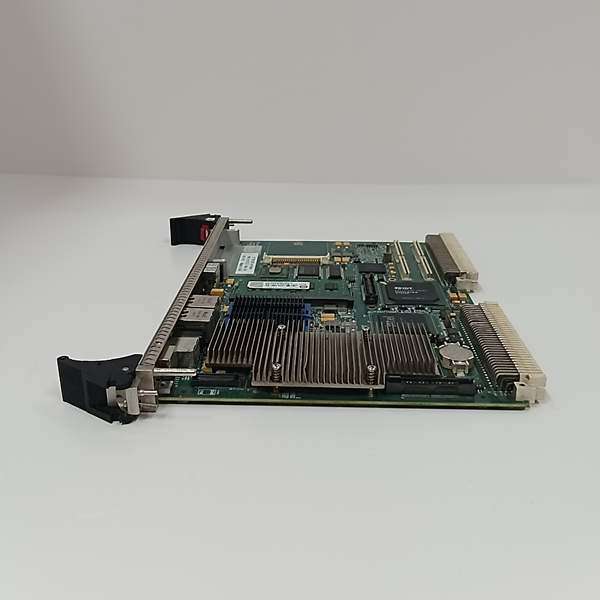
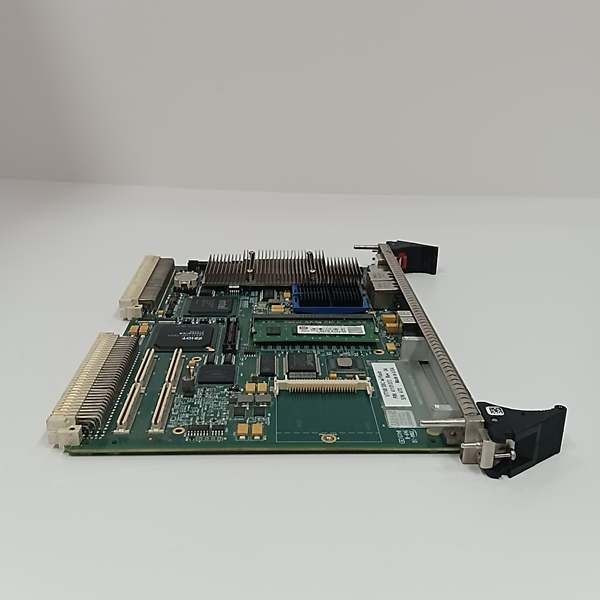
Description
Hard-Numbers: Technical Specifications
- Series: GE Fanuc Intelligent Platforms / Abaco Systems VME Series
- Manufacturer: GE Fanuc / Abaco Systems (formerly GE Intelligent Platforms)
- Form Factor: 6U VME (VME64X compliant)
- Bus Interface Chip: Tundra Universe II VMEbus bridge
- Processor Options:
- Intel Core 2 Duo: Up to 2.16 GHz
- Intel Celeron M: 1.07 GHz
- Cache Memory:
- Core 2 Duo: 4 MB L2 cache
- Celeron M: 1 MB L2 cache
- System/Memory Bus Speed:
- Core 2 Duo: 667 MHz
- Celeron M: 533 MHz
- Memory: Up to 2 GB DDR2 SDRAM via single SODIMM
- Storage: Up to 8 GB bootable CompactFlash (configurable as boot device via BIOS)
- Expansion Slots:
- 1x PCI-X PMC site (133 MHz)
- Board-to-board connector for PMC237CM1/V expansion boards (adds 3x additional PMC sites)
- Networking:
- Dual Gigabit Ethernet ports (Intel 82571 controller)
- RJ45 connectors on front panel
- PXE network boot support
- I/O Interfaces:
- 2x Serial ports (16550 compatible, 16-byte FIFO, up to 115 Kbaud):
- COM1: Front panel DB-9 connector
- COM2: Routed to P2 backplane connector
- 4x USB 2.0 ports (2 on front panel, 2 on P2 backplane)
- 2x SATA ports
- PS/2 keyboard/mouse support on front panel
- SVGA video output on front panel
- 2x Serial ports (16550 compatible, 16-byte FIFO, up to 115 Kbaud):
- VMEbus Interface:
- VME64 mode support: A32/A24/D32/D08, MBLT64/BLT32
- Hardware byte swapping
- Enhanced bus error handling
- Embedded Features:
- 32 KB non-volatile SRAM (NVRAM) for data retention during power-off
- Programmable Watchdog Timer for system reset on software failure
- 4 user-programmable timers (2x 16-bit, 2x 32-bit)
- Chipset: Intel 945GME Express Chipset with integrated graphics
- Operating System Support: Windows XP, VxWorks, Linux
- AXIS Support: Yes (multiprocessor task support)
- Dimensions: 28 cm × 15 cm × 5 cm (6U form factor)
- Weight: 0.5 kg
- Temperature Range:
- Commercial: 0°C to +60°C
- Extended: -40°C to +85°C (Celeron M option allows 20°C higher upper limit)
- Power Supply: 24V DC
- Protection Rating: IP20 (indoor/enclosed use)
- Product Lifecycle: Entered Restricted Production Phase (RPP) on September 29, 2017 (Abaco Systems)
The Real-World Problem It Solves
Industrial and defense applications demand high-performance computing platforms that integrate seamlessly with legacy VMEbus infrastructure while supporting modern I/O requirements. General-purpose industrial PCs lack the ruggedization and VMEbus compatibility needed for embedded applications, while traditional VME SBCs often suffer from limited processing power and expansion flexibility. The V7768-320001 bridges this gap by combining Intel Core 2 Duo dual-core performance (up to 2.16 GHz) with VME64X bus compliance, dual Gigabit Ethernet, and versatile PMC expansion. This enables legacy VME system modernization without complete replacement, supporting data acquisition, real-time control, and high-speed communication in demanding environments.
Where you’ll typically find it:
- Military and defense systems (radar processing, sonar, electronic warfare)
- Aerospace avionics and ground support equipment
- Power generation control systems (gas turbines, SCADA)
- Industrial automation and manufacturing cells
- Telecommunications infrastructure
- Test and measurement equipment
Bottom line: It delivers Intel dual-core computing power within VMEbus architecture, enabling system modernization with rich I/O and expansion options for demanding embedded applications.
Hardware Architecture & Under-the-Hood Logic
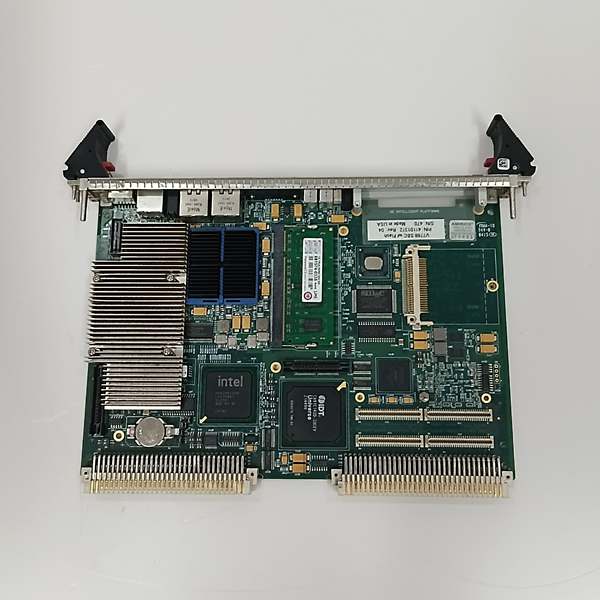
The V7768-320001 is a 6U VME single-board computer based on Intel’s Core 2 Duo architecture, designed for high-performance embedded applications with extensive I/O and expansion capabilities.
-
Processor Subsystem:
- CPU Options: Factory-populated with Intel Core 2 Duo (up to 2.16 GHz) or Intel Celeron M (1.07 GHz)
- Cache: 4 MB L2 cache (Core 2 Duo) or 1 MB L2 cache (Celeron M)
- System Bus: 667 MHz (Core 2 Duo) or 533 MHz (Celeron M) front-side bus
- Chipset: Intel 945GME Express Chipset with integrated graphics controller (GMCH)
-
Memory Subsystem:
- System Memory: Up to 2 GB DDR2 SDRAM via single SODIMM slot
- Non-Volatile Memory: 32 KB SRAM mapped to PCI address space for data retention during power loss
- BIOS: System BIOS and Video BIOS stored in programmable flash memory
-
VMEbus Interface:
- Bridge Chip: Tundra Universe II VMEbus bridge provides VME64 mode support
- Addressing Modes: A32/A24/D32/D08, MBLT64/BLT32
- Features: Hardware byte swapping for big/little endian conversion, enhanced bus error handling
- Backplane Connectors: P1 (32-pin), P2 (96-pin), P0 (optional for power)
-
Networking:
- Ethernet Controller: Dual Intel 82571 Gigabit Ethernet controllers
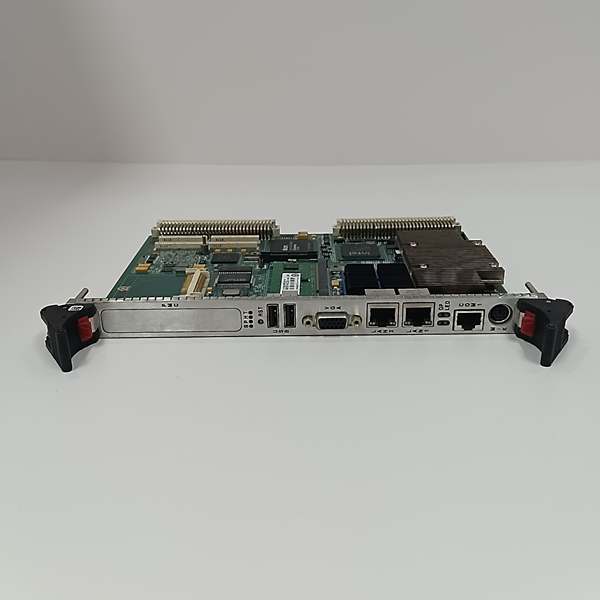
- Physical Interface: Two RJ45 connectors on front panel
- Features: 10/100/1000Base-T support, PXE network boot capability
-
I/O Interfaces:
- Serial Ports: Two 16550-compatible UARTs with 16-byte FIFO buffers
- COM1: DB-9 connector on front panel
- COM2: Routed to P2 backplane connector (46-pin per VITA35, P4V2-46dz)
- USB Ports: Four USB 2.0 ports (Hi-Speed 480 Mbps)
- Two on front panel, two on P2 backplane
- Features: Isochronous data transfer, asynchronous messaging, hot-plug support
- SATA Storage: Two SATA ports for mass storage connection
- CompactFlash: Auxiliary IDE port supports up to 8 GB bootable CompactFlash
- Keyboard/Mouse: PS/2 connector on front panel
- Video: SVGA output controlled by Intel 945GME GMCH
- Serial Ports: Two 16550-compatible UARTs with 16-byte FIFO buffers
-
PMC Expansion:
- PMC Site: One 133 MHz PCI-X PMC expansion slot
- EasyRail Mounting System: Allows PMC installation from exposed top side without removing multi-slot carrier assemblies
- Board-to-Board Connector: Supports PMC237CM1/V expansion board for 3x additional PMC sites
- Total PMC Capacity: Up to 4 PMC sites (1 native + 3 via PMC237CM1/V)
-
Embedded Features:
- Watchdog Timer: Programmable WDT resets system on software integrity failure
- User Timers: Four programmable timers (2x 16-bit, 2x 32-bit) dedicated to user applications
- AXIS Support: Multiprocessor coordination and synchronization for distributed computing
- Non-Volatile RAM: 32 KB SRAM for critical data retention
-
Power and Environmental:
- Input Power: 24V DC
- Thermal Management: Commercial (0°C to +60°C) and Extended (-40°C to +85°C) temperature options
- Ruggedization: Available conformal coating and extended temperature variants for harsh environments
-
Operating System Support:
- Windows XP: Full support with drivers for all I/O interfaces
- VxWorks: Real-time operating system with Board Support Package (BSP)
- Linux: Open-source OS support with community drivers
-
Product Lifecycle:
- Status: Entered Restricted Production Phase (RPP) on September 29, 2017 (Abaco Systems)
- Longevity Support: Designed for multi-decade program support (typical for defense/aerospace applications)
GE V7768-320001
Field Service Pitfalls: What Rookies Get Wrong
Selecting Wrong Processor Option for EnvironmentRookies choose the Intel Core 2 Duo processor for high-temperature environments without considering thermal constraints. The Celeron M option allows 20°C higher upper operating temperature limit.
- Field Rule: For applications above +60°C ambient temperature, select the Celeron M processor option (1.07 GHz, 1 MB cache, 533 MHz bus) with extended temperature rating (-40°C to +85°C).
Misconfiguring VMEbus EndianessInstallers configure VMEbus byte swapping incorrectly, causing data corruption when communicating with big-endian VME devices or legacy systems.
- Quick Fix: Verify endianness requirements of connected VME modules. Configure the VMECOMM MEC_SEL register (offset 0x00 from BAR0) for Big-Endian or Little-Endian mode per system requirements.
Overloading PMC Expansion SitesEngineers populate all PMC sites with high-power PMC modules without calculating total power consumption, causing voltage drop or system instability.
- Field Rule: Calculate total power consumption of all PMC modules and verify against V7768-320001 power budget (24V DC input). Use PMC237CM1/V expansion board with adequate power delivery for high-current PMC cards.
Incorrect CompactFlash ConfigurationTechnicians fail to configure CompactFlash as the boot device in BIOS, preventing system boot from flash storage.
- Quick Fix: Access BIOS setup during startup and select CompactFlash as the primary boot device. Ensure CompactFlash is properly formatted with supported file system (FAT32 typically) and contains a valid OS image.
Ignoring EasyRail PMC Mounting RequirementsField personnel attempt PMC installation without using the EasyRail system, removing multi-slot carrier assemblies and increasing configuration time.
- Field Rule: Utilize the EasyRail PMC mounting system which allows PMC installation from the exposed top side. No need to detach multi-slot carrier assemblies, significantly reducing configuration time and risk of damage.
Thermal Derating Neglect in Extended Temperature ApplicationsInstallers deploy extended temperature boards in high-ambient environments without adequate airflow, causing thermal throttling or shutdown.
- Quick Fix: Ensure proper ventilation in enclosures for extended temperature operation. Monitor board temperature if available via onboard sensors. Consider active cooling (fans) if ambient temperatures approach +70°C.
Improper VMEbus Addressing ConfigurationSystem integrators configure incorrect addressing modes (A32/A24/D32/D08) for specific VME modules, causing communication failures.
- Field Rule: Verify VMEbus addressing requirements of all connected modules. Configure Tundra Universe II bridge registers for appropriate addressing mode and data width (D32/D08) per system architecture.
Neglecting Watchdog Timer ConfigurationDevelopers fail to implement watchdog timer in software, leaving the system vulnerable to hangs without automatic recovery.
- Field Rule: Configure the Watchdog Timer (WDT) Control Status Register (WCSR) in application software. Set appropriate timeout values and enable WDT to ensure automatic system reset if software integrity fails.
OS Driver Installation IssuesTechnicians install operating systems without proper drivers for VMEbus bridge, Ethernet, or PMC expansion boards, causing limited functionality.
- Quick Fix: Obtain and install vendor-provided drivers for VxWorks BSP, Windows XP, or Linux. Ensure Tundra Universe II bridge drivers, Intel Ethernet drivers, and PMC-specific drivers are installed and configured correctly.
Insufficient Memory ConfigurationUsers select undersized SODIMM modules (e.g., 512 MB or 1 GB) for memory-intensive applications, causing performance degradation.
- Field Rule: Install maximum supported 2 GB DDR2 SDRAM via single SODIMM for memory-intensive applications. Ensure memory modules meet speed and timing specifications (DDR2-667 for Core 2 Duo, DDR2-533 for Celeron M).
Forgetting BIOS Settings for Network BootAdministrators attempt PXE network boot without configuring BIOS network boot options, preventing remote OS deployment.
- Quick Fix: Access BIOS setup and enable network boot as primary or secondary boot device. Configure Intel 82571 Ethernet controller for PXE boot support. Verify network infrastructure (DHCP/TFTP server) is properly configured.
Sources:
- Abaco Systems V7768 Hardware Reference Manual (Publication No. 500-9300007768-000 Rev. H.0)
- GE Fanuc Intelligent Platforms V7768 Product Documentation
- Abaco Systems VME SBC Product Selection Guide
- Industrial automation component suppliers (6G Controls, JLPLC, Saulbonnie, Changxin Control)
Please note: The listed price is for reference only and is not binding. Final pricing and terms are subject to negotiation based on current market conditions and availability.


