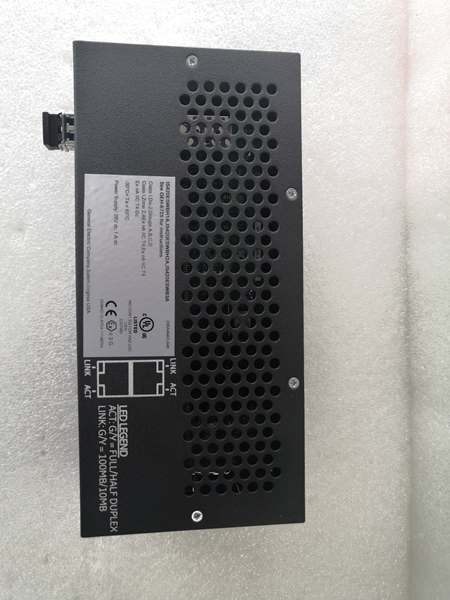
Description
Key Technical Specifications
-
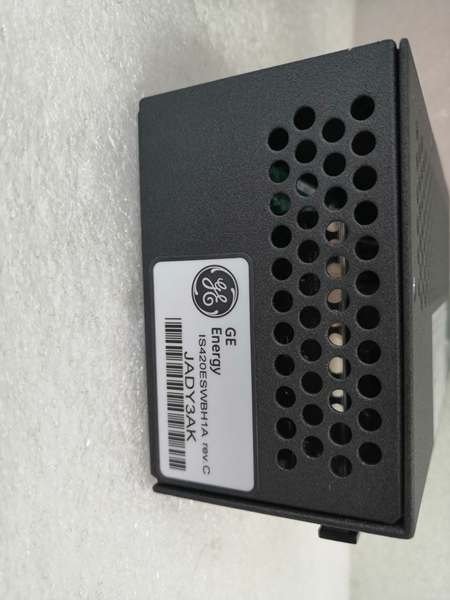
Model Number: IS420ESWBH1A
-
Manufacturer: GE (General Electric)
-
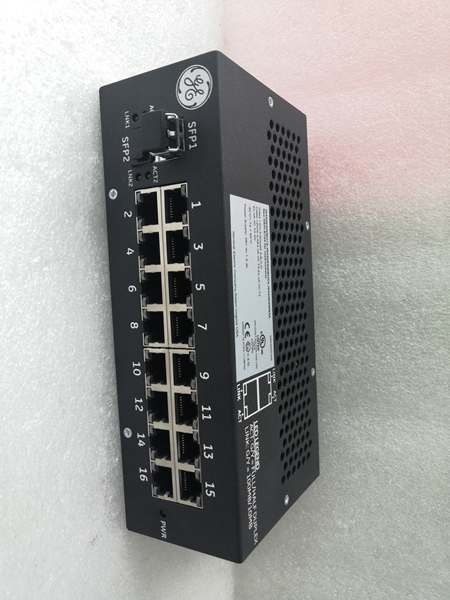
Copper Ports: 16 × 10/100Base-TX RJ45, auto-MDIX, full/half duplex, status LEDs
-
Fiber Port: 1 × 100Base-FX multi-mode LC, 2 km reach
-
Data Rate: 10/100 Mbps auto-negotiate, 256 KB buffer, 4 K MAC table
-
Network Protocol: IONet (GE deterministic Ethernet), IEEE 1588 v2 time-sync ≤ 100 µs
-
Power Supply: 24 VDC (18-36 V) redundant inputs, diode-OR’d, 15 W max
-
Operating Temperature: –40 °C…+70 °C
-
Protection Degree: IP20, fan-less, aluminum housing
-
Dimensions: 162 × 115 × 72 mm, 0.8 kg
-
Mounting: DIN-rail (BVP1/BVP4 clips) or panel plate
-
Certifications: CE, UL, IEC 61131, SIL 2/3 capable

GE IS420ESWBH1A
Field Application & Problem Solved
Gas-turbine skids need a switch that survives 60 °C inside a T-52 auxiliary enclosure and still keeps IONet traffic moving when a copper cable gets crushed by a maintenance cart. The IS420ESWBH1A bolts to the DIN rail—16 copper ports feed local I/O packs, the 100-FX uplink rides fiber back to the control house, and redundant 24 V inputs keep the network alive if one battery string sags. I’ve used these on 7FA combined-cycle units: the switch logs < 1 µs jitter on IEEE 1588, so the triple-redundant controllers stay phase-locked during a transfer-trip test. Value: one rail-mounted box replaces two commercial switches plus a media converter, and you still meet SIL 3 fault-tolerant requirements without managed-switch fluff.
Gas-turbine skids need a switch that survives 60 °C inside a T-52 auxiliary enclosure and still keeps IONet traffic moving when a copper cable gets crushed by a maintenance cart. The IS420ESWBH1A bolts to the DIN rail—16 copper ports feed local I/O packs, the 100-FX uplink rides fiber back to the control house, and redundant 24 V inputs keep the network alive if one battery string sags. I’ve used these on 7FA combined-cycle units: the switch logs < 1 µs jitter on IEEE 1588, so the triple-redundant controllers stay phase-locked during a transfer-trip test. Value: one rail-mounted box replaces two commercial switches plus a media converter, and you still meet SIL 3 fault-tolerant requirements without managed-switch fluff.
Installation & Maintenance Pitfalls (Expert Tips)
Fiber-end cleanliness non-negotiable – 100-FX will flap if the LC ferrule has dust. Swab with alcohol and inspect with a 400× scope before you click it in; otherwise you’ll chase “IONet Sync Lost” at 2 a.m.
Copper port #16 default mirror port – Factory config mirrors port 1 to 16 for diagnostics. If you plug a laptop there and forget, you’ll flood the network with duplicate frames. Disable mirror in ToolboxST before go-live.
Redundant 24 V diodes drop 0.7 V – If you feed A from the main DC bus and B from a separate battery, the lower-voltage source carries the load. Balance both supplies at 27.0 V or the “Active” LED lies about which feed is live.
DIN-rail real-estate – The housing runs warm; leave one empty slot on each side or the internal temp sensor hits 75 °C and throttles switch-fabric speed, giving you 3 % packet loss under burst load.
Fiber-end cleanliness non-negotiable – 100-FX will flap if the LC ferrule has dust. Swab with alcohol and inspect with a 400× scope before you click it in; otherwise you’ll chase “IONet Sync Lost” at 2 a.m.
Copper port #16 default mirror port – Factory config mirrors port 1 to 16 for diagnostics. If you plug a laptop there and forget, you’ll flood the network with duplicate frames. Disable mirror in ToolboxST before go-live.
Redundant 24 V diodes drop 0.7 V – If you feed A from the main DC bus and B from a separate battery, the lower-voltage source carries the load. Balance both supplies at 27.0 V or the “Active” LED lies about which feed is live.
DIN-rail real-estate – The housing runs warm; leave one empty slot on each side or the internal temp sensor hits 75 °C and throttles switch-fabric speed, giving you 3 % packet loss under burst load.
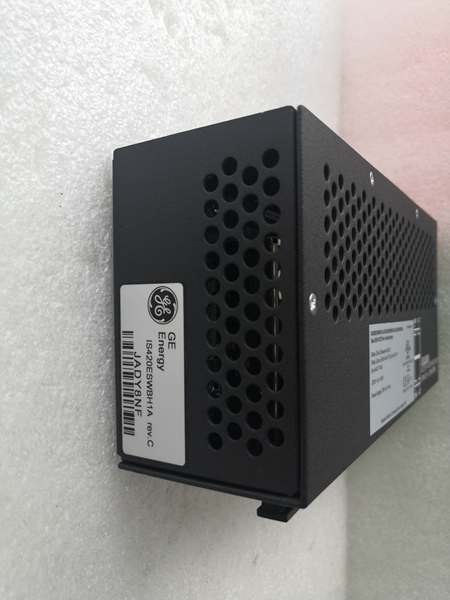
GE IS420ESWBH1A
Technical Deep Dive & Overview
Inside the IS420ESWBH1A is a store-and-forward switch ASIC bolted to an ARM management CPU. The ASIC handles cut-through for IONet multicast frames while the CPU runs a lightweight web server for port stats and VLAN config. IEEE 1588 timestamping is done in hardware—each egress frame gets a 64-bit nanosecond stamp, letting the Mark VIe controllers synchronize within 100 µs over copper or fiber. Redundant power inputs are diode-OR’d with MOSFET ideal-diodes so switch-over is < 1 ms; if both feeds drop the switch keeps its MAC table for 5 ms on internal hold-up caps, preventing IONet re-convergence. No fans, no battery—just a 0.8 kg block you can swap hot if you tie-wrap the fiber loop first.
Inside the IS420ESWBH1A is a store-and-forward switch ASIC bolted to an ARM management CPU. The ASIC handles cut-through for IONet multicast frames while the CPU runs a lightweight web server for port stats and VLAN config. IEEE 1588 timestamping is done in hardware—each egress frame gets a 64-bit nanosecond stamp, letting the Mark VIe controllers synchronize within 100 µs over copper or fiber. Redundant power inputs are diode-OR’d with MOSFET ideal-diodes so switch-over is < 1 ms; if both feeds drop the switch keeps its MAC table for 5 ms on internal hold-up caps, preventing IONet re-convergence. No fans, no battery—just a 0.8 kg block you can swap hot if you tie-wrap the fiber loop first.