Description
Key Technical Specifications
-
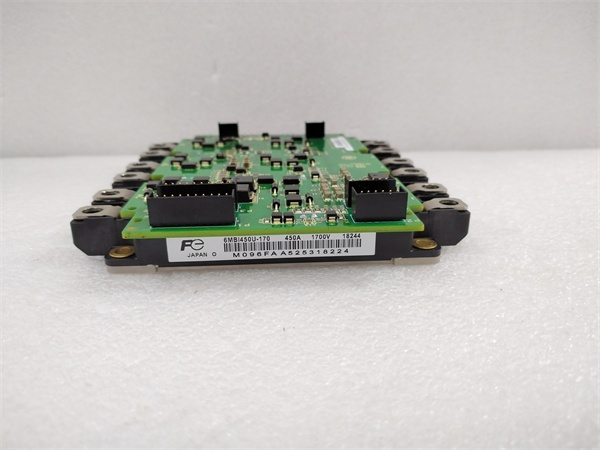
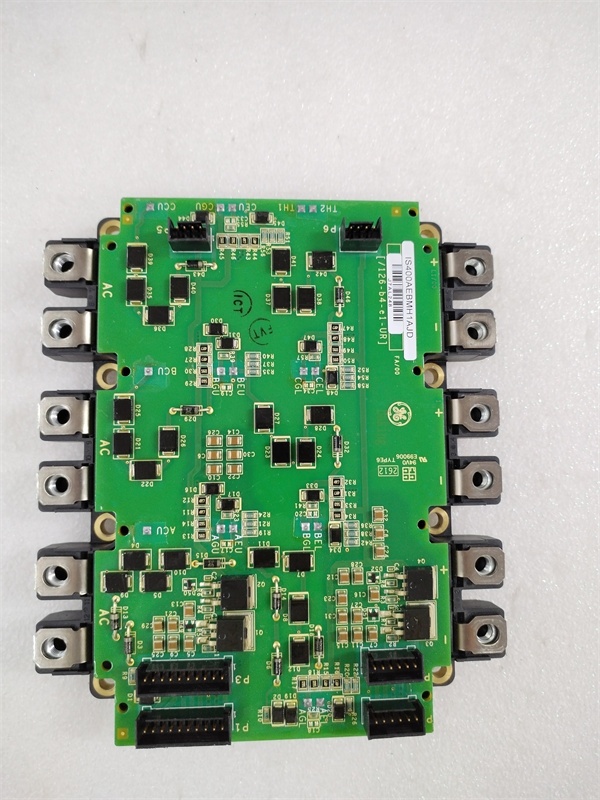
Model Number: IS400AEBMH1AJD
-
Manufacturer: General Electric (GE)
-
Dimensions: 173 × 112 × 13 mm, 0.12 kg
-
Operating Temperature: –40 °C…+85 °C
-
Protection Rating: IP67 (when installed with gasket)
-
Input Range: 0-400 A AC (current sensor), ±0.5 % accuracy
-
Output Signal: 4-20 mA, 0-10 V configurable
-
Logic Supply: 24 VDC (18-36 V)
-
Communication: Modbus-TCP, RS-485, EtherNet/IP
-
Memory: Flash for configuration, RAM for runtime data
-
Programming: Ladder, FBD, ST via ControlST / ToolboxST
-
Certifications: CE, ATEX, IECEx

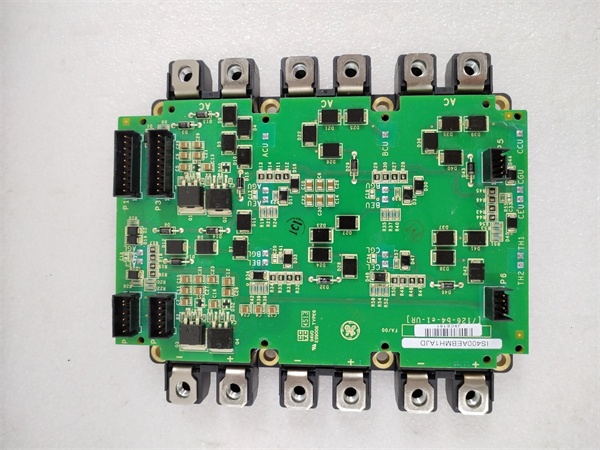
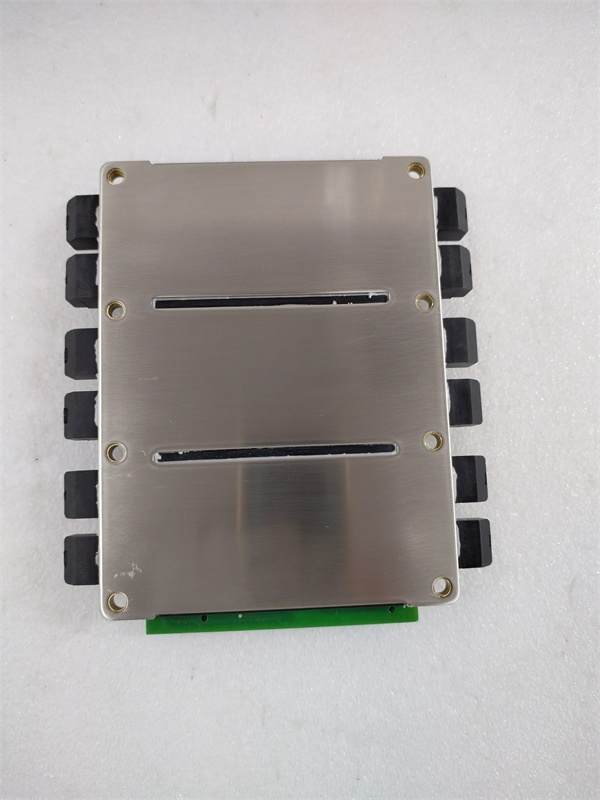
IS400AEBMH1AJD
Field Application & Problem Solved
EX2100e exciter racks need a board that can read generator stator current, motor load, or feeder CTs and hand a clean 4-20 mA signal to the DSP. Drop the IS400AEBMH1AJD on the Mark VIe I/O rail and you get a 0.5 % accurate, IP67-sealed channel that survives 85 °C inside a turbine auxiliary cabinet. I’ve used these on 7FA peakers—board mounts on the door, clamps onto a 400 A window CT, and feeds real load current to the VAR loop; no external transducer, no extra panel cut-out. Value: it collapses CT shorting block, 4-20 mA isolator, and network interface into one 13 mm card you can swap with the rack live.
EX2100e exciter racks need a board that can read generator stator current, motor load, or feeder CTs and hand a clean 4-20 mA signal to the DSP. Drop the IS400AEBMH1AJD on the Mark VIe I/O rail and you get a 0.5 % accurate, IP67-sealed channel that survives 85 °C inside a turbine auxiliary cabinet. I’ve used these on 7FA peakers—board mounts on the door, clamps onto a 400 A window CT, and feeds real load current to the VAR loop; no external transducer, no extra panel cut-out. Value: it collapses CT shorting block, 4-20 mA isolator, and network interface into one 13 mm card you can swap with the rack live.
Installation & Maintenance Pitfalls (Expert Tips)
CT Polarity backwards = negative mA – The board expects “source out” on X1-2. If you land the CT with K toward line you’ll read –8 mA at half load and the DSP will flag “Open CT”. Flip the CT or invert scale in ToolboxST.
24 V ripple > 2 V gives noisy mA – Old battery chargers float 29 V with 3 Vpp saw-tooth; you’ll see ±0.3 mA jitter and VAR loop hunts. Add a 470 µF / 50 V cap across the supply pins.
Gasket backwards kills IP67 – The silicone gasket must seat on the inside lip; if you mount the board flat to a painted door the seal folds and water runs into the 20-pin header during wash-down.
Forget terminating resistor on RS-485 – The port is 2-wire only; leave the network un-terminated and reflections give you “Comm-Lost” every time the turbine ramps. Pop 120 Ω across X2-1 & X2-2 if this node is at either end.
CT Polarity backwards = negative mA – The board expects “source out” on X1-2. If you land the CT with K toward line you’ll read –8 mA at half load and the DSP will flag “Open CT”. Flip the CT or invert scale in ToolboxST.
24 V ripple > 2 V gives noisy mA – Old battery chargers float 29 V with 3 Vpp saw-tooth; you’ll see ±0.3 mA jitter and VAR loop hunts. Add a 470 µF / 50 V cap across the supply pins.
Gasket backwards kills IP67 – The silicone gasket must seat on the inside lip; if you mount the board flat to a painted door the seal folds and water runs into the 20-pin header during wash-down.
Forget terminating resistor on RS-485 – The port is 2-wire only; leave the network un-terminated and reflections give you “Comm-Lost” every time the turbine ramps. Pop 120 Ω across X2-1 & X2-2 if this node is at either end.
IS400AEBMH1AJD
Technical Deep Dive & Overview
The IS400AEBMH1AJD is basically a “smart transducer on a postcard.” An internal 14-bit ADC samples the CT secondary at 1 kHz; the ARM Cortex-M4 runs a 32-sample FIR filter, then drives a 12-bit DAC for 4-20 mA and a 10-bit PWM for 0-10 V. Network traffic rides an on-board PHY that speaks both Modbus-TCP and EtherNet/IP—registers 40001-40064 hold RMS current, crest factor, and temperature. Flash stores scaling and alarm limits; lose 24 V and the board wakes up with last settings—no laptop required after a blackout.
The IS400AEBMH1AJD is basically a “smart transducer on a postcard.” An internal 14-bit ADC samples the CT secondary at 1 kHz; the ARM Cortex-M4 runs a 32-sample FIR filter, then drives a 12-bit DAC for 4-20 mA and a 10-bit PWM for 0-10 V. Network traffic rides an on-board PHY that speaks both Modbus-TCP and EtherNet/IP—registers 40001-40064 hold RMS current, crest factor, and temperature. Flash stores scaling and alarm limits; lose 24 V and the board wakes up with last settings—no laptop required after a blackout.