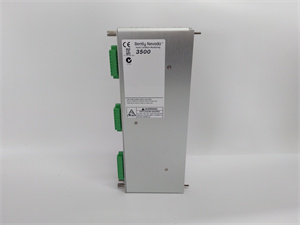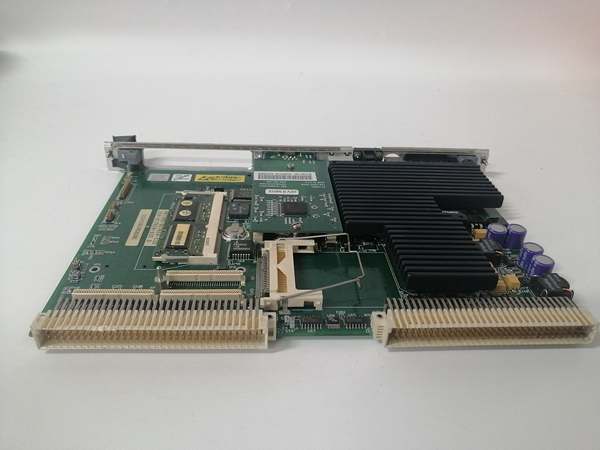
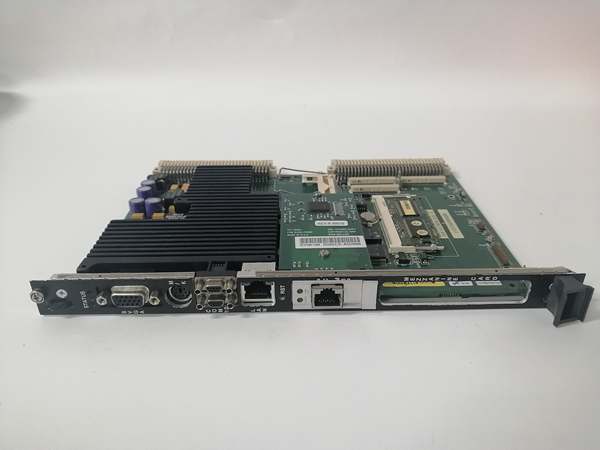
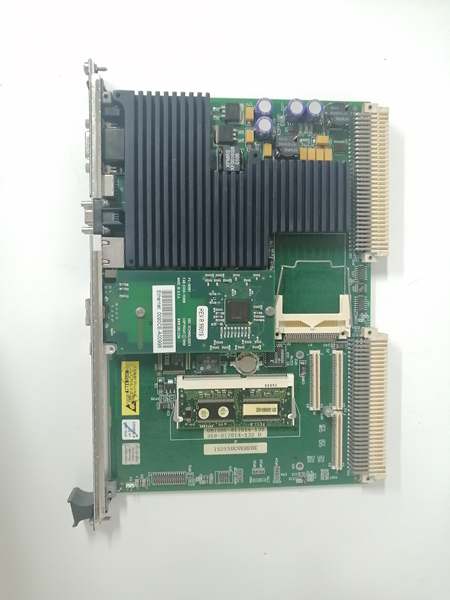
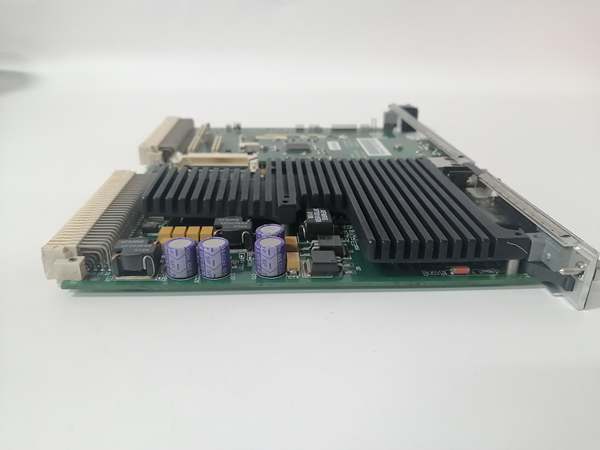
Description
Hard-Numbers: Technical Specifications
-
Processor: 300 MHz Intel Celeron (32-bit x86 architecture)
-
DRAM: 32 MB (battery-backed for data retention)
-
Non-Volatile Storage: 16 MB Compact Flash (firmware and configuration)
-
Operating System: QNX Neutrino (preemptive multitasking real-time OS)
-
VME Interface: VME64 backplane (single-slot, 6U form factor)
-
Ethernet: 2× RJ45 ports (10BaseT/100BaseTX, auto-negotiating, auto-crossover)
-
Serial Port: 1× RS-232/RS-485 COM port for diagnostics and local configuration
-
Power Supply: +5 VDC at 6.0A typical, 8.0A maximum (from VME backplane)
-
Operating Temperature: -30°C to +65°C (ambient)
-
Storage Temperature: -40°C to +85°C
-
Humidity: 5-95% non-condensing
-
Physical Dimensions: 8.26 cm (H) × 4.19 cm (W) × standard VME depth
-
Weight: 0.9 kg (2 lbs) with metal faceplate and heatsink
-
Scan Rate: Deterministic execution for turbine control loops (typically 10-50 ms)
-
LED Indicators: 8 status LEDs (OK, Active, Ethernet Link/Activity, Flash, Fault)
-
Configuration: Proficy Machine Edition or GE ToolboxST software

GE IS215UCVEH2AE
The Real-World Problem It Solves
You know the stakes: a gas turbine trip during peak grid demand costs $100K+ in lost generation and penalties, or a steam turbine overspeed event destroys $5M in rotating equipment. The IS215UCVEH2AE is the brain that prevents these disasters—executing speed control, fuel scheduling, and protection logic in real-time with hard determinism. It’s not a general-purpose PLC; it’s a turbine-specific controller running QNX with microsecond-level jitter tolerance for critical protection loops.
Where you’ll typically find it:
-
Frame 7FA gas turbine control cabinets in combined-cycle power plants
-
Mechanical drive turbines for LNG compression trains in midstream facilities
-
Steam turbine governor control in refinery powerhouses and paper mill cogeneration
Bottom line: It keeps 100MW+ rotating machinery within safe operating limits while maximizing output, handling everything from startup sequencing to emergency overspeed protection without dropping the load.
Hardware Architecture & Under-the-Hood Logic
The IS215UCVEH2AE mounts in Slot 1 of a Mark VI VME rack (typically alongside I/O cards like IS200TBCIS or IS200STCIS). It’s a single-board computer with the Celeron processor, DRAM, and Flash all on one PCB, plus a mezzanine site for optional expansion. The card interfaces with turbine sensors (speed probes, temperature RTDs, pressure transmitters) via the VME backplane to specialized I/O modules, then outputs control signals to fuel valves, IGV actuators, and generator breakers.
Signal flow and processing logic:
-
Input Acquisition: I/O modules scan field signals (4-20mA, RTD, thermocouple, pulse speed) and place data in VME shared memory accessible by the UCVE processor
-
Algorithm Execution: The 300 MHz Celeron runs turbine-specific control algorithms (speed PID, acceleration control, fuel stroke reference, temperature control) under QNX real-time scheduling—no Windows latency or jitter
-
Protection Logic: Overspeed, vibration, and overtemperature protection execute in parallel with control logic; any trip condition immediately opens fuel valves via direct I/O writes
-
Output Control: Calculated control signals (fuel demand, valve position) written to VME memory for D/A conversion by analog output modules
-
Communication: Dual Ethernet ports connect to operator HMI (CIMPLICITY or ToolboxST) for monitoring and to other Mark VI controllers for load sharing and plant-wide coordination
GE IS215UCVEH2AE
Field Service Pitfalls: What Rookies Get Wrong
Confusing This with a Standard PLC Rookies treat the IS215UCVEH2AE like a Rockwell or Siemens PLC—trying to force generic ladder logic into it or expecting Windows-based soft control. It’s not. This is a proprietary VME controller running QNX with turbine-specific firmware. You can’t just “reprogram” it like a PLC; the control strategy is compiled turbine application code.
Field Rule: Use only GE ToolboxST or Proficy Machine Edition for configuration changes. Never attempt to flash generic firmware—the card will reject it and brick itself. Verify the Compact Flash contains the correct turbine model configuration before power-up.
Ignoring the Heatsink and Thermal Management The 300 MHz Celeron runs hot in a sealed VME rack. Rookies install the card without checking the heatsink cover seating or block ventilation slots with cable ties. Thermal shutdown happens at 70°C, but performance degrades above 60°C.
Quick Fix: Verify the heatsink cover is firmly attached with thermal paste intact (replace every 2-3 years). Ensure VME rack fans are operational and filters are clean. If the “OK” LED flickers or the processor resets under load, check chassis temperature first before swapping hardware.
Hot-Swapping Without Proper Shutdown Unlike some modern PLCs, the IS215UCVEH2AE does not support true hot-swap while controlling a running turbine. Pulling the card drops all control outputs to failsafe states—fuel valves close, generator breakers trip. Rookies think they can “swap on the fly” like an I/O module.
Field Rule: Never remove the IS215UCVEH2AE without securing the turbine first (transfer to manual control or shutdown). The VME backplane does not support redundant CPU failover on this single-card architecture—there is no standby. Plan maintenance during scheduled outages or use the Mark VIe (not Mark VI) if you need CPU redundancy.