Description
Hard-Numbers: Technical Specifications
(Note: Specifications can vary based on whether the unit is configured as a Wind Turbine PSU or a Turbine AEPS. Refer to your site’s specific documentation.)
As a Wind Turbine Power Supply Board:
- Input Voltage: 90-264V AC (Wide range universal input)
- Output Voltage: 24V DC (Typical for wind turbine control systems)
- Rated Output Current: 3A
- Dimensions: 30.5cm x 15.2cm x 5.1cm
- Weight: 1.5kg
As a Turbine Auxiliary Emergency Power Supply (AEPS):
- Input Voltage: 125V DC Nominal (Sourced from station battery)
- Output Voltages: +5V DC, ±15V DC (For critical Mark VIe I/O logic and analog circuits)
- Hold-up Time: Designed for 50-100ms+ stable output after input loss
- Transfer Time: Seamless microsecond-level switchover to backup power
General Industrial Specs:
- Operating Temperature: -20°C to +70°C (or 0°C to +60°C depending on application)
- Protection Features: Overvoltage, undervoltage, short-circuit, and reverse polarity protection
- Efficiency: >90%
- Mounting: DIN Rail or Panel Mount
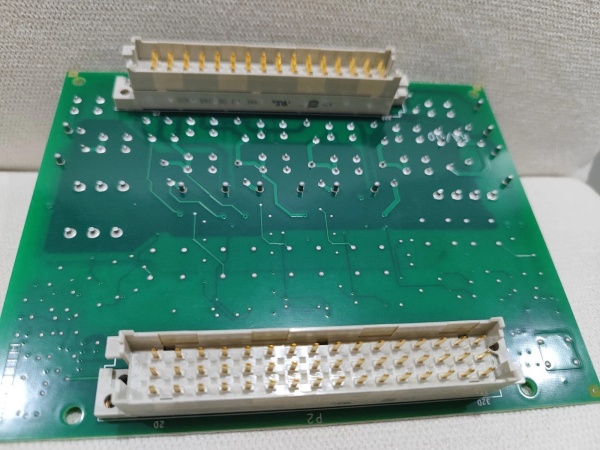
IS200WROBH1A
The Real-World Problem It Solves
Imagine you are the lead controls engineer at a combined-cycle power plant. The facility experiences frequent, brief voltage sags (momentary dips in AC control power) due to heavy motor starts elsewhere in the plant. These minor disturbances are causing the Mark VIe controllers on your gas turbines to reset, leading to nuisance trips, unplanned downtime, and significant financial losses.
The elegant solution is to integrate the module into your Mark VIe Universal Racks. Acting as an Auxiliary Emergency Power Supply (AEPS), this module sits between your primary DC power supply and the most critical I/O modules (like overspeed protection and vibration monitoring).
When a voltage sag occurs, the detects the drop instantaneously. Utilizing its internal energy storage (capacitors or battery buffer), it seamlessly switches to provide clean, regulated backup power to the critical I/O. The turbine control system rides through the disturbance without resetting. The nuisance trips are completely eliminated, saving the plant hundreds of thousands of dollars in lost revenue and preventing unnecessary wear and tear on the turbine internals.
Where you’ll typically find it:
- Wind Farms: Providing stable 24V DC power to Mark VIe wind turbine control panels located in harsh nacelle environments.
- Combined-Cycle & Simple-Cycle Power Plants: Acting as an AEPS to bridge power gaps and prevent controller resets during grid fluctuations or plant load transfers.
- Oil & Gas Mechanical Drive Applications: Ensuring continuous, reliable power to turbine governors and protection systems in remote pipeline compressor stations.
It acts as a highly specialized, deterministic power shield, ensuring that momentary power quality events don’t escalate into costly turbine trips or process shutdowns.
Hardware Architecture & Under-the-Hood Logic
In the GE AE series ecosystem, the “IS210AEPSG” is fundamentally a power conditioning and emergency backup module. The “G1ABB” suffix dictates the module’s specific operational parameters, protection thresholds, and compatibility within a Mark VIe rack.
- Seamless Power Transfer & Holdup Capability: The core logic of the AEPS module is its ability to detect a loss of the primary control power and instantaneously switch to its internal backup energy reservoir. This transfer happens in microseconds, ensuring that the connected Mark VIe I/O modules never experience a power interruption. This “holdup” time (typically 50-100ms or more) is carefully engineered to bridge the gap until a larger plant-wide backup generator comes online or the main power is restored.
- Comprehensive Diagnostics & Status Reporting: The module continuously monitors the health of its input supply, output voltage, and internal circuitry. Front-panel LEDs provide at-a-glance status for input power, output power, and fault conditions. Furthermore, the module communicates its health status to the main Mark VIe controller via discrete wires or serial communication, allowing operators in the control room to see a “Low Battery” or “AEPS Fault” alarm and perform proactive maintenance before a real emergency occurs.
- Application-Specific “ABB” Configuration: The “G1” denotes the foundational hardware and firmware baseline, while the “ABB” suffix points to a highly specific customer configuration, firmware load, or regional certification. This ensures the module’s power output characteristics perfectly match the specific Mark VIe I/O cards it is tasked with protecting.
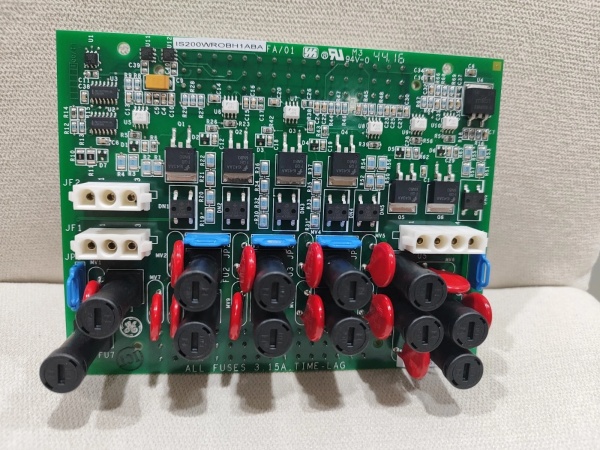
IS200WROBH1A
Field Service Pitfalls: What Rookies Get Wrong
The “Phantom Trip” Mystery
A maintenance team at a gas compression station is experiencing random, unplanned turbine trips during peak summer heat. The control room logs show a “Processor Timeout” error on the Mark VIe controller just before each trip. The technicians suspect a faulty controller and replace the main processor card, but the phantom trips continue.
Frustrated, they finally inspect the power distribution panel and notice that the AEPS module has its “Fault” LED illuminated. Further investigation reveals that the station’s 125V DC battery bank, which feeds the AEPS, has several dead cells due to the extreme heat. When a minor voltage dip occurred on the main AC line, the AEPS tried to switch to battery backup but failed because the battery voltage was too low. This caused the critical I/O to lose power, leading to the “Processor Timeout” and the subsequent turbine trip.
- The Mistake: Ignoring the health of the auxiliary power system (the AEPS and its associated batteries) while blindly troubleshooting the primary controller. The technicians treated the AEPS as a “set-and-forget” device, failing to perform routine battery maintenance.
- Field Rule: The AEPS is a critical link in your turbine’s protection chain. Never ignore the AEPS status LEDs or control room alarms. Incorporate the AEPS and its backup batteries into your regular preventive maintenance schedule. Test the battery autonomy at least annually, and replace batteries proactively based on their expected lifespan (typically 3-5 years). If you see an AEPS fault, treat it as a high-priority action item, because the next power disturbance could result in an unplanned trip. Always use the exact OEM-specified suffix (including the “ABB” configuration) when replacing an AEPS module to ensure the holdup timing and voltage thresholds match your plant’s design specifications.