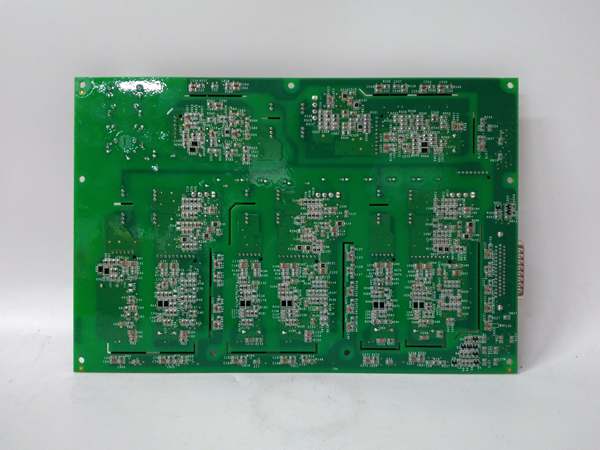
Description
Hard-Numbers: Technical Specifications
- Processor: High-speed Digital Signal Processor (DSP) (Optimized for rapid deterministic scanning of discrete events and low-latency protocol conversion).
- Communication Interface: GE Serial Peripheral Interface (SPI) / IONet for internal rack communication, plus external discrete bridging interfaces (typically high-speed Ethernet or serial).
- Functional Revision: H (8th Revision) (Signifies a highly mature hardware build. The “H4” designation specifically indicates a later-stage refinement over H3, potentially offering improved EMI/ESD immunity, better thermal management, or updated silicon).
- Configuration Suffix: 4A (Denotes a unique factory hardware baseline and specific firmware image. The “4” indicates the hardware revision digit, while “A” points to the foundational firmware load, security certificates, or standard protocol emulation layer).
- Operating Voltage: 24V DC to 48V DC (Nominal, via backplane or dedicated terminals).
- Operating Temperature: -40°C to +70°C (Built to withstand harsh outdoor and industrial environments).
- Signal Isolation: 1500V AC Channel-to-Channel, 2500V AC Channel-to-Ground (Provides robust protection against severe industrial electrical noise and transient voltages).
- Mounting: VME Rack Mount or DIN Rail (Dependent on the specific panel assembly).
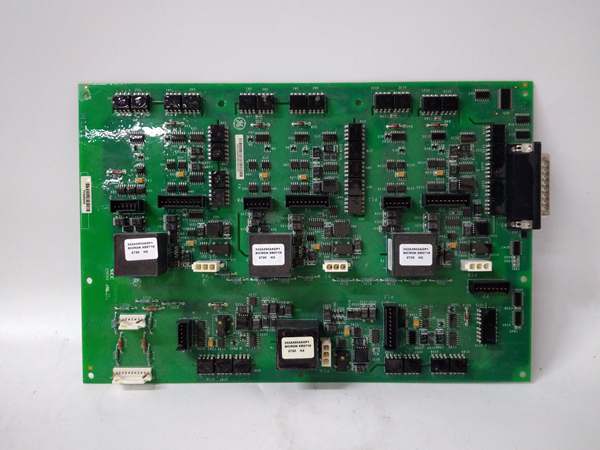
GE IS210AEDBH4A
The Real-World Problem It Solves
Imagine you are the lead controls engineer at a combined-cycle power plant upgrading your turbine controls to a modern Mark VIe platform. The plant’s existing Distributed Control System (DCS) relies on a specific, older communication protocol to receive hundreds of critical turbine trip statuses and alarm conditions. Because these are discrete (on/off) signals, they must be transmitted with extremely low latency to prevent safety hazards. Re-writing the DCS code to accept a modern protocol is too risky and expensive. Additionally, the plant environment is notoriously electrically noisy, having caused signal corruption issues with previous bridge modules.
The elegant solution is to deploy the module into the new Mark VIe control rack. Leveraging the robust “H4” hardware revision, which features enhanced EMI suppression and updated voltage regulation, the module ensures clean, uncorrupted signal processing. Its “A” firmware baseline is perfectly calibrated to emulate the legacy discrete protocol. You map the modern Mark VIe global discrete variables to the module, and it seamlessly translates them into the exact legacy format the DCS expects, delivering trip signals with zero latency.
The migration is completed smoothly, the plant avoids costly DCS reprogramming, and the enhanced H4 hardware guarantees reliable, noise-free communication from day one.
Where you’ll typically find it:
- Modernized Legacy Plants: Facilities upgrading from Mark V or Mark VI to Mark VIe, requiring backward compatibility for discrete signaling with existing plant networks.
- High-Interference Environments: Refineries, petrochemical plants, or heavy manufacturing facilities where electrical noise necessitates the superior hardware isolation of the H4 revision.
- Complex Retrofits: Scenarios requiring a seamless bridge between modern turbine controllers and third-party Safety Instrumented Systems (SIS) or PLCs.
It acts as a highly specialized, noise-immune protocol gateway, ensuring that critical discrete signals are delivered accurately and instantly across disparate control architectures.
Hardware Architecture & Under-the-Hood Logic
In the GE AE series ecosystem, the “IS210AEDB” is fundamentally a discrete I/O and communication bridge board. The “H4A” suffix is critical, dictating the module’s performance envelope and compatibility within a Mark VIe rack.
- Enhanced Hardware Identification (HW_ID) & Firmware Binding: The Mark VIe controller performs a strict handshake to verify connected hardware. The “H4A” suffix corresponds to a unique HW_ID and a specific firmware image stored in the module’s memory. This binding ensures the module operates exactly as defined in the ToolboxST project, preventing configuration drift or unauthorized hardware substitutions.
- Advanced “H4” Hardware Revision: Moving beyond the H3 foundation, the H4 hardware digit incorporates significant refinements. This can include faster DSP clock speeds for reduced latency in discrete scanning, improved galvanic isolation components to withstand higher transient voltages, and enhanced thermal dissipation for greater long-term reliability in hot enclosures.
- Standardized “A” Firmware Baseline: The “A” configuration typically represents a stable, widely-deployed firmware load. It is designed for broad compatibility, handling standard legacy protocol emulation without the need for highly customized (and harder to source) bespoke firmware loads like “BDC” or “BED”.
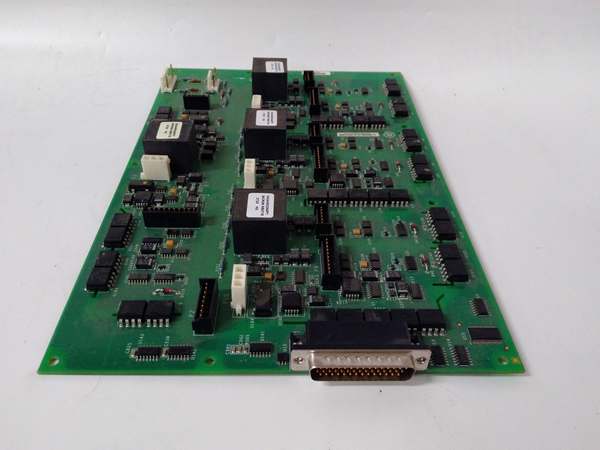
GE IS210AEDBH4A
Field Service Pitfalls: What Rookies Get Wrong
The “Latency Trap” in Alarm Cascades
A power plant experiences a partial trip cascasde because the DCS did not receive a critical turbine overspeed alarm fast enough, resulting in unnecessary stress on the downstream equipment. The root cause analysis traces the issue back to a recent “like-for-like” replacement of an module. The maintenance tech had replaced a failing unit with an older IS210AEDBH2A module pulled from a decommissioned spare parts bin. While the H2A module worked, its older DSP and slower serial buffer caused a 150-millisecond delay in transmitting the discrete trip signal to the DCS—just enough time to trigger the cascade.
- The Mistake: Ignoring the hardware revision digit (H4 vs H2) in a time-critical discrete application. While both modules shared the same base part number and functional revision letter, the internal processing speed and buffer architecture of the H4 module were vastly superior. In safety-related discrete bridging, nanoseconds matter.
- Field Rule: When replacing communication or discrete bridge modules in safety-critical or high-speed applications, you must match the hardware revision digit (the ‘4’ in H4A) exactly. Upgrading to a higher revision (e.g., H4 to H5) is generally safe if approved by engineering, but downgrading (H4 to H2) can introduce dangerous latency and should be strictly prohibited without a full controls impact study. Always verify the spare’s label against the Bill of Materials (BOM) before installation.