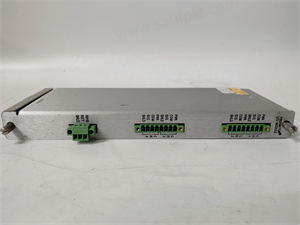
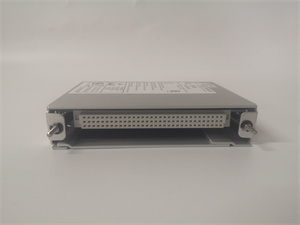
Description
Hard-Numbers: Technical Specifications
- Processor: High-speed Digital Signal Processor (DSP) (Handles deterministic control algorithms and high-speed communication protocol conversion).
- Communication Interface: GE Serial Peripheral Interface (SPI) / IONet for internal rack communication, plus external bridging interfaces (likely Ethernet or serial-based protocols like Modbus).
- Functional Revision: H (8th Revision) (Indicates a highly mature hardware build with extensive bug fixes, superior EMI filtering, and enhanced component tolerances compared to earlier revisions).
- Configuration Suffix: ADC (Denotes a unique factory hardware baseline, specific firmware image, or regional/customer-specific configurations).
- Operating Voltage: 24V DC to 48V DC (Nominal, via backplane or dedicated terminals).
- Operating Temperature: -40°C to +70°C (Designed for harsh outdoor and industrial environments).
- Signal Isolation: 1500V AC Channel-to-Channel, 2500V AC Channel-to-Ground (Protects against severe industrial electrical noise).
- Mounting: VME Rack Mount or DIN Rail (Dependent on the specific panel assembly).
The Real-World Problem It Solves
You are the lead controls engineer for a combined-cycle power plant that recently underwent a corporate-mandated cybersecurity overhaul. As part of the new security posture, the plant’s legacy Modbus TCP network connecting the turbines to the DCS must be replaced with a secure, encrypted OPC-UA architecture. However, the existing Mark VIe controllers are locked by a previous OEM vendor, and modifying the core control logic to add new communication drivers risks voiding the warranty and triggering a forced turbine trip during the next load transient.
To solve this, you install the IS210AEBIH1ADC into an expansion slot in the existing control rack. Leveraging its “H1” hardware capabilities and “ADC” firmware baseline, this module acts as a modern, secure protocol gateway. It passively reads the necessary process variables (like exhaust temperature, rotor speed, and valve positions) from the Mark VIe’s global memory via the high-speed IONet. It then independently packages and encrypts this data, pushing it to the new corporate OPC-UA server over a segregated Ethernet network.
The project is a success: corporate gets their real-time data delivered securely, the core turbine control logic remains completely untouched and under warranty, and the plant avoids a costly, high-risk re-engineering project.
Where you’ll typically find it:
- Cybersecurity Retrofits: In power plants upgrading their OT networks to comply with NERC CIP or IEC 62443 standards without altering legacy turbine controls.
- Multi-Vendor Power Stations: Bridging GE Mark VIe controls with non-GE DCS platforms (e.g., Emerson Ovation, Honeywell TDC3000) in older facilities.
- Remote Monitoring Hubs: Serving as a secure, high-throughput gateway for piping turbine data to cloud-based predictive maintenance platforms.
It acts as a highly specialized, trusted protocol bridge, ensuring that external enterprise networks can securely access vital turbine data without introducing latency or security vulnerabilities to the core control loops.
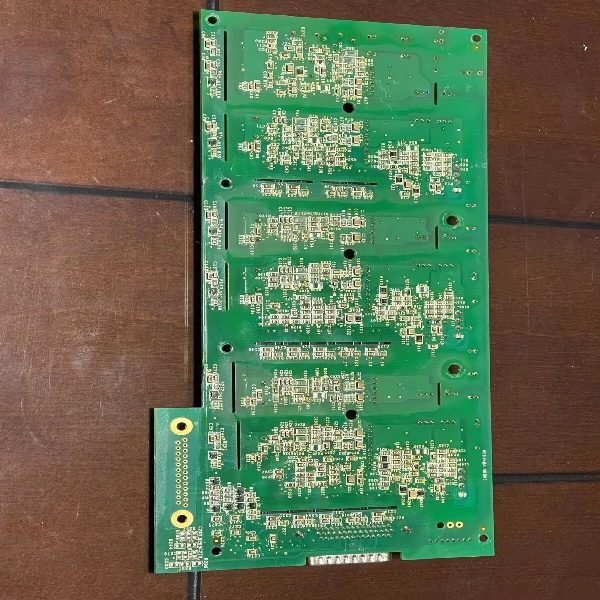
GE IS210AEBIH1ADC
Hardware Architecture & Under-the-Hood Logic
The “H1ADC” suffix indicates a highly specific, mature manufacturing variant of the base IS210AEBI module, tailored for complex energy bridge applications. While it shares the same core architecture as other AE series modules, the combination of the “H1” revision and “ADC” configuration is critical for system integrity in modern networking applications.
- Unique Hardware Identification (HW_ID) & Firmware Binding: The Mark VIe controller uses a strict handshake protocol to verify the identity of connected hardware. The “ADC” suffix corresponds to a unique HW_ID stored in the module’s memory. The controller will only execute the control program if the HW_ID and firmware checksums match the expectations of the downloaded application code, preventing unauthorized or incompatible hardware from compromising plant safety.
- Mature “H1” Hardware Revision: In GE nomenclature, “H” represents the 8th major functional revision (A=1, B=2… H=8). A Rev “H” board features highly refined circuit layouts, improved resistance to electromagnetic interference (EMI), and stricter timing margins compared to early revisions. The “1” further denotes a specific sub-revision or manufacturing variant. This makes the H1 hardware exceptionally stable for handling high-speed, continuous data throughput.
- Network Segmentation & Security: By designating a specific module like the IS210AEBIH1ADC for external communications, engineers can physically and logically isolate the critical turbine control network from the corporate or plant-wide network. This adheres to the Purdue Model for Industrial Cybersecurity, ensuring that a cyberattack on the corporate network cannot propagate to the turbine controller.
Field Service Pitfalls: What Rookies Get Wrong
Violating the “Like-for-Like” Rule During a Crisis Swap
A controls technician is rushing to replace an IS210AEBIH1ADC module after the morning shift reports that the plant’s SCADA system has gone blind to the gas turbine’s status. The turbine is still running fine under local Mark VIe control, but corporate is demanding data. In the heat of the moment, the technician grabs a spare IS210AEBIH1B from the cabinet and installs it, thinking “it’s the same card.”
- The Mistake: Ignoring that the “ADC” suffix contains a unique hardware fingerprint (HW_ID) and, more importantly, the specific IP addressing and network routing tables required by the plant’s IT/OT infrastructure. When the Mark VIe controller reboots, it compares the new card’s HW_ID against the secured project file. Finding a mismatch, it throws a critical “Hardware Key Mismatch” fault. In some configurations, this can force the turbine into “Maintenance Test” mode or even initiate a protective trip to prevent unverified hardware from influencing the control system. Furthermore, even if the controller accepted it, the spare card’s blank network configuration would fail to restore the SCADA link.
- Field Rule: Communication and bridge modules are the nervous system of the plant; they are never generic. Always match the full part number exactly. If an exact spare (H1ADC) is not available, the correct procedure is to install a blank AEBI card and use the ToolboxST “Hardware Update” wizard to flash the correct “.fwi” firmware image and push the network configuration from the controller’s last-known-good backup. Skipping this step turns a simple SCADA outage into a full-blown turbine trip.