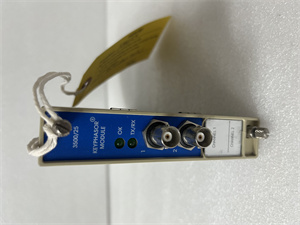
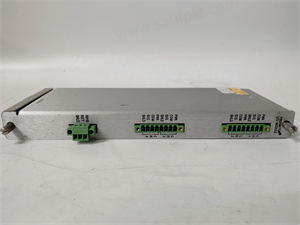
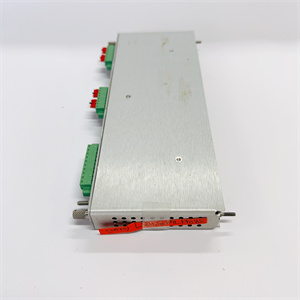
Description
Hard-Numbers: Technical Specifications
- Processor: High-speed Digital Signal Processor (DSP) (Executes deterministic control algorithms).
- Communication Interface: GE Serial Peripheral Interface (SPI) / IONet (Ensures low-latency data exchange with the main controller).
- Functional Revision: I (Based on standard GE nomenclature where A=1, B=2… I=9. This suggests a highly evolved, late-stage hardware revision with extensive enhancements over earlier versions).
- Configuration Suffix: BDA (Denotes a unique factory hardware baseline, specific firmware image, or regional/customer-specific configuration).
- Operating Voltage: 24V DC (Nominal, via backplane or dedicated terminals).
- Operating Temperature: -40°C to +70°C (Designed for harsh outdoor and industrial environments).
- Protection: Conformal Coated (Provides enhanced resistance to moisture, dust, and corrosive elements, consistent with advanced AEAA variants).
- Signal Isolation: 1500V AC Channel-to-Channel, 2500V AC Channel-to-Ground (Protects against severe industrial electrical noise).
- Mounting: VME Rack Mount or DIN Rail (Dependent on the specific panel assembly).
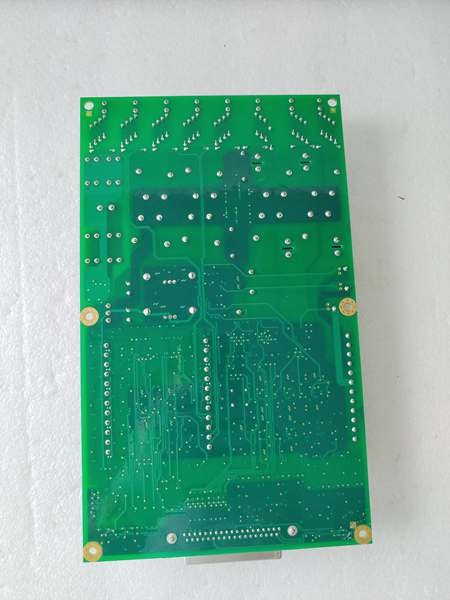
GE IS210AEAAH2BHB
The Real-World Problem It Solves
You are the lead controls engineer for an aging Combined-Cycle Power Plant operating legacy GE Frame 7FA gas turbines. During a scheduled outage, your team updates the Mark VIe control software to patch a cybersecurity vulnerability. Post-upgrade, the turbine fails to synchronize, throwing a cryptic “Hardware Key Mismatch” error pointing to the AEAA I/O module in the auxiliary panel.
After digging through decades-old OEM documentation, you discover the original module is a highly specialized IS210AEAAHIBDA, specified uniquely for its precise timing tolerances required by the plant’s legacy liquid fuel injection system. A standard IS210AEAAH2B from the warehouse won’t work because its hardware ID doesn’t match the rigid parameters expected by the updated, highly customized ToolboxST application. The IS210AEAAHIBDA solves this by providing the exact, pre-certified hardware fingerprint the controller expects, ensuring the fuel control logic remains valid and preventing a prolonged, costly outage.
Where you’ll typically find it:
- Legacy Gas & Steam Turbines: In systems requiring highly accurate analog signal processing for specialized fuel control, valve positioning, or emissions monitoring.
- Oil & Gas Pipeline Compressor Stations: Controlling balance-of-plant (BOP) equipment where the I/O must adhere to specific, obsolete API standards.
- Retrofit Projects (Brownfield): Acting as a bridge module in systems transitioning from older GE controls to Mark VIe, where the “IBDA” configuration ensures backward compatibility with existing field wiring and sensor calibrations.
It acts as a highly specialized, trusted interface node, ensuring that the Mark VIe controller receives perfectly scaled and conditioned data from the field, maintaining the integrity of the plant’s safety and environmental control loops.
Hardware Architecture & Under-the-Hood Logic
The “IBDA” suffix indicates a highly specific, potentially obsolete manufacturing variant of the base IS210AEAAH module. While it shares the same core architecture (including the DSP and SPI/IONet interfaces), the “IBDA” designation is critical for system integrity in specific legacy applications.
- Unique Hardware Identification (HW_ID) & Firmware Binding: The Mark VIe controller uses a strict handshake protocol to verify the identity of connected hardware. The “IBDA” suffix corresponds to a unique HW_ID stored in the module’s memory. Furthermore, this variant likely ships with a specific, locked firmware version (
.fwifile) tailored for the OEM’s protection and emissions logic. The controller will only execute the control program if the HW_ID and firmware checksums match the expectations of the downloaded application code, preventing unauthorized or incompatible hardware from compromising plant safety. - Application-Specific Calibration Constants: Different industrial processes require different signal conditioning. The “IBDA” variant is factory-calibrated with specific gain, offset, and linearization constants tailored for particular sensor types. These constants are stored in the module’s non-volatile memory and are inaccessible to the average field technician, ensuring the integrity of the original engineering design.
- Late-Stage Hardware Revisions (Rev I): If following standard GE revision sequencing (A=1, B=2, etc.), the “I” denotes the 9th major functional revision. This implies the hardware has undergone extensive evolutionary changes, likely featuring superior EMI filtering, enhanced DSP processing speeds, and improved component tolerances compared to earlier revisions.
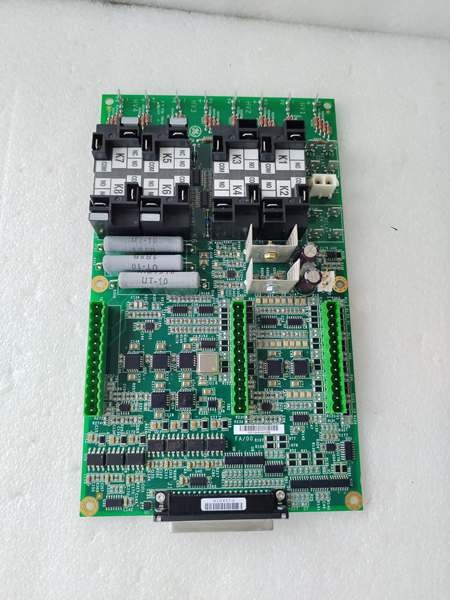
GE IS210AEAAH2BHB
Field Service Pitfalls: What Rookies Get Wrong
Assuming “Compatible” Equals “Interchangeable”
A maintenance technician is rushed to restore a gas-fired power plant that has tripped offline. The root cause is traced to a failed AEAA I/O module (originally IS210AEAAHIBDA). Seeing the “H” and assuming it’s a standard variant, the technician grabs a compatible IS210AEAAH2B from the warehouse. After the swap, the controller boots but immediately flags a “Hardware Key Mismatch,” keeping the turbine in lockdown.
- The Mistake: Ignoring that the “IBDA” suffix contains a unique hardware fingerprint and calibration data mandated by the plant’s specific ToolboxST project file. The standard module, while electrically compatible, failed the controller’s security and integrity checksum.
- Field Rule: In any facility with a Safety Instrumented System (SIS) or strict ISO certifications, the full part number—including the suffix—must match exactly. If a direct replacement isn’t available, a formal Management of Change (MOC) must be filed, and the new hardware must be re-bound to the controller using the ToolboxST wizard, which updates the physical ID binding. Substituting obscure, highly customized parts without proper engineering approval is a fast track to a catastrophic turbine trip.