Description
Hard-Numbers: Technical Specifications
- Processor: High-speed Digital Signal Processor (DSP) (Executes deterministic control algorithms) .
- Communication Interface: GE Serial Peripheral Interface (SPI) / IONet (Ensures low-latency data exchange with the main controller) .
- Functional Revision: B (Includes enhanced hardware robustness and ESD protection) .
- Configuration Suffix: BJE (Denotes a unique factory hardware baseline, specifically calibrated for extended environmental tolerances).
- Operating Voltage: 24V DC (Nominal, via backplane or dedicated terminals) .
- Operating Temperature: -40°C to +70°C (Extended industrial temperature range for harsh outdoor or process environments) .
- Signal Isolation: 1500V AC Channel-to-Channel, 2500V AC Channel-to-Ground (Protects against severe industrial electrical noise) .
- Mounting: VME Rack Mount or DIN Rail (Dependent on the specific panel assembly) .
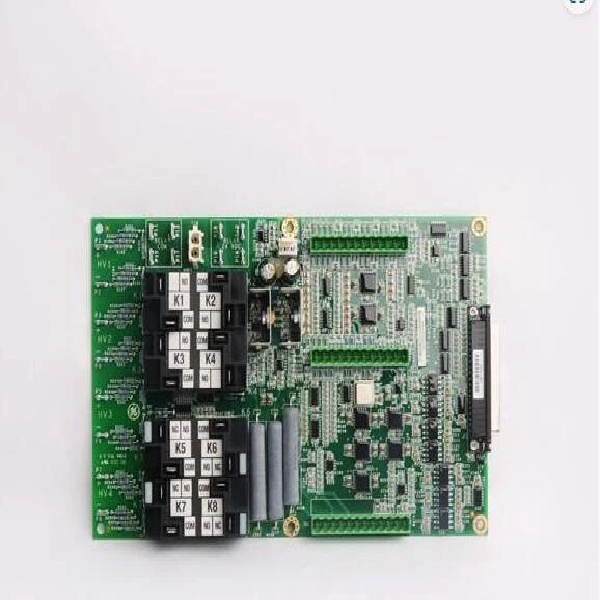
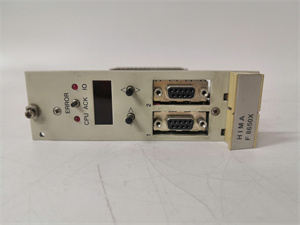
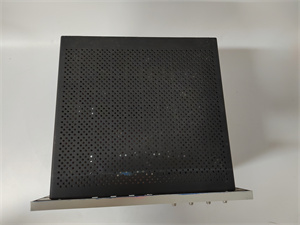
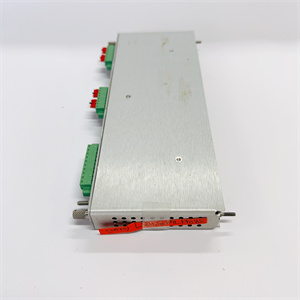
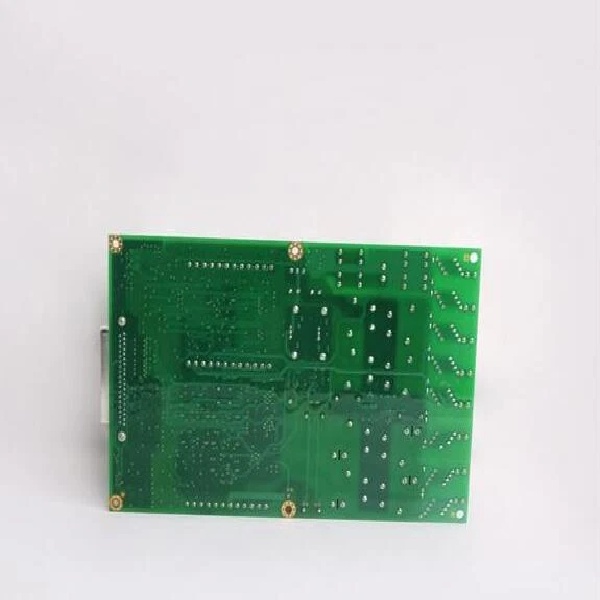
IS210AEAAH1B
The Real-World Problem It Solves
You are managing a remote natural gas compressor station in the Arctic Circle. The temperature has plummeted to -35°C, and the turbine control system is struggling. Suddenly, the Mark VIe controller throws a critical fault, and the station goes into an emergency shutdown. You discover that a standard I/O module in the outdoor enclosure has failed due to the extreme cold, causing the lubrication oil temperature readings to drop out. You attempt to swap it with a standard IS210AEAAH1B from your service vehicle, but the Mark VIe controller flags a “Hardware Key Mismatch” and refuses to boot the safety logic. The original integrator had specified the IS210AEAAH1BJE because the station’s control panels are exposed to freezing temperatures and intense vibration from the compressors. The IS210AEAAH1BJE solves this by providing the exact hardware fingerprint the controller expects, while its extended-temperature-rated components ensure reliable operation in the biting cold, preventing a prolonged and expensive shutdown .
Where you’ll typically find it:
- Arctic or Desert Oil & Gas Fields: In upstream compression or pump stations where ambient temperatures swing wildly, exceeding the limits of standard commercial electronics .
- Offshore Platforms: Installed in non-climate-controlled enclosures on the deck of oil rigs, where saltwater spray, vibration, and freezing winds demand ruggedized hardware .
- Geothermal Power Plants: Controlling wellhead isolation valves and scaling, where high ambient heat and corrosive gases necessitate electronics rated for extreme conditions .
It acts as a highly ruggedized, trusted interface node, ensuring that the Mark VIe controller receives perfectly scaled and conditioned data from the field, regardless of how hostile the external environment becomes .
Hardware Architecture & Under-the-Hood Logic
The “BJE” suffix indicates a specific manufacturing variant of the base IS210AEAAH1B module, built with enhanced components to withstand environmental stress. While it shares the same core architecture, the “BJE” designation is critical for system integrity in extreme applications.
- Unique Hardware Identification (HW_ID) & Firmware Binding: The Mark VIe controller uses a strict handshake protocol to verify the identity of connected hardware. The “BJE” suffix corresponds to a unique HW_ID stored in the module’s memory. Furthermore, this variant often ships with a specific, locked firmware version (
.fwifile) optimized for the slower response times of certain extreme-temperature sensors. The controller will only execute the control program if the HW_ID and firmware checksums match the expectations of the downloaded application code . - Extended-Temperature Component Selection: Unlike standard modules that use commercial-grade silicon (-10°C to +60°C), the “BJE” variant is populated with industrial or military-grade components rated for -40°C to +85°C. This includes the DSP, memory chips, and voltage regulators. This ensures that the module boots reliably in freezing conditions and doesn’t suffer from thermal throttling or logic errors during extreme heat waves .
- Enhanced Vibration & Thermal Cycling Resistance: The “BJE” configuration often features upgraded PCB laminates and stricter solder reflow profiles to prevent microfractures caused by constant vibration (e.g., from nearby gas compressors or wind turbine gearboxes). Additionally, the firmware may include advanced digital filtering algorithms designed to ignore signal spikes caused by piezoelectric effects in sensors undergoing rapid thermal expansion or contraction .
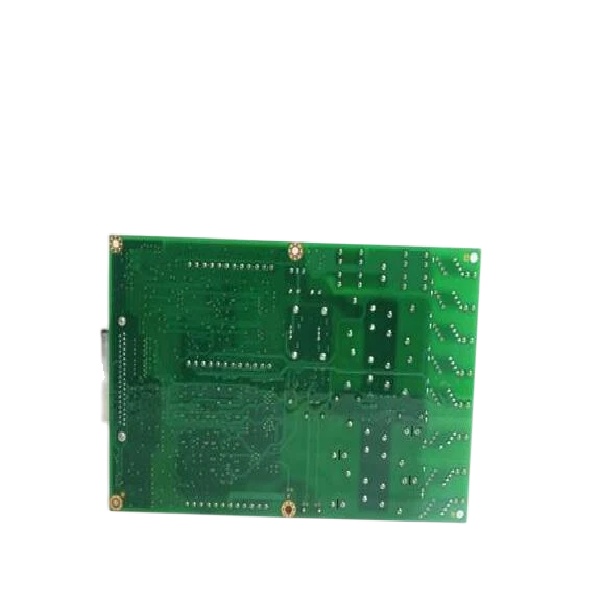
IS210AEAAH1B
Field Service Pitfalls: What Rookies Get Wrong
Substituting with a Standard Commercial-Grade Spare
A junior technician is sent to a remote desert pipeline station to replace a failed I/O module. The site’s documentation clearly lists the required part as an IS210AEAAH1BJE. However, the technician finds a standard IS210AEAAH1B in the truck and decides to install it to save time, assuming “a card is a card.” The system boots up, and he leaves. Two weeks later, during the hottest part of the day (ambient temperature reaches 55°C inside the un-air-conditioned enclosure), the standard module overheats and causes a total communication loss with the main compressor. The station automatically shuts down, resulting in a massive financial penalty for lost throughput.
- The Mistake: Ignoring the environmental rating implied by the suffix. The standard “B” revision was not designed for continuous operation above 50°C-60°C. The “BJE” variant uses components specifically binned and tested for high-heat environments.
- Field Rule: Never substitute a specialized suffix with a base model in remote or harsh environments. The few hours saved by using an incorrect spare are never worth the risk of a catastrophic, unplanned shutdown in the middle of the night, miles away from the nearest support shop. Always respect the engineering specifications for extreme environments.