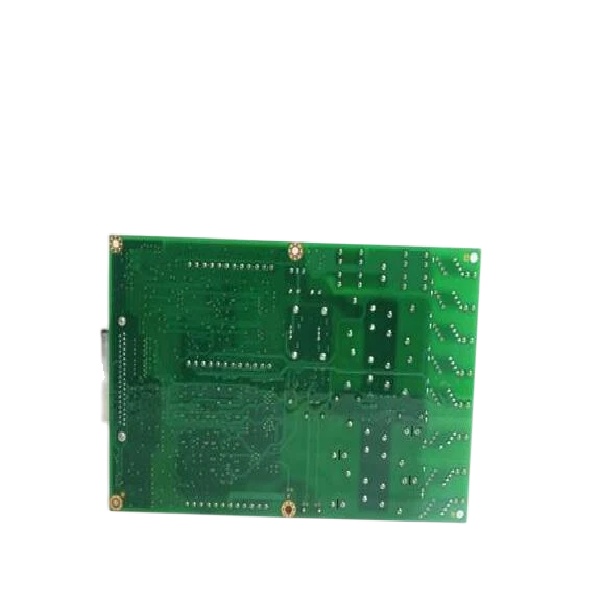
Description
Hard-Numbers: Technical Specifications
- Manufacturer: General Electric (GE Energy)
- Series Platform: Mark VIe
- Functional Acronym: AEAA
- PCB Coating: Conformal Coating (Protects against moisture, dust, and chemical contaminants)
- Operating Temperature: 0°C to +60°C
- Relative Humidity: 5% to 95% (Non-condensing)
- Signal Isolation: ±2000 V DC (Channel-to-channel or channel-to-ground isolation)
- Functional Revision: B (Modified version of the original IS210AEAAH1)
- Weight: Approx. 0.3 kg – 1.1 kg (Sources vary, generally lightweight for rack/DIN mounting)
- Mounting Features: Standard factory-drilled insulation holes for secure installation
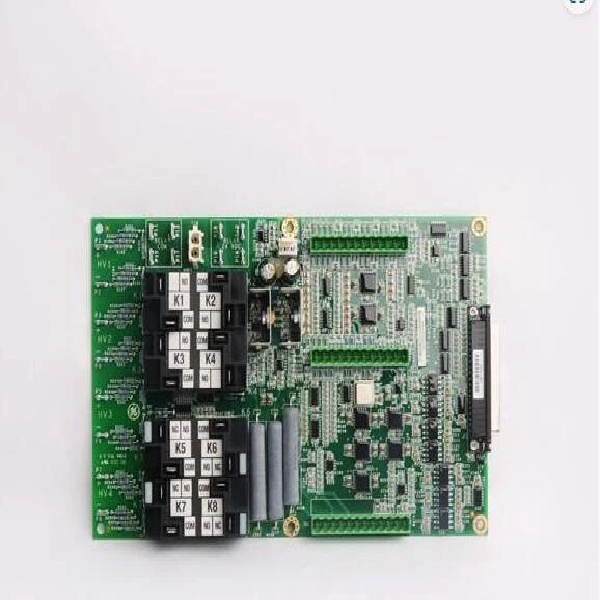
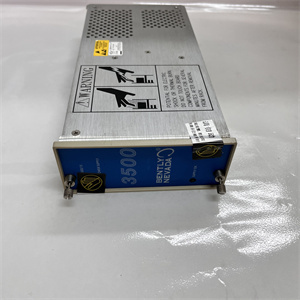
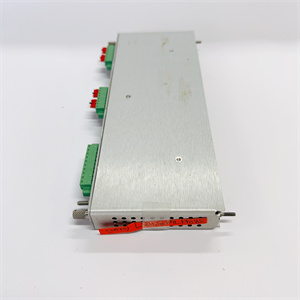
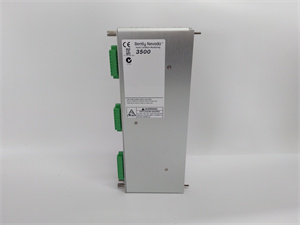
IS210AEAAH1B
The Real-World Problem It Solves
You are maintaining a GE 1.5MW wind turbine located in a coastal or offshore wind farm. The nacelle control cabinet is exposed to high humidity, salty sea spray, and significant temperature swings. A standard, uncoated I/O processor board has just failed due to corrosion and moisture ingress, causing an unplanned turbine shutdown and loss of power generation. You need a direct, drop-in replacement that can withstand these brutal environmental factors without compromising signal integrity. The IS210AEAAH1BCA solves this exact problem with its robust conformal coating and enhanced isolation, ensuring your turbine stays online even when the elements turn nasty .
Where you’ll typically find it:
- Wind Turbine Nacelles: Mounted within the main control cabinets of GE wind turbines, processing critical sensor data and control loops for blade pitch and yaw systems .
- Offshore & Coastal Industrial Sites: Deployed in any Mark VIe-controlled application (gas/steam turbines, compressors) where the control panel is exposed to high salinity, condensation, or airborne particulates .
- Heavy Industrial Automation: Serving as a reliable interface for high-voltage or noisy environments, leveraging its ±2000 V DC isolation to protect sensitive downstream electronics .
It acts as the resilient “front-line” interface between the chaotic outside world of field sensors and the pristine digital logic of the Mark VIe controller, shrugging off environmental abuse that would fry a standard circuit board.
Hardware Architecture & Under-the-Hood Logic
The “H1BCA” suffix denotes a specific configuration and revision within the AE (Acquisition & Excitation) series of Mark VIe printed circuit boards. Unlike generic controller boards, the IS210AEAAH1BCA is built from the ground up for survival and signal precision in distributed control systems .
- Military-Grade Conformal Coating: The most defining feature of the BCA variant is its comprehensive conformal coating. This chemical polymer layer is applied to the entire assembled PCB, sealing the integrated circuits (ICs), solder joints, and passive components against moisture, fungal growth, and dust. This prevents the formation of microscopic conductive paths (dendrites) caused by humidity, which are a primary cause of controller failures in wind turbines .
- High-Voltage Galvanic Isolation: Industrial environments are rife with electrical noise and transient voltage spikes. The BCA board incorporates robust isolation barriers, rated up to ±2000 V DC, between its input/output channels and the main controller logic. This ensures that a massive inductive voltage spike from a nearby contactor or VFD doesn’t “jump” across the board and fry the main Mark VIe processor .
- Modular AE Series Architecture: As part of the IS210 AE series, this board is designed for flexible integration. It supports various daughterboards and dual-width configurations, allowing it to be tailored for specific I/O requirements (analog, digital, or communication). The “H1” grouping indicates its compatibility with the first group of Mark VIe hardware architectures, ensuring seamless communication over the system’s internal bus (IONet/SPI) .
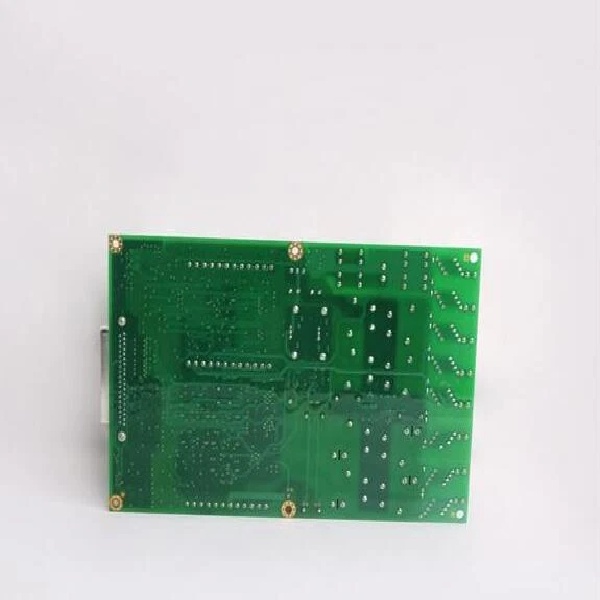
IS210AEAAH1B
Field Service Pitfalls: What Rookies Get Wrong
Torquing Down Connections on a Rigid PCB
A technician is replacing a failed board in a vibrating wind turbine nacelle. He threads the mounting screws through the factory-drilled insulation holes and tightens them as hard as he can to ensure a solid ground connection. Two months later, the board fails due to hairline cracks in the PCB substrate around the mounting holes.
- The Mistake: Over-tightening mounting screws on a rigid fiberglass PCB. Wind turbines vibrate constantly, and metal screws act as stress concentrators. Forcing the screw creates micro-fractures in the board’s internal copper layers, eventually leading to broken traces or short circuits.
- Field Rule: Always use a calibrated torque screwdriver when installing PCBs. Follow the manufacturer’s torque specifications (usually very low, around 5-7 in-lbs for PCB standoffs). If the board feels loose, use nylon washers to dampen vibration rather than cranking down on the screws.
Damaging the Conformal Coating During Handling
An engineer is performing routine maintenance in a humid turbine hub. He removes the IS210AEAAH1BCA board to inspect a connector and carelessly places it on a bare metal tool trolley. The impact chips the conformal coating off several key integrated circuits. Later, the turbine faults out during a rainstorm due to a short circuit on the exposed traces.
- The Mistake: Treating a conformally coated board like a standard, rugged piece of metal. The conformal coating is a thin, sometimes brittle layer. Dropping the board or sliding it against hard surfaces will flake or chip the coating, completely negating its moisture and dust protection.
- Quick Fix: Always place PCBs on a non-conductive, soft surface (like an anti-static foam pad or a rubber mat) during installation or inspection. Never slide the board across metal surfaces. If you accidentally scratch the coating, apply a small amount of field-repair conformal coating compound (available in pen/marker form) to reseal the exposed area before reinstalling.