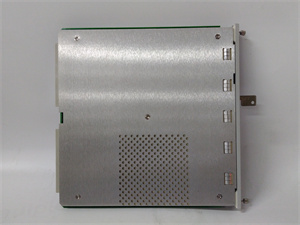
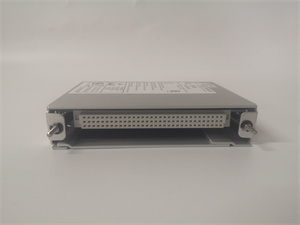
Description
Hard-Numbers: Technical Specifications
- Operating Voltage: 24 VDC (Nominal, 18-32VDC input range)
- Communication Protocols: Modbus TCP/IP, EGD (Ethernet Global Data), RNET
- Network Speed: 10/100 Mbps (Auto-negotiating Ethernet ports)
- Operating Temperature: -40°C to +70°C (Functions in freezing nacelles and sweltering power plant floors)
- Isolation Rating: 1500 VDC (Galvanic isolation between field wiring and backplane logic)
- Physical Dimensions: 178 x 51 x 305 mm (L x W x H)
- Mounting Style: DIN Rail or Mark VIe Rack Mount
- Diagnostics: Front-panel LED array (Power, Link/Activity, Status, Fault)
- Humidity Tolerance: 5% to 95%, non-condensing
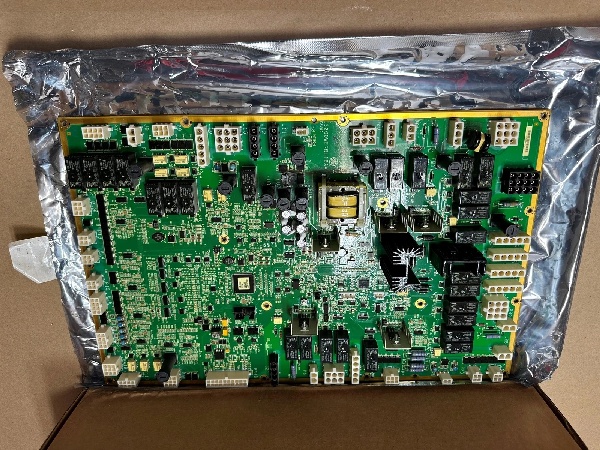
IS200WETBH1B
The Real-World Problem It Solves
You are commissioning a new gas turbine package, and the main Mark VIe rack is located 200 feet away from the lube oil console. Running hundreds of individual wires back to the main panel is a nightmare for voltage drop and signal noise. You need a rugged, distributed I/O block that can sit locally on the DIN rail, handle the harsh electrical environment near the pumps and heaters, and pipe clean, deterministic data back to the controller over a single Ethernet cable.
Where you’ll typically find it:
- Remote Turbine Skids: Mounted on DIN rails in local junction boxes for lube oil, fuel gas, or water injection skids.
- Wind Turbine Nacelles: Serving as the primary interface for Yankee drives, pitch motors, and vibration sensors.
- Retrofit Projects: Acting as a drop-in replacement to consolidate legacy serial communications into modern Ethernet architectures.
It eliminates long wire runs, reduces cabinet clutter, and provides a localized processing buffer that prevents network bottlenecks when the turbine hits full load.
Hardware Architecture & Under-the-Hood Logic
This board is the workhorse of the Mark VIe distributed architecture. It doesn’t care about the corporate network; it cares about reading sensors and executing logic. The “H1B” suffix denotes a specific hardware revision focused on improved MTBF and enhanced trace routing for high-noise environments.
- Signal Conditioning & Filtering: Raw 4-20mA analog loops and 24VDC discrete signals land on the terminal blocks. The board immediately clamps inductive voltage spikes (like those from a closing relay or a starting motor) and applies hardware-level low-pass filtering to strip out high-frequency noise from nearby VFDs.
- Local Processing & Logic Execution: The onboard processor buffers the cleaned data and executes any assigned fast logic. By handling the heavy lifting at the edge, it ensures the main controller isn’t flooded with irrelevant data or high-frequency interrupt requests.
- Network Injection & Deterministic Routing: The processed data is encapsulated into Ethernet frames and injected onto the RNET (Redundant Network). The onboard switch actively manages traffic flow, suppressing broadcast storms and ensuring critical control packets take priority over routine diagnostics.
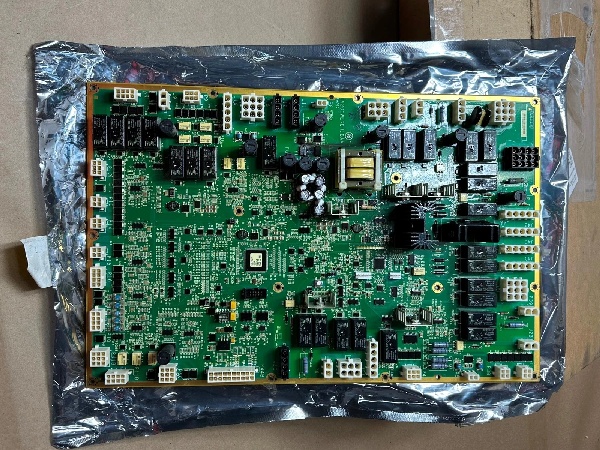
IS200WETBH1B
Field Service Pitfalls: What Rookies Get Wrong
Using the Module’s 24VDC as a Power Supply for Field Devices
A junior tech wires the 24VDC output from the WETB module directly to a bank of four 4-20mA pressure transmitters to “save time.” When the turbine starts, the inrush current from the transmitters overwhelms the module’s internal power regulator. The WETB browns out, dropping all local I/O and triggering a “Safety Chain Break” trip.
- Field Rule: The 24VDC terminals on this module are for sinking/sourcing field device signals, not for powering them. Always use a separate, dedicated 24VDC power supply for your transmitters and sensors. Keep the module’s power feed strictly for its own logic.
Ignoring Chassis Grounding and Creating Ground Loops
An electrician mounts the WETB on a painted DIN rail and connects the sensor shields directly to the module’s ground terminal. Because the turbine skid and the control cabinet have slightly different ground potentials, a ground loop forms. The HMI starts showing jumpy, erratic readings on all analog inputs, especially when the main generator excites.
- Quick Fix: Scrape the paint off the DIN rail or use a star washer to bite through the coating. Run a heavy-gauge ground wire from the module’s chassis ground terminal directly to the skid’s primary earth ground. Never connect sensor cable shields to the module; ground them at the sensor end only.
Forgetting to Terminate the Ethernet Network Properly
A contractor daisy-chains three WETB modules together using standard patch cables. He leaves the termination switches on the modules in the default “OFF” position. The unterminated Ethernet lines act as antennas, picking up massive EMI from the adjacent 480VAC bus. The resulting signal reflections cause massive packet loss, leading to “Network Storm” faults and a full turbine trip.
- Field Rule: For any linear Daisy Chain network architecture, the first and last nodes must have their 120-ohm termination enabled (either via DIP switch or physical jumper block). Always verify the physical layer with a cable tester before powering up the rack.
Commercial Availability & Pricing Note
Please note: The listed price is for reference only and is not binding. Final pricing and terms are subject to negotiation based on current market conditions and availability.