Description
Product Introduction
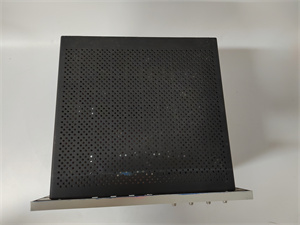
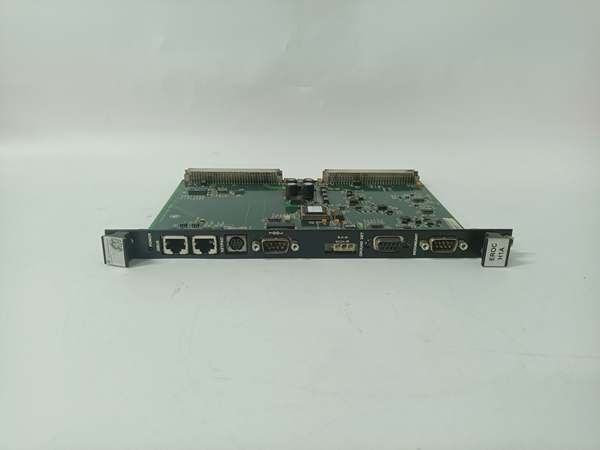
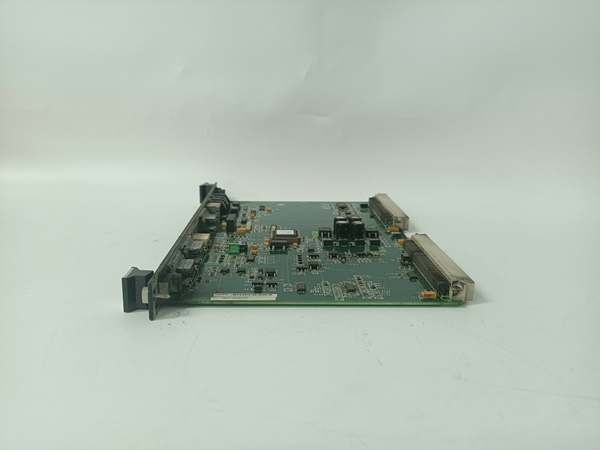
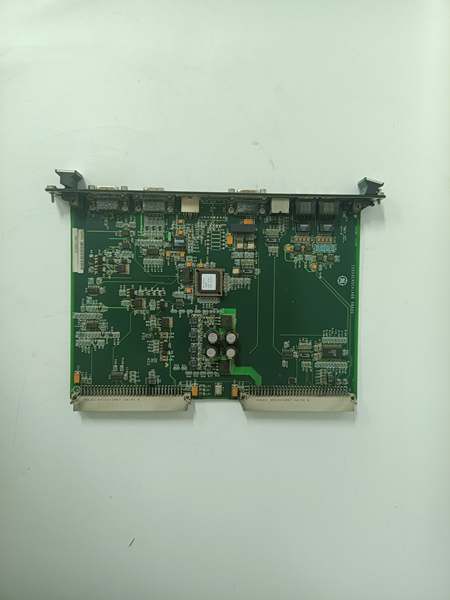
The is a critical safety terminal board designed as the final hardware barrier in Mark VIe turbine control systems. Its primary job is to monitor overspeed conditions and physically disconnect the emergency stop solenoids, cutting fuel to the turbine even if the main controller software hangs or the network fails.
This “ABB” revision supports Triple Modular Redundant (TMR) voting logic (2oo3), ensuring that two out of three channels must agree on a “Trip” command before actuating. It houses 8 independent SPDT (Form C) relays with a typical response time of under 5 milliseconds from signal detection to contact action. The board is conformal coated for corrosion resistance and is built to operate in high-vibration turbine compartments ranging from -30°C to +65°C .
IS200EROCH1ABB
Key Technical Specifications
- System Role: EROC (Emergency Overspeed Relay Output)
- Relay Count: 8 Independent (SPDT / Form C: NO, NC, Common)
- Coil Voltage: 24 Vdc (Range 18–32 Vdc, from EROC Processor)
- Contact Rating:
- Resistive: 5 A @ 250 V AC / 30 V DC
- Inductive: 2 A @ 250 V AC / 30 V DC
- Voting Logic: Hardware 2oo3 (Two-out-of-Three)
- Trip Response: < 5 ms (Signal to Contact Transition)
- Isolation: 1500 V AC (Coil-to-Contact), 1500 V AC (Channel-to-Channel)
- Diagnostics: Contact Weld Detect, Coil Open Detect, LED per Channel
- Connectors: 50-pin Ribbon (To EROC Proc), Barrier Strips (Field)
- Safety Rating: SIL-2 / SIL-3 Capable (System Dependent)
- Temp Range: -30 °C to +65 °C (Operational)
Quality Control Process (Engineer’s Perspective)
- Incoming Verification: Match the serial to the manifest. Inspect the 8 relay bodies for cracked casings—vibration fatigue is common in used units. Check barrier terminal screws for galvanic corrosion on copper lugs.
- Live Trip Test: Rig with 24 Vdc coil supply and 125 Vdc load sim. Simulate a 2oo3 vote scenario. We scope the NO/NC transition; bounce time must stay under 5 ms to prevent chattering the main trip solenoids.
- Electrical Parameter Test: Back-probe the 24 Vdc coil input with a Fluke 115. Megger the 250 V AC field terminals to chassis at 500 V; leakage must hold >10 MΩ to survive lightning surges in switchyards.
- Diag Verification: Force a “Weld” fault via test header. The board must flag the channel red—hardware sensing circuits are local to this board .
- Final QC & Packaging: Exercise relays 50 cycles to seat wipers. Bag in rigid ESD foam with desiccant. Label “QC Passed – EROC Trip Verified” with the date.
Replacement Pitfall Guide
❗ TMR Voting Uniformity: The is almost always used in triplets (R, S, T racks). Mixing this “ABB” revision with an older “A” or “B” revision in the same TMR set causes “Hardware Mismatch” alarms and may inhibit voting logic or force degradation to Simplex mode.
❗ Wiring Polarity (Common vs NO/NC): These are Form C relays. In “Fail Safe” designs, the solenoid is often energized via the Common (C) and Normally Closed (NC) path. Landing the 125 Vdc Trip Bus on the Normally Open (NO) terminal by mistake leaves the fuel valve permanently de-energized (turbine won’t start). Verify the site wiring diagram—don’t trust the labels blindly.
❗ Field Wiring Faults (The Silent Killer): The #1 cause of death for EROC boards isn’t age; it’s external shorts. If your field wiring to the E-Stop solenoid has a ground fault or insulation breakdown, the voltage surge back into the EROC card can fry the output drivers instantly. Megger (insulation resistance test) your field cables at 500V before connecting a new board.
❗ Firmware/Silent Fail: The board may look healthy (Green LEDs), but if the internal voting logic firmware mismatches the main processor (ToolboxST version), it can enter a “Silent Fail” where it refuses to trip or resets randomly. Always check the .tgtproject file compatibility after swapping hardware .
❗ ESD Sensitivity: The 50-pin ribbon headers go to the EROC processor. Discharge to the panel frame before unplugging—static in dry turbine halls (common in northern China winters) can arc the sensing circuits.
Keep these in mind and you’ll cut 90% of rework time.
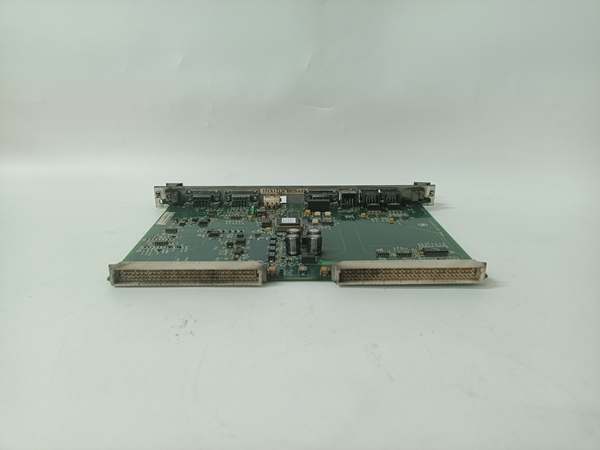
IS200EROCH1ABB
Compatibility Matrix & Benchmarks
- → GE IS200EROCH1A: Needs Adaptation— “ABB” is a specific coated/hardware revision; for TMR, all three racks (R,S,T) should ideally match this “ABB” spec to avoid vote timing skew.
- → GE IS200EROC (Processor): Direct— Physical mate for the EROC Logic Processor.
- → GE IS200TREGH1BEC: Incompatible— TREG is typically for 125V Trip Bus primarytripping; EROC is specialized for Overspeed/ESD logic chains.
- Trip Response: < 5 ms (Hardware Vote to Contact Break/Make)
- Vote Consensus: 2oo3 (Hardware-level, no software delay)
- Isolation Test: 1500 V AC (Coil to Contact, 1 min dwell)