Description
Product Introduction
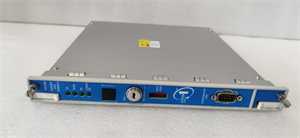
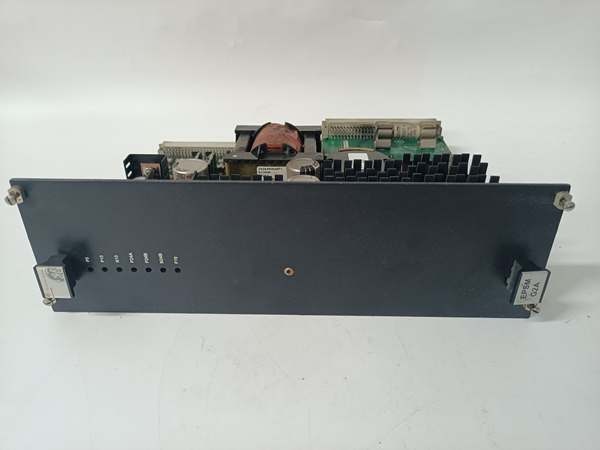
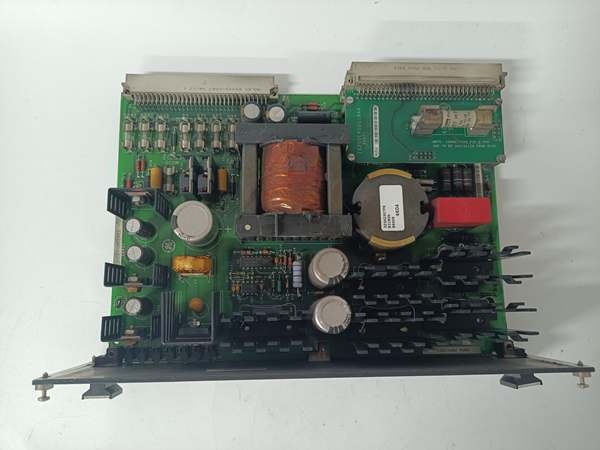
The is a Generation 2 Enhanced Power Supply Module (EPSM) designed for the Mark VI and Mark VIe turbine control systems, as well as EX2100 excitation racks. It serves as the “heart” of the control cabinet, converting wide-range AC input (90-264V AC) or DC input into stable, isolated DC rails required by the processors, I/O packs, and communication modules.
The “G2A” denotes the Generation 2 hardware with specific firmware/logic updates, while the “C” suffix represents a specific revision level often associated with improved thermal management and component hardening compared to earlier revisions (like A or B). These units are typically installed in redundant pairs; if one fails, the other seamlessly takes over without tripping the turbine, provided the system is configured for redundancy.
Key Technical Specifications
| Parameter | Value |
|---|---|
| Input Voltage | 90 – 264 VAC (Auto-sensing) or 100 – 300 VDC |
| Frequency | 47 – 63 Hz (AC Mode) |
| Output 1 (Logic) | +5 VDC @ ~20 A (Typical, varies by load) |
| Output 2 (Field) | +24 VDC @ ~5 A (Typical, for relays/solenoids) |
| Total Power | ~220W – 250W (Continuous) |
| Hold-Up Time | > 20 ms (At full load, prevents brownout trips) |
| Efficiency | > 85% – 90% (Typical) |
| Protection | OVP, OCP, Short Circuit, OTP (Auto-recovering) |
| Indicators | AC OK, +5V OK, +24V OK, FAULT, REDUNDANCY |
| Mounting | Mark VI/VIe Chassis Slot (e.g., IS200CHAS) or DIN Rail |
| Temp Range | -30 °C to +65 °C (Operating) |
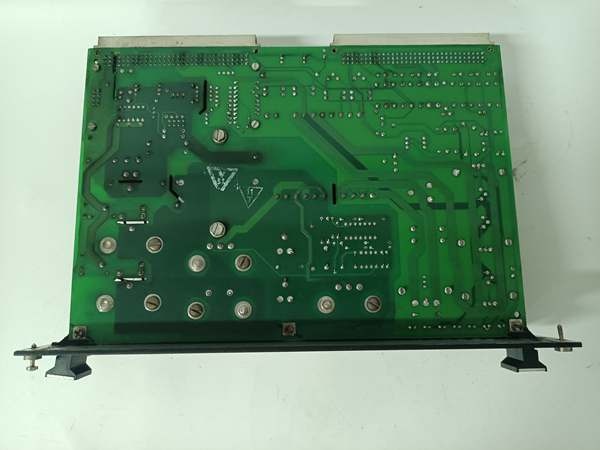
IS200EPSMG2AEC
Quality Control Process (Engineer’s Perspective)
- Incoming Verification: Match the serial to documentation. Inspect the terminal blocks for heat discoloration (sign of previous overloads) and ensure the backplane “tongue” connector (pins) is straight and free of carbon tracking.
- Load Bank Test: Connect to a programmable DC load. Ramp the +5V rail from 0A to 20A while monitoring with an oscilloscope. Ripple must stay under 50mV p-p; excessive ripple causes random CPU resets in adjacent VME cards.
- Brownout Simulation: Use a Variac to drop input voltage to 85V AC. The unit must shut down gracefully or hold up for >20ms without sending “glitch” voltages to the backplane that could corrupt the VCMI/VPRO processors.
- Thermal Check: Run at 80% load for 1 hour. Check the rectifier bridge and FETs for hot spots (>85°C case temp is a reject). The “C” revision usually handles heat better, but aged thermal paste on heatsinks is a common failure point.
- Final QC: Verify Ground Strap resistance (<1 Ohm to chassis). Bag in anti-static foam. Label “QC Passed – Load/Volt OK”.
Replacement Pitfall Guide
❗ The “Silent” Inrush Trip: The has a high inrush current (can spike to 40A for ms at startup). If you are replacing a unit and the main cabinet breaker trips instantly upon insertion, your breaker is likely “Fast Trip” (Type B/C). You may need a Time-Delay (Slow-Blow) characteristic or to ensure the soft-start circuit on the PSU is functioning.
❗ Redundancy Orphan: If you are running a redundant pair (Unit A & B), do not mix “G2A” with “G1” (older) revisions if possible. While sometimes compatible, differences in the “Redundancy OK” handshaking logic can cause nuisance alarms or failover glitches. Always aim to match the revision of the surviving unit.
❗ Grounding is Mandatory: This unit is sensitive to grounding. If the chassis ground resistance is high (>1 Ohm), you will get a steady “FAULT” LED even if voltages are perfect. Always check the chassis ground strap integrity before condemning the PSU.
❗ Seating Force: The rear connector is a tight 96-pin style. “Half-seating” causes intermittent 5V sag, leading to “VME Bus Error” or “Processor Fail” on other cards. Push firmly until the ejector lever locks with a click.
❗ DC Input Polarity: While primarily AC, these accept DC input. Reversing DC polarity on the terminals will blow the input bridge rectifier instantly (no internal reverse-polarity fuse on most revisions).
Keep these in mind and you’ll cut 90% of rework time.
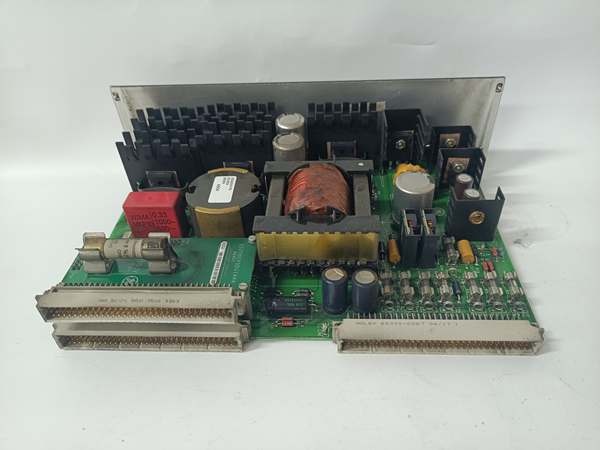
IS200EPSMG2AEC
Compatibility Matrix & Benchmarks
- → GE IS200EPSMG1A : Caution— G2A is Gen 2 (higher efficiency/current). Generally backward compatible in Mark VIe, but check firmware/backplane ID in ToolboxST. Mixing in a redundant pair is not recommended.
- → GE IS200CHASG1 (Chassis) : Direct— Slides into standard Mark VI/VIe controller or I/O rack power slots.
- → Standard ATX PSU : Incompatible— Proprietary backplane pinout and form factor.
- Efficiency: > 88% (Typical at 50% load)
- Switching Freq: ~50 kHz (Digital Control)
- MTBF: ~100,000+ hours (Depending on environment)