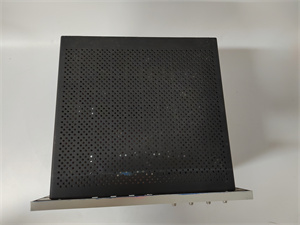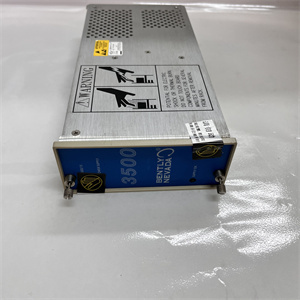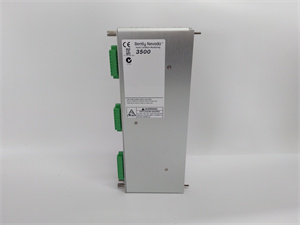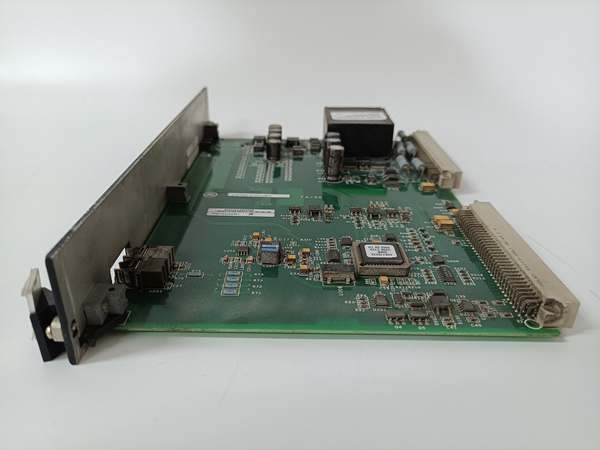
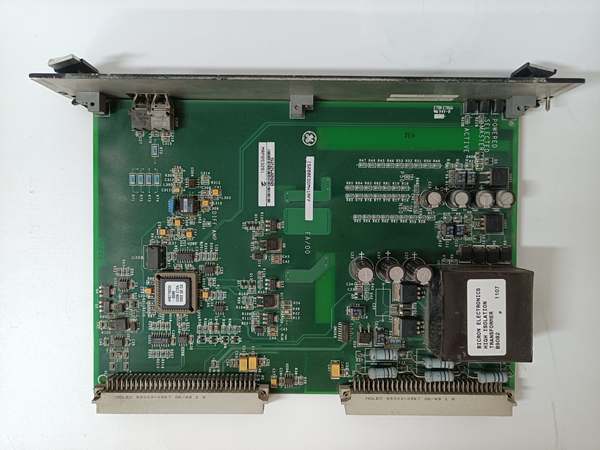
Description
Hard-Numbers: Technical Specifications
- Communication Interface: High-Speed Serial Link (HSSL) via Fiber Optic
- Input Signal: Attenuated AC voltage from EXAM module (Nominal 50V p-p)
- Monitoring Range: 0 – 10 MΩ (typical resistance to ground)
- Response Time: < 100 ms (typical fault detection)
- Operating Temperature: -30°C to +65°C
- Physical Dimensions: 9 in (H) x 6 in (D) x 1.5 in (Faceplate W)
- Mounting Location: Exciter Power Backplane Rack (EPBP)
- Diagnostics LEDs: 3x (Power, Active, Selective Master)
- Configuration Method: P2 Connector Jumper Pins (Master/Slave/Ctrl)
GE IS200EGDMH1A
The Real-World Problem It Solves
You’re sitting in the control room of a 9FA gas turbine, and suddenly the annunciator screams “Generator Field Ground Alarm.” The turbine hasn’t tripped yet, but you know that a single ground fault in a floating DC system is a disaster waiting to happen. If a second point grounds out, you’ve got a dead short across the rotor winding, massive circulating currents, and a million-dollar rotor rewind on your hands.
This EGDM board eliminates that ticking time bomb. It doesn’t sit idle; it actively injects a low-level AC test signal into the rotor field circuit and measures the leakage path to ground. It tells you exactly how healthy your rotor insulation is before it blows up in your face.
Where you’ll typically find it:
- EX2100 Exciter Cabinets: Mounted in the EPBP rack, interfacing with the EXAM (Attenuator Module) and the DSPX controller.
- Large Synchronous Generators (Gas/Steam/Hydro): Protecting multi-million-dollar rotor windings from insulation breakdown.
- Retrofit Projects: Upgrading legacy excitation systems with modern, optically isolated ground fault detection.
It turns a silent, invisible insulation failure into a quantifiable resistance reading on your HMI.
Hardware Architecture & Under-the-Hood Logic
This board isn’t just passively listening; it’s an active signal generator and impedance calculator. It lives in the exciter power rack, acting as the vigilant guardian of the rotor winding integrity. The “AFF” suffix indicates RoHS 6/6 lead-free component soldering and optimized thermal plane design for increased MTBF.
- AC Signal Injection & Attenuation: The DSPX controller generates a 50V peak-to-peak AC test signal. This signal travels via fiber optic to the EGDM. The EGDM then enables the EXAM module, which attenuates that signal (typically 10:1) and injects it into the rotor field circuit.
- Leakage Current Sensing: The EXAM module measures the minute current flowing from the injected signal to ground through any insulation weaknesses. It sends this raw analog signal back to the EGDM via a multi-conductor cable.
- Signal Conditioning & Digitization: Inside the EGDM, a high common-mode rejection differential amplifier cleans up the signal. A Voltage-Controlled Oscillator (VCO) and ADC convert this analog leakage current into a digital pulse stream.
- Impedance Calculation & Reporting: The EGDM calculates the equivalent resistance to ground in real-time. It packages this data and shoots it back to the DSPX controller via the fiber optic link. If the resistance drops below the programmable alarm threshold, the DSPX trips the turbine to save the rotor.
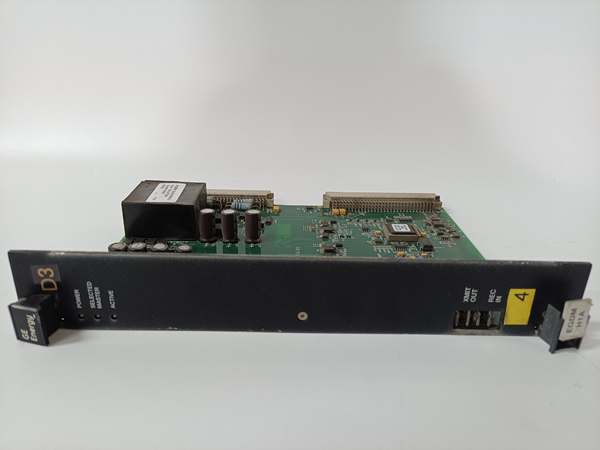
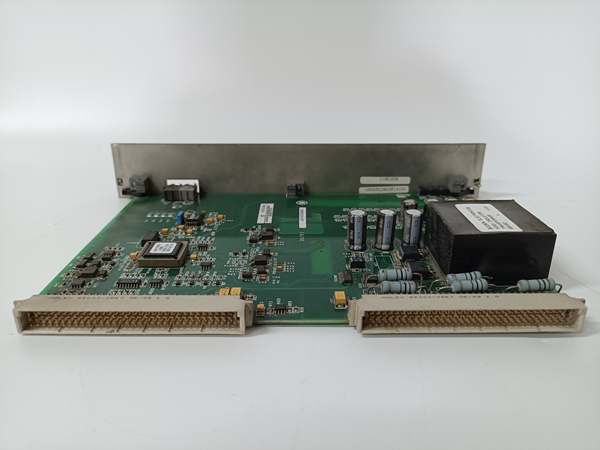
GE IS200EGDMH1A
Field Service Pitfalls: What Rookies Get Wrong
Mixing Up the Redundancy Roles (M1/M2/C) with P2 Jumpers
A rookie is replacing a failed EGDM in a triple-redundant EX2100 system. He grabs a generic H1A board and slaps it in. The LEDs light up green, but the HMI screams “EGDM Configuration Mismatch.” The “Selected Master” LED is blinking furiously because the P2 jumper pins are set for a simplex system, not the designated Controller (C) or Master (M1/M2) roles.
- Field Rule: Before pulling the failed board, photograph the P2 connector jumper settings on the backside. In a redundant system, you must set the jumpers to define whether this specific EGDM serves as the Controller (C), Master 1 (M1), or Master 2 (M2). A mismatch here breaks the voting logic and renders the board useless.
Crimping Strands Instead of Ferrules on the EXAM Cable
A tech is re-terminating the 9-pin cable between the EGDM and the EXAM module in the auxiliary cabinet. To save time, he lands the stranded wires directly into the terminal block without ferrules. Two months later, a single strand of wire migrates sideways, touching the neighboring terminal and creating a phantom ground path. The EGDM now reads a permanent 5kΩ ground fault, causing constant low-insulation alarms.
- Quick Fix: Always use bootlace ferrules on stranded wires entering the EGDM’s terminal blocks. Double-check the torque (typically 5-7 lb-in) on the exam cable connections. Loose, un-ferruled strands are the #1 cause of nuisance ground fault alarms in my 25 years of service.
Attempting Local Repairs on Lead-Free (RoHS 6/6) Boards
A tech notices a cold solder joint on a capacitor near the VCO chip and tries to touch it up with a standard 63/37 leaded solder iron. The lead-free solder on the board has a higher melting point. The tech cranks the iron to 400°C, delaminates the PCB trace, and utterly destroys the $10,000 board.
- Field Rule: Never attempt to solder or rework RoHS 6/6 hardware in the field. These boards require specialized lead-free solder paste and precise temperature-controlled reflow ovens. If you spot a physical defect, RMA the board to a certified repair center with a lead-free capable line. You are not equipped to fix it in a turbine cabinet.
Commercial Availability & Pricing Note
Please note: The listed price is for reference only and is not binding. Final pricing and terms are subject to negotiation based on current market conditions and availability.