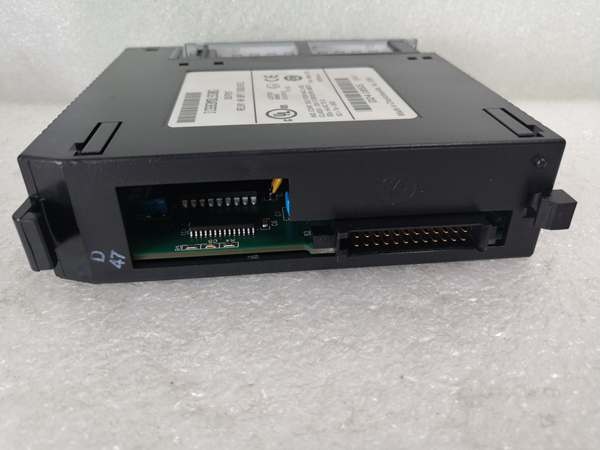
Description
Hard-Numbers: Technical Specifications
- Rated Input Voltage: 24VDC
- Input Voltage Range: 0 to +30VDC
- Input Current: 7mA typical at rated voltage
- On-State Voltage: 11.5 to 30VDC
- Off-State Voltage: 0 to +5VDC
- Response Time: 7ms typical (on and off)
- Backplane Power Draw: 80mA from +5VDC bus
- External Power Draw: 125mA from +24VDC supply (when sourcing power to field devices)
- Isolation Rating: 250VAC continuous / 1500VAC for 1 minute (field-to-backplane)
- Isolation (with 24V OUT used): 50VAC continuous / 500VAC for 1 minute
- Operating Temperature: 0°C to +60°C (+32°F to +140°F)
- Points per Module: 16 single-group inputs
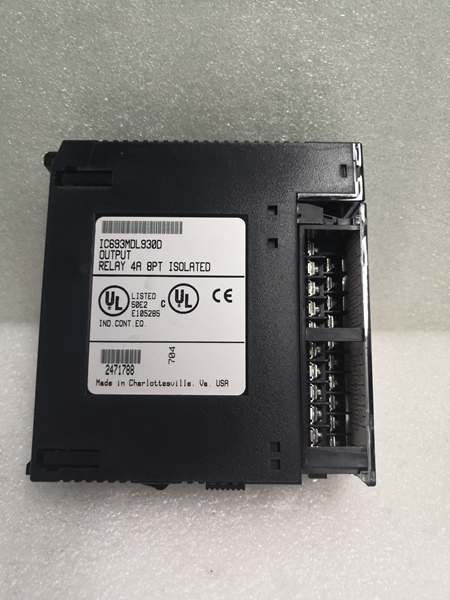
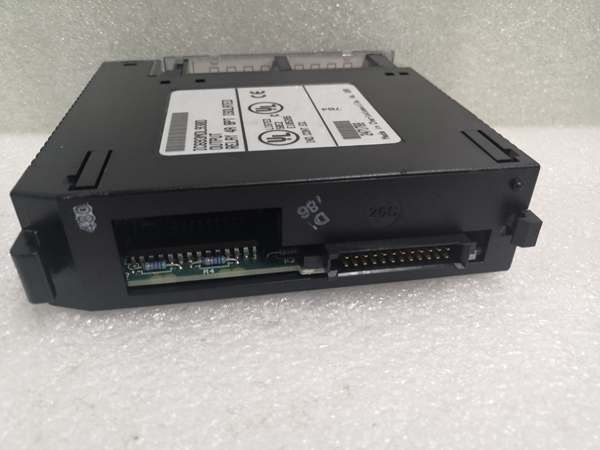
GE IC693MDL930
The Real-World Problem It Solves
This module eliminates the headache of stocking separate sourcing and sinking input cards. One SKU handles both configurations—wire it positive logic for NPN sensors, negative logic for PNP sensors. The built-in +24V OUT terminals mean you can power two-wire proximity switches directly from the module, saving panel space on external power supplies.
Where you’ll typically find it:
- Packaging lines with banks of 24V proximity switches detecting product presence
- Conveyor systems reading photoeyes and limit switches across multiple zones
- Machine tool cells interfacing with safety interlock contacts and operator stations
Bottom line: One module covers your 24V DC input requirements regardless of sensor output type, reducing spare parts inventory and wiring complexity.
Hardware Architecture & Under-the-Hood Logic
This module is a passive input conditioner—no onboard microprocessor. The RX3i CPU polls the module across the backplane and reads the optically isolated input states directly. All logic configuration is determined by how you wire the field terminals, not by software settings.
Signal flow breakdown:
- Field device (sensor or switch) connects to input terminal; logic polarity depends on whether you wire to +24V OUT or 0V OUT as the common reference.
- Input current flows through an internal optocoupler LED; the 7mA threshold ensures reliable switching even with voltage drops on long cable runs.
- Optocoupler output drives a latch that the CPU reads during its I/O scan cycle.
- +24V OUT and 0V OUT terminals are tied directly to the external 24V supply feeding the module—there is no internal isolation between these terminals and the input commons.
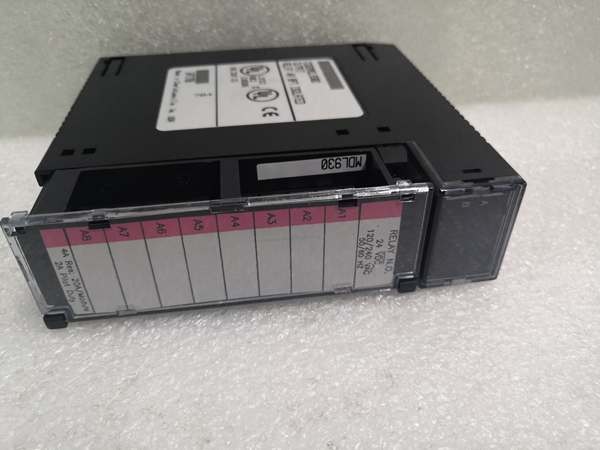
GE IC693MDL930
Field Service Pitfalls: What Rookies Get Wrong
Using the +24V OUT Terminal Without Understanding Isolation DegradationWhen you power field devices from the module’s +24V OUT terminal, the isolation rating drops from 250VAC to 50VAC continuous. This is a critical detail on systems where field wiring runs through electrically noisy environments or where ground potential differences exist between panels.
- Field Rule: If isolation matters—such as wiring between separate cabinets or across building grounds—do not use the +24V OUT terminal. Bring a separately fused 24V supply to the field devices instead.
Confusing Sourcing and Sinking WiringThe module supports both positive logic (sourcing inputs, sinking sensors) and negative logic (sinking inputs, sourcing sensors) based entirely on which common terminal you reference. Wire it wrong and every input reads permanently ON or OFF.
- Quick Fix: Before powering up, verify your sensor output type (NPN vs. PNP) and match it to the wiring diagram in the user manual. NPN sensors require positive logic; PNP sensors require negative logic.
Overloading the +24V OUT TerminalThe +24V OUT terminal can only supply the module’s rated current capacity. If you daisy-chain too many sensors or add indicators, you risk blowing the internal trace or causing voltage sag that leads to intermittent input faults.
- Field Rule: Calculate total field device current draw. If it exceeds 500mA aggregate, use an external power supply for the sensors and wire the module inputs only.
Commercial Availability & Pricing Note
Please note: The listed price is for reference only and is not binding. Final pricing and terms are subject to negotiation based on current market conditions and availability.