Description
Hard-Numbers: Technical Specifications
- Input Voltage: 120/240 VAC or 125 VDC nominal
- AC Input Range: 85-264 VAC (50/60Hz)
- DC Input Range: 100-300 VDC
- Total Output Capacity: 100W maximum
- +5VDC Output: 5.0-5.2VDC (5.1VDC nominal), 40W max
- +24VDC Relay Output: 24-28VDC, 30W max
- +24VDC Isolated Output: 21.5-28VDC, 40W max
- +5VDC Backplane Current: Approximately 8A maximum
- Input Power: 120VA (AC) / 70W (DC) at full load
- Inrush Current: 10A peak, 250ms maximum
- Holdup Time: 20ms minimum
- Overvoltage Protection: 6.4-7VDC on +5V rail
- Overcurrent Protection: 8A maximum on +5V rail
- Communication: RS-485 serial port (9-pin sub-D connector)
- Operating Temperature: 0-60°C
- Mounting Location: Leftmost slot of baseplate only
- Internal Fuse: GE catalog 44A724627-109 or revision-specific equivalent (verify fuse rating on your specific unit)
- Certifications: CE compliant, cULus listed, Class I Division 2 rated

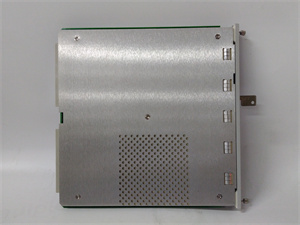
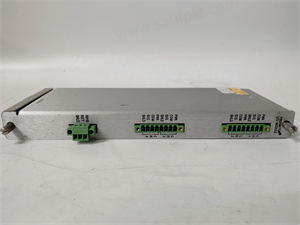
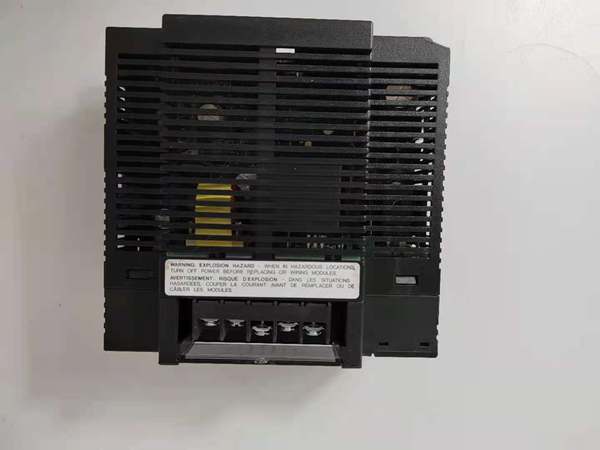
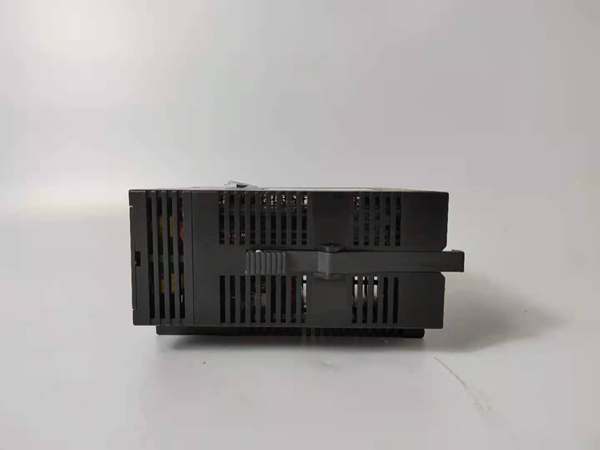
GE IC693PWR322
The Real-World Problem It Solves
The PWR322F solves the same core problem as base PWR322—eliminating dual power supplies in heavily loaded racks where PWR321’s 30W limit causes brownouts. Revision F includes component-level refinements that improve long-term reliability in harsh environments: upgraded capacitors with higher temperature ratings, improved EMI filtering for VFD-heavy installations, and tighter voltage regulation tolerances on the isolated 24V rail. These aren’t game-changers on paper, but in the field they mean fewer nuisance trips and longer MTBF in hot, noisy cabinets.
Where you’ll typically find it:
- Petrochemical process unit control cabinets with analog-heavy I/O configurations
- Power generation E-trip systems requiring redundant power with high-current capability
- Mining haul truck PLC systems where vibration and temperature extremes kill standard supplies faster
Bottom line: PWR322F delivers the same 100W punch as earlier PWR322 revisions, but Revision F’s component upgrades make it more resilient in environments that fry lesser supplies.
Hardware Architecture & Under-the-Hood Logic
PWR322F shares identical electrical architecture to base PWR322—AC/DC input, EMI filtering, bridge rectification, high-frequency switching at 100W capacity. The Revision F updates are in component selection: higher-grade electrolytic capacitors (105°C rating vs 85°C in earlier revisions), improved ferrite cores on the EMI filter for better high-frequency noise suppression, and tighter-tolerance voltage references on the regulator circuits. You won’t find these listed in the standard specs, but they’re the difference between a supply that lasts 10 years in a 55°C cabinet and one that fails in 3.
Internal signal flow and protection logic:
- Input stage: Same beefy EMI filter and bridge rectifier as base PWR322, but Revision F uses higher-temperature-rated capacitors and improved ferrite material for better EMI suppression in VFD-heavy environments.
- Primary switching: Same high-power DC-DC converter architecture. Revision F may include updated switching transistors with lower Rds(on) for slightly improved efficiency (83-85% vs 82-84% in earlier revisions), reducing heat generation at full load.
- Output isolation: Three separate secondary windings with higher current capability. Revision F uses upgraded rectifier diodes with better thermal characteristics, reducing voltage sag under heavy transient loads like simultaneous solenoid actuation.
- Protection circuitry: Same scaled current limiters (8A for +5VDC). Revision F may include faster-acting short-circuit detection circuits—milliseconds faster crowbar response can save downstream components during catastrophic wiring faults.
- Diagnostic monitoring: Same supervisory circuit architecture. Revision F might include updated firmware or threshold tuning on the RS-485 diagnostic registers to provide earlier warning of voltage sag or thermal stress before shutdown occurs.
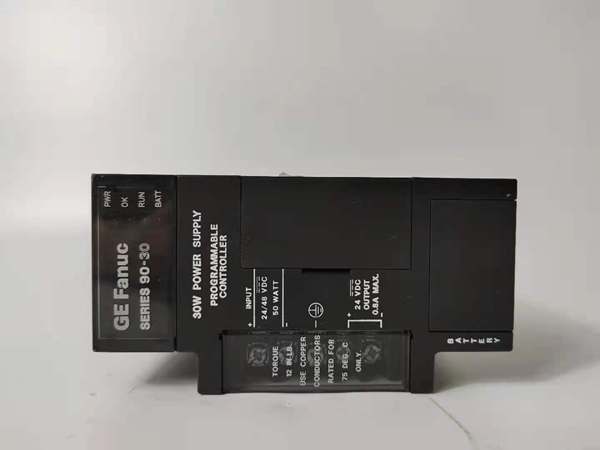
GE IC693PWR322
Field Service Pitfalls: What Rookies Get Wrong
Fuse Rating Revision ConfusionRevision F might use a different internal fuse rating than earlier PWR322 revisions due to component updates. Techs blindly install GE 44A724627-109 (standard PWR321 fuse) without checking Revision F spec sheet and experience premature failures or inadequate protection.
Field Rule: Pull the fuse from your specific PWR322F unit before replacement and read the catalog number stamped on the fuse end cap. Don’t assume earlier revision fuse ratings carry over—Revision F components might require different protection characteristics. Match the exact catalog number or use verified cross-reference from GE documentation.
Heat Dissipation UnderestimationRevision F’s efficiency improvements are marginal (1-2%), but techs treat it like a magical heat reducer and jam it into already-overheated cabinets. 100W output is still 100W of heat that needs to go somewhere—Revision F helps marginally but doesn’t eliminate the need for proper ventilation.
Quick Fix: Design your cabinet thermal management for worst-case 100W load regardless of revision. If you’re pushing Revision F hard, add forced ventilation or relocate the module away from other heat sources. Don’t bank on Revision F’s efficiency improvements to solve a pre-existing cooling problem.
EMI Filtering ExpectationsRevision F includes improved EMI filtering, but techs expect it to solve noise issues caused by poor cabinet grounding or cable routing. The upgraded ferrite cores help, but they can’t fix fundamental grounding mistakes or unshielded sensor cables running next to VFD power conductors.
Field Rule: Use Revision F’s improved filtering as insurance, not a cure-all. Implement proper grounding practice—single-point ground reference, shielded cables, separation of power and signal conductors. If you still have noise problems after installing Revision F, check your installation basics before blaming the module.
Thermal Derating at High AmbientRevision F uses 105°C-rated capacitors vs 85°C in earlier revisions, giving better high-temperature tolerance. Techs push Revision F to 60°C ambient non-终止, thinking “it’s rated for it,” and still experience shortened lifespan. The capacitors survive longer, but other components (semiconductors, PCB traces) don’t benefit equally.
Quick Fix: Derate to 50°C continuous ambient for long-term reliability regardless of capacitor rating. If your cabinet runs at 55-60°C ambient, add active cooling—don’t assume Revision F’s component upgrades make it immune to thermal stress. Heat is still the enemy, even with better components.
Backplane Current OverconfidenceRevision F delivers the same 8A +5VDC as base PWR322, but techs load it to 100% thinking “Revision F can handle more.” Component upgrades don’t increase rated capacity—they just improve reliability at rated capacity. Loading to 8A continuous still causes accelerated wear.
Field Rule: Derate to 80% of rated capacity (6.4A continuous on +5VDC) for reliable operation regardless of revision. Revision F might last longer at 100% load, but you’re still operating beyond recommended design margins. If you need more than 6.4A continuous, install a second PWR322F rather than pushing one unit to its limit.
Revision Mixing in Redundant ConfigurationsTechs mix Revision F with earlier revisions in redundant supply setups, expecting them to share load equally. Voltage regulation differences between revisions cause unequal current sharing—one supply might carry 70% of load while the other carries 30%, leading to premature failure on the heavily-loaded unit.
Quick Fix: Use identical revisions (all Revision F) in redundant configurations. If you’re mixing due to inventory constraints, add diode isolation between supplies or implement current-sharing circuits. Never rely on voltage regulation tolerances across different revisions to automatically balance load.
Commercial Availability & Pricing Note
Please note: The listed price is for reference only and is not binding. Final pricing and terms are subject to negotiation based on current market conditions and availability.