Description
Hard-Numbers: Technical Specifications
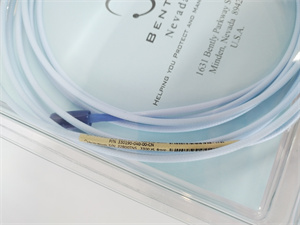
- Product Type: Cable Kit for High-Density I/O Modules
- Cable Quantity: 2 cables per kit (left cable IC693CBL327, right cable IC693CBL328)
- Connector Type: Fujitsu FCN-365S024-AU 24-pin connector on one end, stripped wire ends on other end
- Number of Pins: 24 pins per connector
- Current Rating: 1.2 Amps per conductor
- Cable Length: 10 feet (3 meters) per cable
- Connector Design: Right-angle connection for reduced clearance space
- Kits per Module: 1 kit per 32-point I/O module
- Weight: 1.88 lbs (0.85 kg) per kit
- Compatible Modules: 32-point I/O modules (IC693MDL654, IC693MDL655, IC693MDL752, IC693MDL753)
- Product Lifecycle Status: Discontinued/Obsolete
The Real-World Problem It Solves
Standard straight-connector cables require significant clearance space in front of PLC racks, making installation difficult in space-constrained control cabinets. The IC693CBK001 cable kit addresses this constraint with right-angle connectors that reduce required clearance while providing safe, high-density connections for 32-point I/O modules handling high-tension circuits.
Where you’ll typically find it:
- Space-constrained cabinets: Control panels with limited front clearance for cable connections
- High-density I/O installations: Systems using 32-point I/O modules requiring dual 24-pin connectors
- Retrofit projects: Replacing older straight-connector cables with modern right-angle designs
- Direct mount applications: I/O modules installed without terminal blocks, using direct cable connections
Bottom line: The IC693CBK001 provides high-density, right-angle cabling solutions for Series 90-30 32-point I/O modules, reducing installation space requirements while maintaining safe current-carrying capacity for high-tension circuits.
Hardware Architecture & Under-the-Hood Logic
The IC693CBK001 is a cable kit, not an electronic module. It consists of two physical cables designed to connect Series 90-30 32-point I/O modules to field wiring. The kit includes one left cable (IC693CBL327) and one right cable (IC693CBL328), each featuring a 24-pin Fujitsu connector on one end and stripped wire ends on the other.
-
Connector Design
- Fujitsu FCN-365S024-AU 24-pin connector provides secure, high-density connection
- Right-angle design reduces front clearance space required for cable connections
- Replaces older straight-connector cables for improved cabinet space utilization
-
Conductor Specifications
- 24 conductors per cable, each rated for 1.2 Amps current capacity
- Designed for high-tension circuit applications
- Stripped wire ends on field side for direct termination to terminal blocks or field devices
-
Cable Construction
- 10-foot (3-meter) length provides adequate reach for most cabinet installations
- High-density insulation for protection in industrial environments
- Shielded construction to minimize electrical noise interference
-
Module Compatibility
- Specifically designed for 32-point Series 90-30 I/O modules
- Compatible modules: IC693MDL654, IC693MDL655, IC693MDL752, IC693MDL753
- Dual 24-pin connector modules require both left and right cables
-
Installation Scenarios
- Direct mount: Connects directly to I/O module when using direct mounting method
- Generic terminal block: Useful when I/O module installed with generic terminal strip
- Replacement cable: Upgrades older straight-connector cables to right-angle design
-
Current Rating Considerations
- 1.2 Amps per conductor suitable for most discrete I/O applications
- When used with 16-point output modules, current rating may need modification
- Always verify total load per conductor does not exceed 1.2 Amps
Field Service Pitfalls: What Rookies Get Wrong
Using with incompatible I/O modules
Rookies attempt to use IC693CBK001 cables with 16-point I/O modules or modules without dual 24-pin connectors. The cables don’t fit, and they waste hours trying to force incorrect connections.
- Field Rule: IC693CBK001 is specifically designed for 32-point I/O modules with dual 24-pin connectors (IC693MDL654, 655, 752, 753). Never use with 16-point modules or modules without the correct connector type. Verify I/O module compatibility before ordering cables.
Exceeding 1.2 Amp current rating
Rookies connect high-current devices to the stripped wire ends without calculating total load. Multiple high-current devices on a single conductor exceed the 1.2 Amp rating, causing overheating and potential cable damage.
- Field Rule: Never exceed 1.2 Amps per conductor. Calculate total load for each wire, including all connected devices. For high-current applications, use appropriately sized field wiring and consider using separate conductors for high-current loads. When in doubt, use the I/O module’s terminal block instead of direct cable connection.
Mixing left and right cables incorrectly
Rookies install both cables as left-side or both as right-side. The connector orientation doesn’t match the I/O module’s left and right connector positions, forcing improper connections or preventing connection entirely.
- Field Rule: Install left cable (IC693CBL327) on the left connector and right cable (IC693CBL328) on the right connector of the I/O module. The cables are not interchangeable due to connector pinout differences. Label cables during installation to prevent confusion.
Over-tightening connector screws
Rookies overtighten the 24-pin connector screws during installation. The excessive torque damages the connector housing or strips the threads, causing poor electrical contact and intermittent connections.
- Field Rule: Tighten connector screws to manufacturer-specified torque only (typically finger-tight or minimal tool torque). The connector is designed for secure connection without excessive force. If connector feels loose, check for bent pins or debris before applying additional torque.
Using with damaged connectors
Rookies install cables with bent or corroded connector pins. The poor electrical contact causes intermittent I/O faults that are difficult to trace back to the cable connection.
- Field Rule: Inspect 24-pin connectors before installation for bent pins, corrosion, or debris. Straighten bent pins carefully with non-conductive tools. Clean corroded pins with electrical contact cleaner. Never install a cable with damaged connectors—replace it.
Not accounting for cable bend radius
Rookies make sharp bends in the cables near the connector to fit tight spaces. The sharp bends damage internal conductors and cause intermittent connections or open circuits.
- Field Rule: Maintain minimum bend radius (typically 10x cable diameter) when routing cables. Use cable management systems to support cables and prevent sharp bends. Never force cables into tight spaces—re-route to accommodate proper bend radius.
Ignoring cable shielding
Rookies leave shielded cables ungrounded or ground at both ends. This creates ground loops and defeats the cable’s noise immunity, causing erratic I/O behavior in electrically noisy environments.
- Field Rule: Properly ground cable shields at one end only (typically the cabinet/PLC end). Never ground shields at both ends. For long cable runs, verify shield continuity and ensure proper grounding practices are followed to maintain noise immunity.
Using incorrect wire strippers
Rookies use oversized wire strippers on the stripped wire ends. They nick or damage conductors, creating weak points that fail under vibration or thermal cycling.
- Field Rule: Use properly sized wire strippers for the wire gauge. Strip only enough insulation to make secure connections without leaving excessive bare conductor exposed. Verify no conductor strands are cut or damaged during stripping before making connections.
Commercial Availability & Pricing Note
Please note: The listed price is for reference only and is not binding. Final pricing and terms are subject to negotiation based on current market conditions and availability.