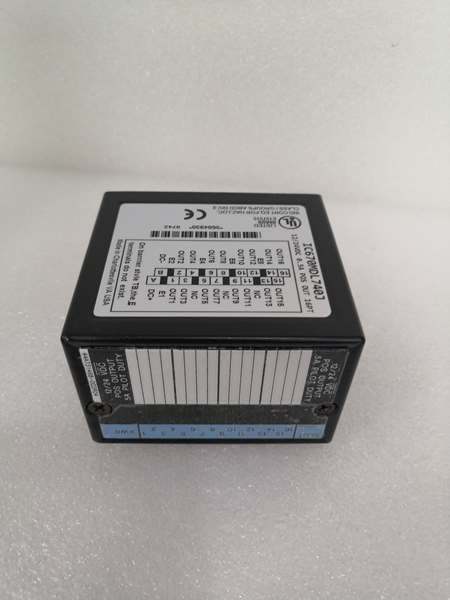
Description
Key Technical Specifications
-
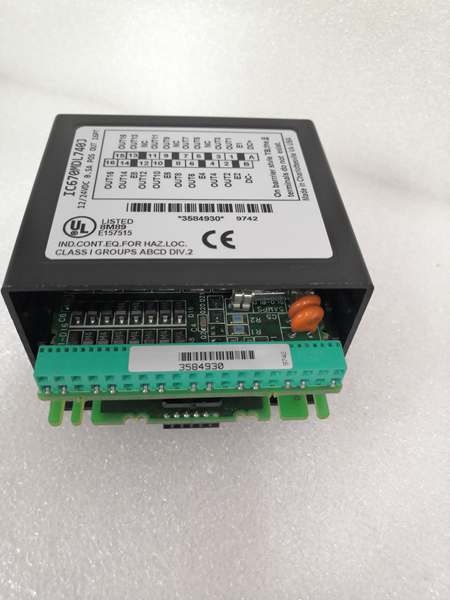
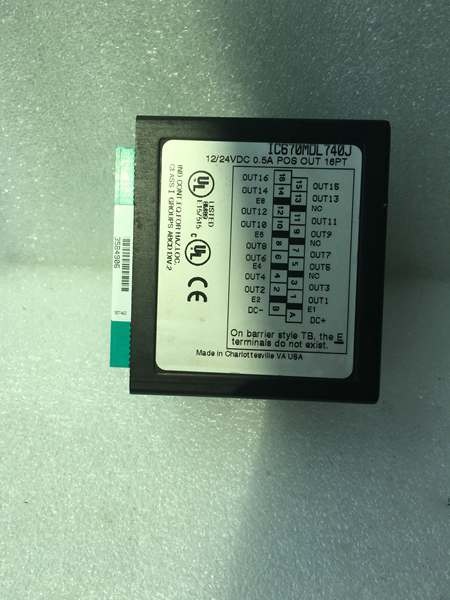
Model Number: IC670MDL740
-
Manufacturer: GE Fanuc / Emerson
-
Output Type: Sourcing (positive logic)
-
Channels: 16 discrete outputs (single group)
-
Voltage Range: 10–30 VDC (nominal 24 VDC)
-
Current Rating: 0.5 A per point, 4 A total module; 2 A inrush for 100 ms max
-
Minimum Load: 1 mA (to maintain LED status)
-
Voltage Drop: 0.5 V max @ 0.5 A
-
Leakage: 0.5 mA max @ 30 VDC
-
Response Time: < 0.5 ms typical on/off
-
Protection: Group 5 A slow-blow fuse (250 VAC), reverse-polarity guard, blown-fuse LED
-
Power Draw: 111 mA from Bus Interface Unit (5 V logic)
-
Terminals: 25-point integrated block, AWG #14–22 (one wire) or #18 (two wires)
-
Isolation: 500 V channel-to-channel, 1500 V field-to-logic
- Operating Temp: –20 °C to +70 °C (conformal-coated)

IC670MDL740J
Field Application & Problem Solved
A remote I/O station on a conveyor line doesn’t want a separate relay rack—it wants one card that can drive sixteen 24 V pilot lights and interposing relays. Slide the IC670MDL740 into a Field-Control Bus Interface Unit, land two wires per point, and you have isolated, fused, LED-indicated outputs ready for PLC commands. When the card fails you lose the whole output group and the line stops; swap it (draw-out style), snap the 25-terminal plug back in, and the lights come on exactly as before—no software reload, no re-addressing. Found in every GE Field-Control remote drop from automotive body shops to wind-turbine nacelles. Value is consolidation: one card replaces sixteen relays, a fuse block, and a handful of status lights.
A remote I/O station on a conveyor line doesn’t want a separate relay rack—it wants one card that can drive sixteen 24 V pilot lights and interposing relays. Slide the IC670MDL740 into a Field-Control Bus Interface Unit, land two wires per point, and you have isolated, fused, LED-indicated outputs ready for PLC commands. When the card fails you lose the whole output group and the line stops; swap it (draw-out style), snap the 25-terminal plug back in, and the lights come on exactly as before—no software reload, no re-addressing. Found in every GE Field-Control remote drop from automotive body shops to wind-turbine nacelles. Value is consolidation: one card replaces sixteen relays, a fuse block, and a handful of status lights.
Installation & Maintenance Pitfalls (Expert Tips)
Fuse fatigue—group dies, LEDs dark
The 5 A slow-blow fuse is internal. After years of in-rush it opens and every output drops out—looks like a PLC fault. Check the blown-fuse LED first; if it’s dark, pull the card and meter the fuse—swap in a 5 A 250 V slow-blow, not a fast-acting.
The 5 A slow-blow fuse is internal. After years of in-rush it opens and every output drops out—looks like a PLC fault. Check the blown-fuse LED first; if it’s dark, pull the card and meter the fuse—swap in a 5 A 250 V slow-blow, not a fast-acting.
Minimum load miss—LED off but coil still on
The channel needs ≥ 1 mA to turn the status LED on. If you drive a high-impedance solid-state relay the LED stays off even when the output is good. Meter the load current—if you see > 1 mA and no LED, replace the card; otherwise add a 10 k bleed resistor.
The channel needs ≥ 1 mA to turn the status LED on. If you drive a high-impedance solid-state relay the LED stays off even when the output is good. Meter the load current—if you see > 1 mA and no LED, replace the card; otherwise add a 10 k bleed resistor.
Wire size cheat—terminal cracks, intermittent fault
The 25-terminal block accepts AWG #14–22 one wire or two #18. If you force two #14s the spring cracks and the point drops out under vibration. Use a ferrule or step down to #18 for doubles—torque to 0.5 N·m.
The 25-terminal block accepts AWG #14–22 one wire or two #18. If you force two #14s the spring cracks and the point drops out under vibration. Use a ferrule or step down to #18 for doubles—torque to 0.5 N·m.
Reverse polarity—fuse blows instantly
The module is sourcing only; land the external 24 V negative on the output common and the fuse blows before you can blink. Power up with a DMM on the terminal strip—positive must appear on the “+” pin when the output is true.
The module is sourcing only; land the external 24 V negative on the output common and the fuse blows before you can blink. Power up with a DMM on the terminal strip—positive must appear on the “+” pin when the output is true.
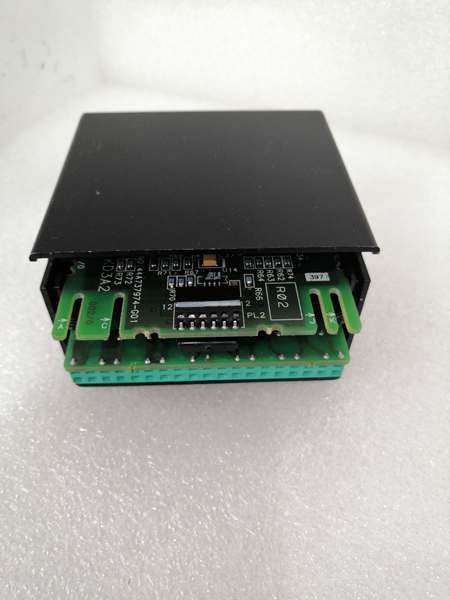
IC670MDL740
Technical Deep Dive & Overview
IC670MDL740 is a remote I/O output slice frozen in 1995 silicon. A 5 V logic interface latches the PLC word, drives sixteen MOSFETs, and reports fuse/status back to the Bus Interface Unit over the internal parallel bus. Because the card is group-fused and diode-protected you can swap it hot—just kill the 24 V field supply first or you’ll arc-weld the 25-terminal plug. Treat the field terminals like a DIN-rail block and the card will keep the conveyors running for another thirty years
IC670MDL740 is a remote I/O output slice frozen in 1995 silicon. A 5 V logic interface latches the PLC word, drives sixteen MOSFETs, and reports fuse/status back to the Bus Interface Unit over the internal parallel bus. Because the card is group-fused and diode-protected you can swap it hot—just kill the 24 V field supply first or you’ll arc-weld the 25-terminal plug. Treat the field terminals like a DIN-rail block and the card will keep the conveyors running for another thirty years
.