Description
DS3800HRIA1A1A Product Overview
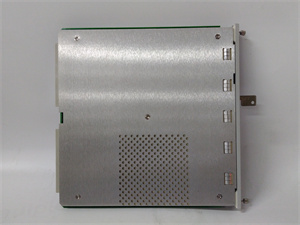
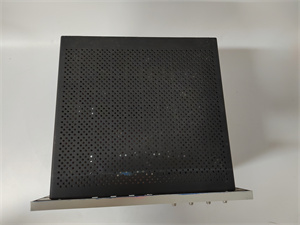
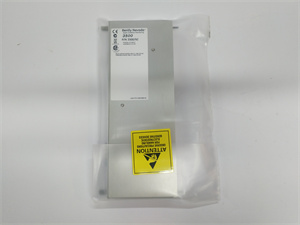
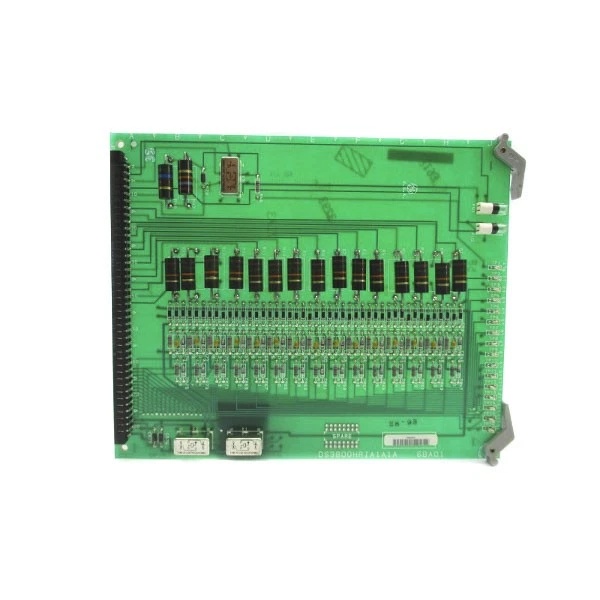
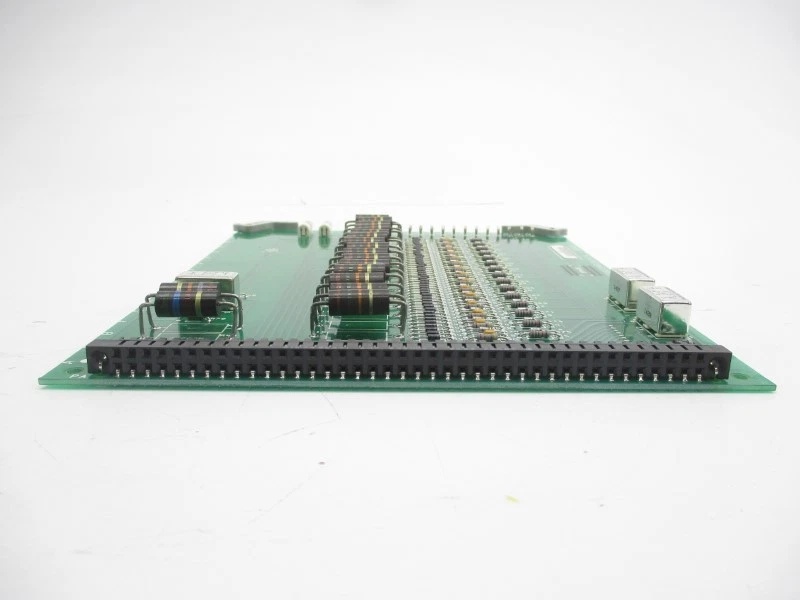
The DS3800HRIA1A1A is an analog I/O isolator board that plugs into GE Mark IV turbine and EX2000 exciter control racks. Occupying a 6BA02 Euro-card slot, it acts as the analog “front end” between field transducers and the 5 V CPU: it accepts ±10 V or 4–20 mA signals, provides 1500 Vdc group isolation, buffers the result to the NDIA data bus, and clamps incoming surges with on-board MOVs. Because all copper traces are fully encapsulated in high-temperature epoxy, the unit is treated as a line-replaceable module—any internal fault requires a complete card swap rather than component-level rework. The module is fully hot-swappable when the rack is powered down, and its low-profile epoxy package allows adjacent-slot population without additional cooling.
The DS3800HRIA1A1A is an analog I/O isolator board that plugs into GE Mark IV turbine and EX2000 exciter control racks. Occupying a 6BA02 Euro-card slot, it acts as the analog “front end” between field transducers and the 5 V CPU: it accepts ±10 V or 4–20 mA signals, provides 1500 Vdc group isolation, buffers the result to the NDIA data bus, and clamps incoming surges with on-board MOVs. Because all copper traces are fully encapsulated in high-temperature epoxy, the unit is treated as a line-replaceable module—any internal fault requires a complete card swap rather than component-level rework. The module is fully hot-swappable when the rack is powered down, and its low-profile epoxy package allows adjacent-slot population without additional cooling.
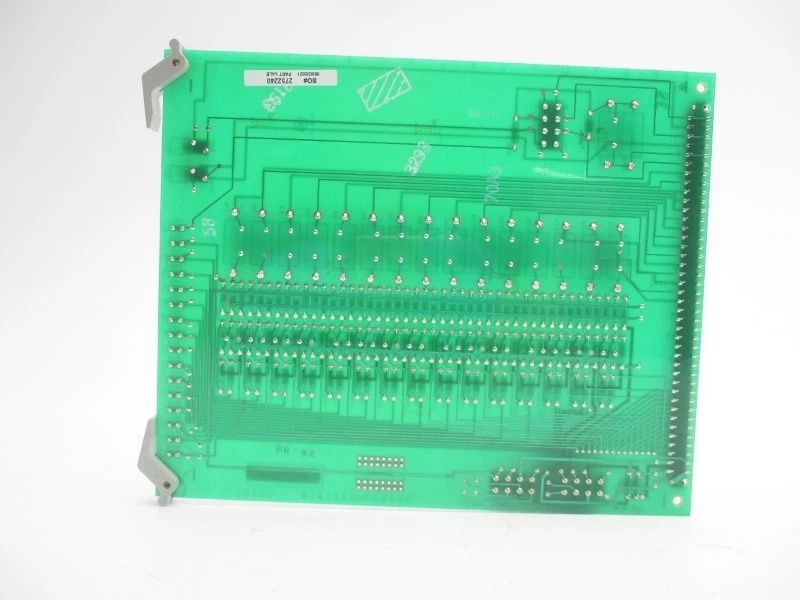
GE DS3800HISA1A1A
DS3800HRIA1A1A Technical Specifications
-
Model Number: DS3800HRIA1A1A
-
Manufacturer: General Electric (GE Fanuc)
-
Product Type: Analog I/O Isolator / Signal Buffer Board
-
Series: DS3800, Mark IV Speedtronic
-
Form Factor: 6BA02 Euro-card (≈ 233 × 160 mm)
-
Daughter-Card Mate: DS3800DSWA terminal block (screw-clamp landing)
-
Input Range: ±10 V or 4–20 mA (jumper-selectable)
-
Isolation: 1500 Vdc channel-to-ground; group-isolated
-
Update Rate: 2 ms (scanned by CPU every control interval)
-
Power Demand: +5 V @ 0.6 A, ±15 V @ 0.2 A from rack 2PL bus
-
Operating Temperature: 0 – 60 °C
-
Weight: ≈ 0.22 kg
-
Construction: Epoxy-sealed copper traces—non-repairable
Core Features & Customer Value
Group-Isolated Analog I/O: The on-board isolation amplifiers accept ±10 V or 4–20 mA on the same terminal strip. For the control engineer this eliminates external signal conditioners and ground-loop errors, reducing wiring complexity and spare-part count.
Epoxy-Sealed Construction: All internal copper is encapsulated in high-temperature epoxy. In coastal or industrial sites with conductive dust and high humidity the seal prevents trace-to-trace shorting that would otherwise cause random “ANALOG FAIL” alarms after ten-plus years of service. The trade-off is non-repairability—any internal fault requires a whole-card exchange—but this is offset by reduced troubleshooting time and the fact that plants stock one spare instead of maintaining a repair bench.
Plug-and-Play Daughter-Card Interface: The board is normally sold together with terminal block DS3800DSWA, providing screw-clamp landing for field wires and on-board MOVs for surge suppression. For maintenance crews this translates to a three-minute replacement instead of a half-shift re-wiring job.
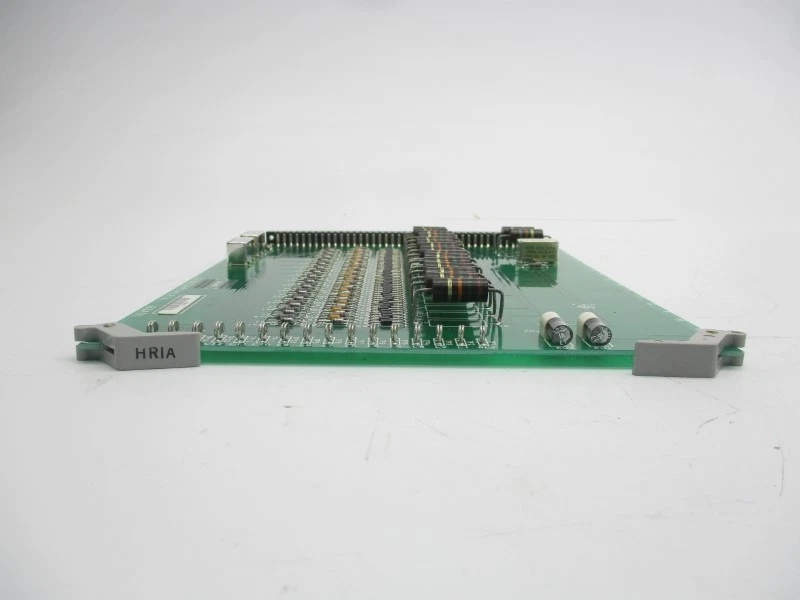
GE DS3800HISA1A1A
Typical Applications
In combined-cycle power plants the board is installed in the Mark IV turbine control core where it lands isolated ±10 V signals from exhaust-temperature thermocouple transmitters and 4–20 mA from compressor-discharge pressure transmitters. The on-board opto-isolators keep 480 V switching transients from walking into the 5 V CPU data bus.
On utility-scale EX2000 static exciters the same card is used to isolate the brushless-exciter field-current transmitter and the diode-fail analog output. Because the inputs are group-isolated, a shorted transducer will not drag down the entire analog I/O rack.
Frequently the same part number is used on mechanical-drive gas compressors to land the 4–20 mA inlet-pressure transmitter and the ±10 V guide-vane position feedback. Its ability to mix voltage and current signals on one card makes it a universal “analog isolator” for any Mark IV loop that needs deterministic, ground-loop-free operation.