Description
Key Technical Specifications
-
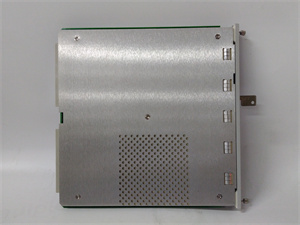
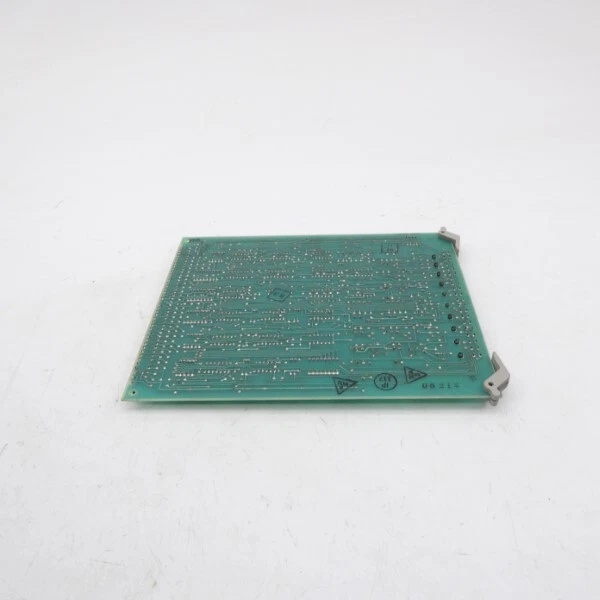
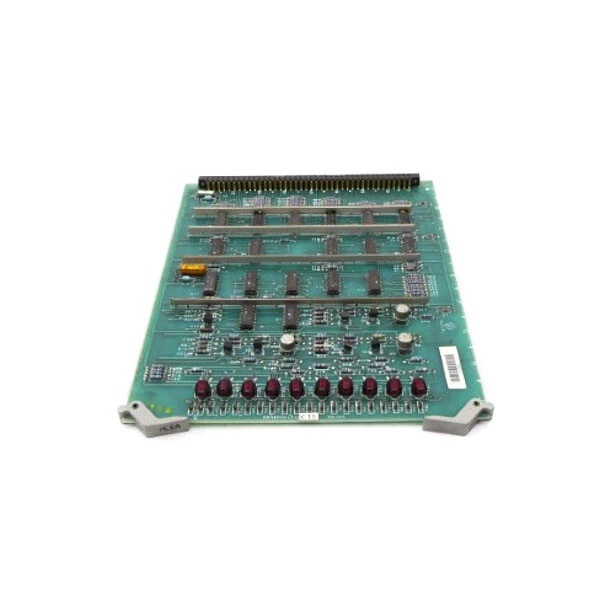
Model Number: DS200UPSAG1AGD
-
Manufacturer: General Electric
-
Input Rail: +5 V ±10 %, ±12 V ±5 % from external bulk supply
-
Output Rail: 5 V @ 8 A, +12 V @ 1 A, –12 V @ 0.5 A, remote-sense lines
-
Isolation: 1500 Vrms input-to-back-plane, 500 V channel-to-channel
-
Noise Filter: Pi-section common-mode choke, 40 dB @ 500 kHz switcher ripple
-
Over-Volt Clamp: 6.8 V SCR crowbar on 5 V rail, trips at 6.2 V, latches until power-cycle
-
Protection: Three 5 A 250 V fuses (one per rail), auto-reset thermal on ±12 V
-
Connectors: 96-pin DIN to back-plane, three 9-pin pluggable for sense/status
-
Diagnostics: Green “5 V OK” LED, red “OVER-VOLT” latch, front-panel reset push-button
-
Operating Temperature: 0 – 70 °C operational, –40 – 85 °C storage

GE DS3800HLEA1C1B
-
Dimensions: 250 × 150 × 40 mm, 1.25 kg
Field Application & Problem Solved
In a 1995 frame-7 combined-cycle block the Mark V rack doesn’t want raw battery—it wants quiet, stiff 5 V and clean ±12 V or the servo valves start drifting and you trip on “HYDRO AUX FAULT.” The DS200UPSAG1AGD is the first card after the bulk supply; it knocks down switcher hash, clamps spikes, and gives you remote sense so the 5 V at the CPU is exactly 5.00 V even when the battery bus sags to 22 V during starter crank. You’ll find it in the left-most slot of every Mark V cabinet from Florida peakers to California cogeneration. Its value is bullet-proof rails: when this card dies the 5 V rail collapses, every logic card resets, and the unit locks out—swap it and you’re back online without re-calibrating a single LVDT.
In a 1995 frame-7 combined-cycle block the Mark V rack doesn’t want raw battery—it wants quiet, stiff 5 V and clean ±12 V or the servo valves start drifting and you trip on “HYDRO AUX FAULT.” The DS200UPSAG1AGD is the first card after the bulk supply; it knocks down switcher hash, clamps spikes, and gives you remote sense so the 5 V at the CPU is exactly 5.00 V even when the battery bus sags to 22 V during starter crank. You’ll find it in the left-most slot of every Mark V cabinet from Florida peakers to California cogeneration. Its value is bullet-proof rails: when this card dies the 5 V rail collapses, every logic card resets, and the unit locks out—swap it and you’re back online without re-calibrating a single LVDT.
Installation & Maintenance Pitfalls (Expert Tips)
Crowbar misfire—scope the rail before you power the rack
The SCR crowbar is there to save the CPUs, but after 20 years the gate resistor drifts high; a 200 µs spike can false-fire and short the 5 V rail. If the green LED latches red on first power-up, pull the card, scope the 5 V—if you see a clean 5.05 V you’ve got a tired SCR; change the 2N5060 or the whole card.
The SCR crowbar is there to save the CPUs, but after 20 years the gate resistor drifts high; a 200 µs spike can false-fire and short the 5 V rail. If the green LED latches red on first power-up, pull the card, scope the 5 V—if you see a clean 5.05 V you’ve got a tired SCR; change the 2N5060 or the whole card.
Sense leads reversed—rail reads high, CPUs cook
Remote-sense lines are pins 7-8 on the 9-pin plug. Swap them and the feedback inverts—the card thinks the rail is low and hammers 6.5 V into the back-plane before the crowbar trips. Always meter sense polarity before you torque the screws; 30 s with a DMM saves a $30 k processor rack.
Remote-sense lines are pins 7-8 on the 9-pin plug. Swap them and the feedback inverts—the card thinks the rail is low and hammers 6.5 V into the back-plane before the crowbar trips. Always meter sense polarity before you torque the screws; 30 s with a DMM saves a $30 k processor rack.
Input fuse fatigue—opens under vibration
The three 5 A fuses are soldered pigtail-style. Years of turbine vibration work-hardens the end-caps; cold-start inrush pops a visually good fuse. If you measure 28 V at the input pins but 0 V on the test jack, cut the fuse out and replace it with a panel-mount holder—five-cent part, five-minute fix.
The three 5 A fuses are soldered pigtail-style. Years of turbine vibration work-hardens the end-caps; cold-start inrush pops a visually good fuse. If you measure 28 V at the input pins but 0 V on the test jack, cut the fuse out and replace it with a panel-mount holder—five-cent part, five-minute fix.
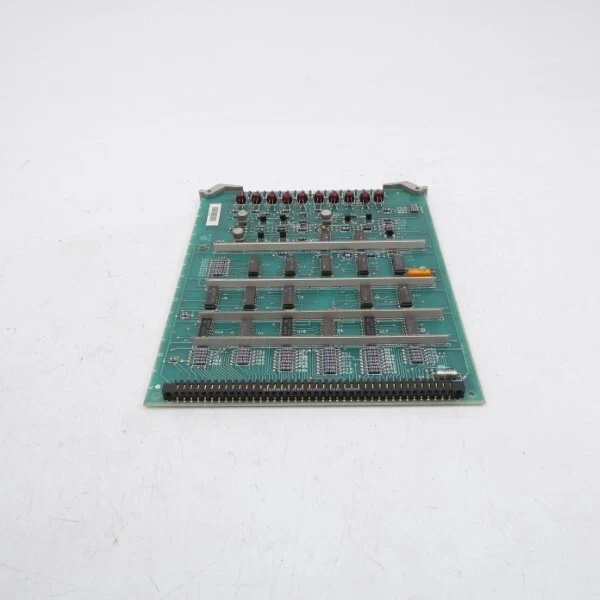
GE DS3800HLEA1C1B
Missing shoulder washers—card arcs to rack
The mounting holes are through-plated. Forget the fiber washers and the card edge sits 0.5 mm proud; 24 V battery finds the rack paint, arcs, and blows a hole in the ground plane. Use the original GE shoulder washers or add 2 mm nylon spacers—torque to 8 in-lb, no more.
The mounting holes are through-plated. Forget the fiber washers and the card edge sits 0.5 mm proud; 24 V battery finds the rack paint, arcs, and blows a hole in the ground plane. Use the original GE shoulder washers or add 2 mm nylon spacers—torque to 8 in-lb, no more.
Technical Deep Dive & Overview
DS200UPSAG1AGD is a linear post-regulator and EMI filter on a 6U Euro-card. Two common-mode chokes and a pi-filter knock 40 dB off the 20 kHz–1 MHz hash coming from the bulk switcher. An LM723-derived regulator drives a PNP pass transistor for the 5 V rail; ±12 V use 7812/7912 TO-3 cans bolted to the card edge for heat-sinking. Remote-sense lines feed the regulator so drop across the back-plane is nulled out. A 6.8 V SCR crowbar sits on the 5 V output—if the pass transistor shorts, the SCR fires, pulls the rail to near zero, and saves every TTL chip downstream. The card is essentially a ruggedized lab supply that lives in a coal-dust cabinet—treat the sense leads like thermocouple wire and it will keep the rack alive for another 30 years
DS200UPSAG1AGD is a linear post-regulator and EMI filter on a 6U Euro-card. Two common-mode chokes and a pi-filter knock 40 dB off the 20 kHz–1 MHz hash coming from the bulk switcher. An LM723-derived regulator drives a PNP pass transistor for the 5 V rail; ±12 V use 7812/7912 TO-3 cans bolted to the card edge for heat-sinking. Remote-sense lines feed the regulator so drop across the back-plane is nulled out. A 6.8 V SCR crowbar sits on the 5 V output—if the pass transistor shorts, the SCR fires, pulls the rail to near zero, and saves every TTL chip downstream. The card is essentially a ruggedized lab supply that lives in a coal-dust cabinet—treat the sense leads like thermocouple wire and it will keep the rack alive for another 30 years
.