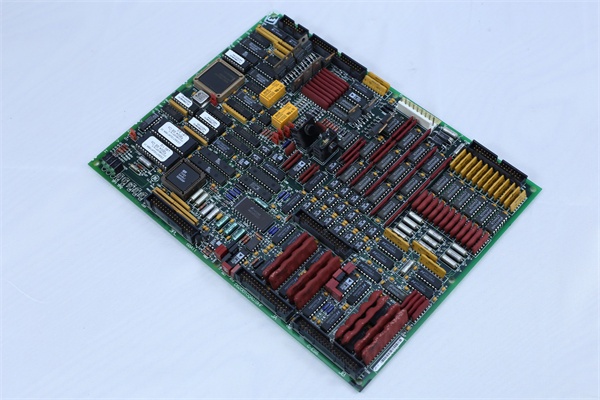
Description
Hard-Numbers: Technical Specifications
- Functional Acronym: TCQA (Turbine Control Quadrature Board)
- Board Variant: G1 variant with HF suffix (specific hardware configuration)
- Revision: B (Board Revision B)
- Suffix: HF (configuration-specific designation)
- Core Function: Quadrature signal processing and position feedback
- Input Signal Types: Quadrature encoder signals (A, B, Z channels), resolver signals
- Signal Levels: Compatible with various encoder/resolver signal levels (typically TTL, differential, or voltage levels)
- Channels: Multiple quadrature input channels (typically 2-4 channels)
- Resolution: High-resolution position measurement capability
- Direction Detection: Direction sensing for bidirectional rotation
- Speed Calculation: Speed computation from position change over time
- Index Pulse: Index pulse (Z channel) detection for position reference
- Signal Conditioning: Input signal conditioning and filtering
- Noise Immunity: Differential input for noise immunity
- Diagnostic Features: Signal loss detection, cable fault detection
- LED Indicators: Multiple LED indicators for channel status, signal presence, faults
- Power Requirements: Typically 24 V DC from control system power supply
- Dimensions: Standard Mark V board form factor (typically 3″ H × 11.5″ W)
- PCB Coating: Normal coating (non-conformal)
- Manual: GEH-6235 (Turbine Control Quadrature Board Manual) – HF supplement

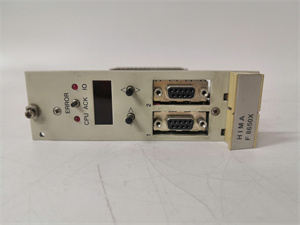
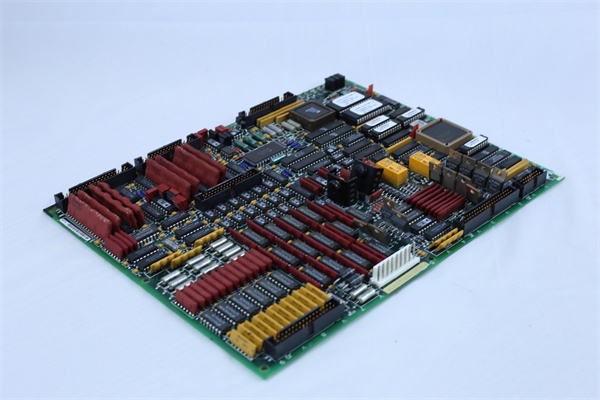
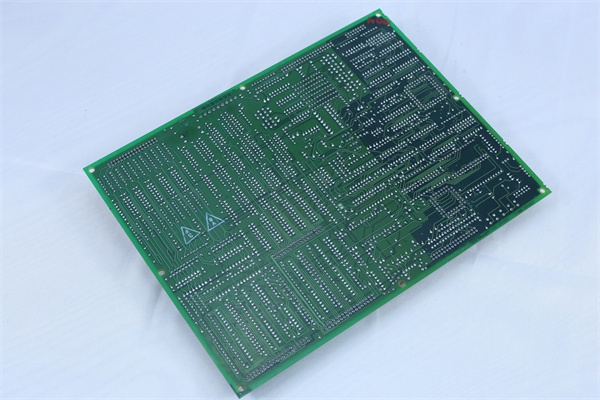
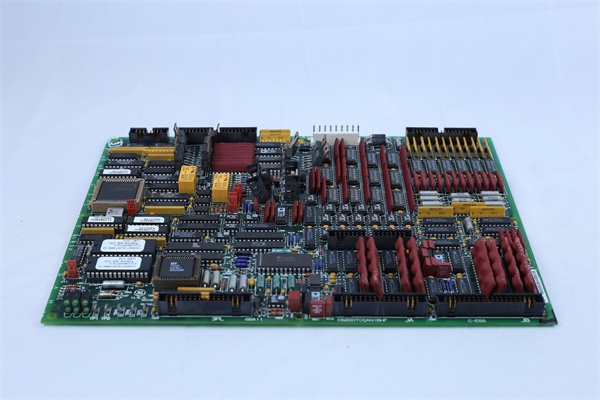
GE DS200TCQAG1B
The Real-World Problem It Solves
The Mark V control system in turbine applications requires precise position and speed feedback from rotary encoders or resolvers to control turbine speed, governor operation, and actuator positioning. The DS200TCQAG1BHF (Turbine Control Quadrature Board – G1 Variant, Revision B with HF suffix) provides this critical quadrature signal processing capability with HF-specific configuration features for particular encoder types or application requirements. The HF suffix indicates a specialized hardware configuration optimized for specific encoder types, high-frequency applications, enhanced resolution requirements, or application-specific features. The board receives quadrature signals (A and B channels 90° out of phase) from rotary encoders or resolvers, processes these signals through conditioning circuits, decodes the quadrature waveform to determine position and direction, calculates speed based on position change rate, and provides this data to Mark V control processors. The HF configuration may include features tailored for specific applications such as high-frequency encoder support, enhanced resolution for precision positioning, specialized filtering for high-speed applications, or improved noise immunity. Without this board, the Mark V system would lack the capability to process quadrature encoder signals with HF-specific capabilities, potentially limiting control accuracy or preventing operation with specific encoder types.
Where you’ll typically find it:
- Control racks in Mark V control cabinets
- Turbine control systems requiring HF-configured quadrature processing
- High-speed encoder applications requiring enhanced processing
- Actuator positioning systems with high-resolution feedback
- Generator shaft position monitoring with high-frequency encoders
- Applications requiring HF-specific quadrature signal processing capabilities
Bottom line: HF-configured quadrature signal processing board—providing specialized encoder/resolver signal decoding, position measurement, speed calculation, and direction detection for high-performance turbine control feedback.
Hardware Architecture & Under-the-Hood Logic
The DS200TCQAG1BHF (G1 Variant, Revision B with HF suffix) is the Turbine Control Quadrature Board for the Mark V control system, serving as the quadrature signal processing interface with HF-specific configuration features. The HF suffix designates a specialized hardware configuration optimized for specific encoder types, high-frequency applications, enhanced resolution requirements, or application-specific features. The board provides multiple input channels for quadrature encoder signals. Each input channel receives differential or single-ended encoder signals through input connectors and protection circuits. The input signals pass through HF-specific signal conditioning circuits that provide enhanced filtering, high-speed threshold detection, and improved noise immunity features optimized for high-frequency encoder signals. The conditioned quadrature signals are then processed by HF-optimized decoder circuits that determine position increments, direction of rotation, and detect index pulses with enhanced accuracy at high speeds. Position counters accumulate position increments to provide absolute position data with high-resolution capability. Speed calculation circuits compute speed based on the rate of position change over time, optimized for high-speed applications. The HF configuration may include specialized high-frequency processing algorithms, enhanced resolution capabilities, improved signal conditioning, or application-specific features that differ from standard TCQA configurations. The board includes diagnostic capabilities to detect signal loss, cable faults, encoder malfunctions, or signal quality issues, and communicates status information through LED indicators and system interfaces.
Signal flow:
- Quadrature encoder signals (A, B channels) enter TCQA-HF through input connectors
- Index pulse (Z channel) enters through dedicated input
- HF-specific input protection circuits provide overvoltage and transient protection
- HF-specific signal conditioning circuits filter and threshold encoder signals for high-frequency operation
- Differential input processing provides improved noise immunity
- HF-optimized quadrature decoder circuits determine position increments and direction
- Direction detection logic identifies rotation direction (CW/CCW)
- High-resolution position counters accumulate position increments
- Index pulse detection provides position reference for counter reset
- HF-optimized speed calculation circuits compute speed from position change rate
- HF-specific processing algorithms enhance accuracy for high-frequency signals
- Position and speed data are formatted for transmission to control processors
- Diagnostic circuits monitor signal integrity and detect faults
- Cable fault detection identifies open or short circuits
- LED indicators display channel status, signal presence, and fault conditions
GE DS200TCQAG1B
Field Service Pitfalls: What Rookies Get Wrong
Confusing HF with standard TCQA causes configuration errorsMixing up HF and standard boards. I’ve seen technicians installing standard TCQA where TCQA-HF belongs, losing HF-specific features and causing encoder incompatibility.
- Field Rule: Clearly identify TCQA-HF vs. standard TCQA. TCQA-HF has HF-specific configuration for high-frequency or high-resolution applications. Standard TCQA lacks HF-specific features. Check board label for “HF” suffix. Never assume TCQA boards are identical—HF provides specialized capabilities.
Overlooking HF encoder type compatibility causes signal failuresConnecting wrong encoder types. I’ve seen technicians connecting encoders incompatible with HF configuration, causing signal decoding failures.
- Field Rule: Verify HF encoder type compatibility before connection. HF may support specific encoder types optimized for high-frequency operation. Check that encoder frequency range matches HF specifications. Verify encoder signal levels compatible with HF inputs. Never assume any encoder works—verify HF encoder compatibility first.
Skipping HF frequency verification causes high-speed errorsNot verifying encoder frequency capabilities. I’ve seen technicians installing encoders exceeding HF frequency limits, causing signal decoding failures.
- Field Rule: Verify HF frequency requirements before installation. Check that encoder frequency does not exceed HF maximum rating. Verify HF processing capability matches encoder frequency. Test encoder operation at maximum expected speed. Never assume HF handles any frequency—verify frequency limits first.
Neglecting HF-specific resolution settings causes accuracy issuesNot configuring HF resolution parameters. I’ve seen technicians using standard resolution settings for HF boards, missing enhanced resolution capabilities.
- Field Rule: Configure HF-specific resolution parameters after installation. HF may support higher resolution than standard TCQA. Verify lines per revolution (LPR) or bits per revolution settings match HF capabilities. Check that resolution settings optimize for high-frequency operation. Never assume standard resolution works—use HF-specific resolution settings.
Forgetting to verify index pulse detection at high speed causes position driftNot testing index pulse at high speeds. I’ve seen technicians verifying index pulse only at low speeds, missing high-speed detection issues.
- Field Rule: Test index pulse detection at operating speeds after HF installation. Verify index pulse detection works correctly at high frequencies. Check that position counters reset accurately at high speed. Test index pulse detection during acceleration/deceleration. Never assume low-speed test is sufficient—verify index functionality at operating speeds.
Improper encoder grounding causes signal noise at high frequencyIncorrect encoder grounding. I’ve seen technicians grounding encoders incorrectly, introducing noise that affects high-frequency signals.
- Field Rule: Follow proper encoder grounding procedures for HF applications. Use differential encoder connections for maximum noise immunity. Verify encoder shield grounding follows Mark V HF specifications. Avoid ground loops that affect high-frequency signals. Never improvise encoder grounding—improper grounding causes high-frequency signal noise.
Skipping HF-specific signal level verification causes errorsNot verifying signal levels at high frequency. I’ve seen technicians checking encoder signal levels only at low speed, missing high-frequency signal degradation.
- Field Rule: Verify encoder signal levels at operating frequencies. Check signal integrity at maximum expected speed. Verify signal amplitude meets HF specifications at high frequency. Test signal quality across full speed range. Never assume low-speed signal levels apply—verify high-frequency signal quality.
Overlooking HF diagnostic enhancements causes missed faultsNot utilizing HF diagnostic features. I’ve seen technicians installing HF boards but not understanding HF-specific diagnostic capabilities, missing fault information.
- Field Rule: Learn HF diagnostic enhancements. HF may include specialized high-frequency diagnostic parameters. Use HF-specific diagnostic tools for high-frequency fault identification. Document HF-specific diagnostic features. Never assume standard diagnostics apply—utilize HF capabilities.
Forgetting to verify cable length for high-frequency signals causes signal degradationUsing excessive cable length. I’ve seen technicians using encoder cables exceeding HF length limits, causing signal degradation.
- Field Rule: Verify cable length limits for HF operation. Check that encoder cable length does not exceed HF maximum rating. Use low-capacitance cables for long runs. Test signal quality at end of longest cable run. Never assume cable length is not critical—high-frequency signals are length-sensitive.
Skipping HF calibration causes measurement errorsNot calibrating HF-specific features. I’ve seen technicians using standard calibration procedures for HF boards, missing enhanced accuracy improvements.
- Field Rule: Calibrate HF-specific features after installation. Use HF-specific calibration procedures for high-frequency operation. Verify calibration accuracy across operating frequency range. Document HF calibration values. Never assume standard calibration works—use HF-specific procedures.
Commercial Availability & Pricing Note
Please note: The listed price is for reference only and is not binding. Final pricing and terms are subject to negotiation based on current market conditions and availability. As an HF-configured specialized quadrature processing component, availability may be limited and lead times extended. TCQA-HF boards require compatibility verification with encoder types, frequency ranges, signal levels, and HF-specific configurations. Proper encoder selection and installation are essential for reliable high-frequency operation.