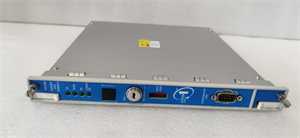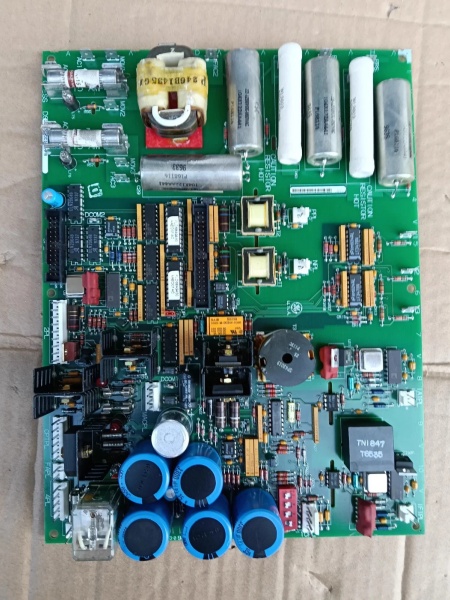
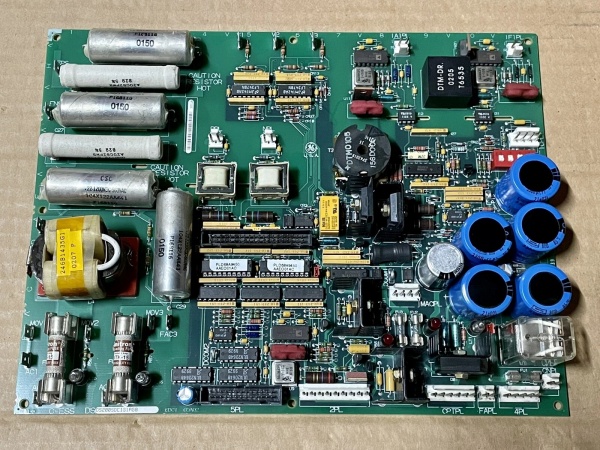
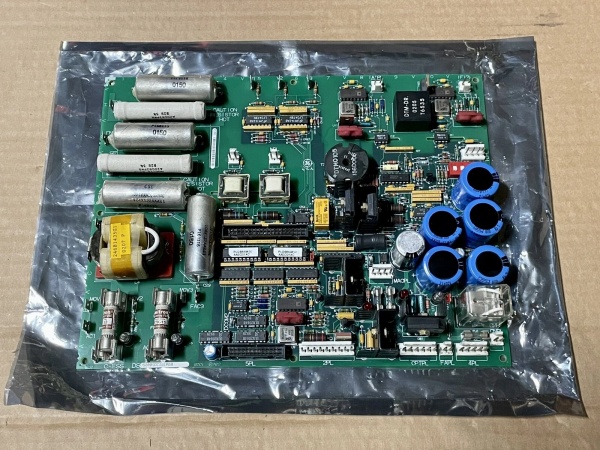
Description
Hard-Numbers: Technical Specifications
- Functional Acronym: SI0B (Servo Interface 0B)
- Group Number: G1 (Group 1 variant)
- Revision: BA (Board Revision B, Artwork Revision A)
- Configuration: H1 (H1 servo interface configuration)
- Core Location: Control Core (R> processor rack) – varies by system configuration
- Servo Interfaces: H1-specific servo control interfaces
- Command Output: Analog and/or digital command outputs to servo controllers
- Feedback Input: Multiple feedback input channels (LVDT, resolver, or encoder feedback)
- Position Feedback: LVDT (Linear Variable Differential Transformer) inputs for position sensing
- Signal Conditioning: H1-specific signal conditioning for optimized performance
- Gain/Offset Adjustment: Potentiometers for servo loop tuning
- Trip Function: Integrated trip output for emergency actuator shutdown
- Isolation: Galvanic isolation between control system and servo equipment
- LED Indicators: LED indicators for servo status, fault conditions, and feedback status
- Power Requirements: Typically 24 V DC or 125 V DC from control system power supply
- Dimensions: Standard Mark V board form factor (typically 3″ H × 11.5″ W)
- PCB Coating: Normal coating (non-conformal)
- Manual: GEH-6203 (Servo Interface Board Manual)

DS200SDCIG1AGB
The Real-World Problem It Solves
The Mark V control system requires specialized servo interface configurations for applications with unique actuator arrangements or specific H1 architecture requirements. The DS200SI0BH1ABA (Servo Interface Board – H1 Configuration, Revision BA) provides H1-specific servo interface options that differ from other servo configurations in signal processing characteristics, feedback channel configuration, or I/O capacity. This board enables closed-loop servo control for specific fuel valve types, specialized steam control arrangements, or custom position control applications that require the H1 architecture. The revision BA represents a mature hardware update that may include improved signal conditioning accuracy, enhanced feedback processing, updated isolation circuits, or functional improvements over earlier SI0B revisions. Without this board, H1-configured servo control applications would lack the proper interface, leading to suboptimal actuator performance or incompatible system configurations.
Where you’ll typically find it:
- Control Core (R> processor rack) – varies by system configuration
- Gas turbine control systems with H1-configured fuel valves
- Steam turbine control systems with H1 valve arrangements
- Applications requiring H1 servo interface architecture
- Systems with custom position control requirements
- Turbines with specific actuator configurations requiring H1 interface
Bottom line: Specialized H1 servo interface for unique actuator control requirements—revision BA configuration, providing tailored signal processing and feedback capabilities for H1 architecture applications.
Hardware Architecture & Under-the-Hood Logic
The DS200SI0BH1ABA (H1 Configuration, Revision BA) is the servo interface board for the Mark V control system, specifically designed for applications requiring H1 servo architecture. This H1 configuration differs from other servo configurations in signal processing characteristics, feedback channel configuration, I/O capacity, or servo loop architecture. The revision BA design represents a mature hardware update, potentially incorporating improved signal conditioning circuits, enhanced feedback processing, updated isolation barriers, or artwork modifications based on GE engineering change orders. The board receives digital position commands from the R> processor and converts these commands into servo-compatible analog or digital command signals. Position feedback from LVDTs, resolvers, or encoders is conditioned and processed through H1-specific signal paths to provide accurate position information for closed-loop control. The H1 configuration may include specialized feedback channel multiplexing, alternative servo loop algorithms, or optimized output characteristics tailored to particular actuator types.
Signal flow:
- R> processor issues digital position command to SI0B (H1 configuration)
- H1 command conversion circuitry generates servo-compatible output
- Servo controller receives command signal and drives actuator accordingly
- Actuator position changes are detected by position feedback device
- LVDT excitation circuitry provides AC excitation to LVDT primary
- H1-specific feedback conditioning processes feedback signals
- Enhanced feedback processing circuitry (revision BA) extracts position information
- Position feedback returns to servo loop for error calculation
- Servo loop calculates position error and adjusts servo output accordingly
- Gain and offset potentiometers allow H1-specific servo loop tuning
- Integrated trip function provides emergency actuator shutdown
- Galvanic isolation separates control system ground from servo equipment ground
- LED indicators display servo status, fault conditions, and feedback status
- H1 configuration provides specialized signal processing architecture
- Board operates in control core with R> processor redundancy
DS200SDCIG1AGB
Field Service Pitfalls: What Rookies Get Wrong
Confusing SI0B with other servo board types causes installation errorsMixing up SI0B and other servo interface boards. I’ve seen technicians replacing SI0B with SDCI or other servo boards, causing incompatible interfaces and control failures.
- Field Rule: Clearly identify SI0B vs. other servo boards. SI0B is Servo Interface 0B—different from SDCI, SBCA, or other servo boards. Check board label for “SI0B” designation. Compare original board type with replacement board. Consult GEH-6203 manual for SI0B-specific configuration. Never assume all servo boards are interchangeable—verify board type matches application requirements.
Ignoring H1 configuration requirements causes actuator mismatchNot understanding H1-specific characteristics. I’ve seen technicians treating H1 configuration like standard servo, causing actuator control issues.
- Field Rule: Understand H1 configuration has unique characteristics. H1 may use different signal processing or feedback channel assignments. Servo loop characteristics may differ from standard configuration. Check H1-specific calibration procedures. Never assume H1 matches standard servo—learn H1-specific requirements.
Forgetting to verify H1-specific jumper settings causes configuration errorsMissing H1 configuration jumpers. I’ve seen technicians setting jumpers based on standard servo knowledge, causing incorrect H1 operation.
- Field Rule: Verify H1-specific jumper settings are correct. H1 configuration may have different jumper positions or configuration options. Document original jumper positions before removal. Compare new board jumper configuration with original. Consult GEH-6203 manual for H1 jumper descriptions. Never assume standard servo jumpers match H1—verify H1-specific settings.
Mixing up H1 connector assignments causes signal routing errorsIncorrect H1 connector wiring. I’ve seen technicians wiring H1 connectors based on standard servo knowledge, causing signal misrouting.
- Field Rule: Verify H1 connector assignments are correct. H1 may have different connector pinouts or signal assignments. Check connector labels on H1 board. Document which connectors carry which signals. Verify ribbon cables match H1 configuration. Never assume H1 connectors match standard servo—verify H1-specific routing.
Skipping BA revision compatibility verification causes installation failuresInstalling revision BA without checking compatibility. I’ve seen technicians replacing earlier SI0B revisions with revision BA boards without verifying compatibility, leading to configuration errors or interface failures.
- Field Rule: Verify revision BA compatibility before installation. Revision BA may have different jumper positions, connector assignments, or component values. Compare original board revision with replacement board. Consult GEH-6203 manual for revision compatibility matrix. Check for any engineering change notices (ECNs) applying to revision BA. Document any configuration differences between revisions. Never assume revision BA is drop-in compatible—verify BA-specific requirements.
Improper LVDT calibration causes position error despite H1 configurationIncorrect LVDT scaling or zero adjustment. I’ve seen technicians not calibrating LVDT properly for H1 configuration, causing actuators to drift or fail to reach commanded position.
- Field Rule: Always calibrate LVDT feedback after SI0B replacement, especially with H1 configuration. Verify LVDT zero position corresponds to actual actuator zero. Check LVDT full-scale position matches actuator full travel. Adjust LVDT scaling potentiometers if required. Test position accuracy across entire range. H1 may have different calibration requirements—never assume standard calibration applies.
Overlooking revision BA enhancements causes missed diagnostic opportunitiesNot utilizing BA-specific improvements. I’ve seen technicians installing revision BA boards but not understanding enhanced features, failing to leverage improved capabilities.
- Field Rule: Learn revision BA-specific enhancements. BA may have improved signal conditioning or enhanced fault detection. Check for additional LED indicators or diagnostic features. Use enhanced diagnostic capabilities for fault identification. Document BA-specific features compared to earlier revisions. Never assume BA is just a minor update—utilize BA enhancements.
Improper servo loop tuning on H1 causes control instabilityMisadjusting gain and offset potentiometers. I’ve seen technicians not understanding H1 servo loop characteristics, setting gain/offset incorrectly, causing oscillation or sluggish response.
- Field Rule: Adjust H1 servo loop gain and offset carefully. H1 servo loops may have different characteristics than standard configuration. Start with original board settings, then fine-tune if needed. Monitor actuator response during adjustment. Document final potentiometer settings. Never assume H1 tuning matches standard servo—learn H1-specific requirements.
Commercial Availability & Pricing Note
Please note: The listed price is for reference only and is not binding. Final pricing and terms are subject to negotiation based on current market conditions and availability.