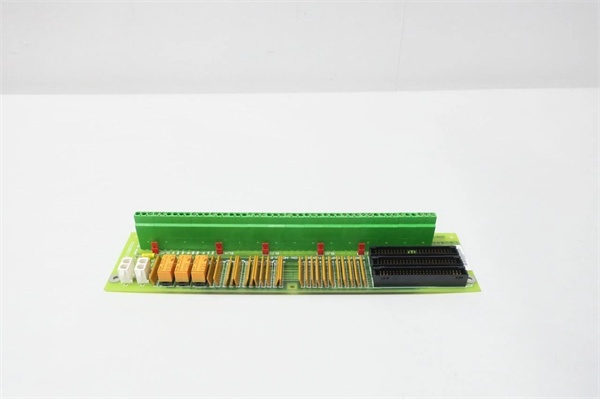
Description
Key Technical Specifications
-
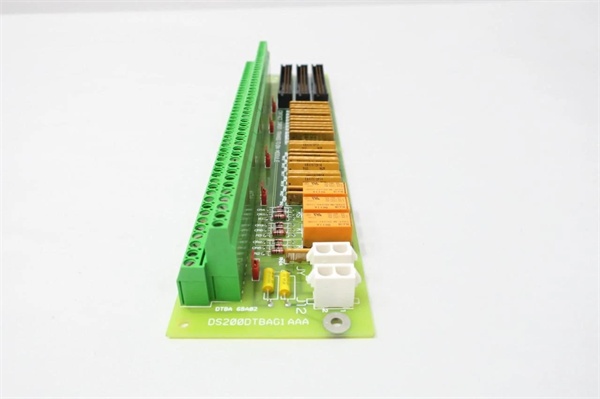
Model Number: DS200DTBAG1AAA
-
Manufacturer: General Electric
-
Input Voltage Range: 24 – 125 VDC dry contact
-
Wire Capacity: 190 total (95 per terminal block)
-
Connections: JQR, J12, JQS/T, JY; 5 berg jumpers; 2 × 2-pin test connectors
-
Protection: 23 metal-oxide varistors (20 mm) for transient clamping
-
Diagnostics Port: 9-pin D-Shell RS-232 (TIMN) for laptop access
-
Isolation: 500 V channel-to-ground
-
Scan Rate: 10 – 40 ms (configurable jumper)
-
Operating Temperature: 0 °C to +60 °C board spec; –28 °C to +55 °C system rating
-
Dimensions: 159 × 108 × 25 mm (6.25 × 4.25 in)
-
Weight: 0.36 – 0.8 kg depending on coat & hardware

DS200DTBAG1AAA
Field Application & Problem Solved
LM2500/LM6000 packages cram a lot of contact inputs into a small C-core—fire-gas switches, torque-limit relays, compartment fans, you name it. This board is the cheap, sacrificial layer. You land 190 wires on two screw-clamp blocks, the varistors eat 1 kV spikes from lightning or contactors, and the SDCC sees clean on/off states. When a spike blows a varistor you lose one channel, not the whole rack. Swap time is five minutes; every aeroderivative site keeps a spare taped inside the door. Bottom line: no DTBA, no contact inputs; no contacts, no turbine start permissives.
LM2500/LM6000 packages cram a lot of contact inputs into a small C-core—fire-gas switches, torque-limit relays, compartment fans, you name it. This board is the cheap, sacrificial layer. You land 190 wires on two screw-clamp blocks, the varistors eat 1 kV spikes from lightning or contactors, and the SDCC sees clean on/off states. When a spike blows a varistor you lose one channel, not the whole rack. Swap time is five minutes; every aeroderivative site keeps a spare taped inside the door. Bottom line: no DTBA, no contact inputs; no contacts, no turbine start permissives.
Installation & Maintenance Pitfalls (Expert Tips)
Jumpers define the voltage window
Factory default is 24 V. Move JP1-JP3 to the 125 V pads if your plant uses 110 Vdc fire-gas loops—forget and you’ll read every contact as closed. Photograph the old board before you pull it.
Jumpers define the voltage window
Factory default is 24 V. Move JP1-JP3 to the 125 V pads if your plant uses 110 Vdc fire-gas loops—forget and you’ll read every contact as closed. Photograph the old board before you pull it.
Varistors fail short—ohm before power
A blown MOV reads <10 Ω to ground; if you energize you’ll drag the 24 V rail down and fault the whole C-core. Meter each input pin to chassis first thing.
A blown MOV reads <10 Ω to ground; if you energize you’ll drag the 24 V rail down and fault the whole C-core. Meter each input pin to chassis first thing.
TIMN port is 5 V referenced
Plugging a grounded laptop into the 9-pin RS-232 can short +5 V to frame ground and blow the MAX232 on the SDCC. Use an isolated USB-RS-232 dongle or kill power before you plug in.
Plugging a grounded laptop into the 9-pin RS-232 can short +5 V to frame ground and blow the MAX232 on the SDCC. Use an isolated USB-RS-232 dongle or kill power before you plug in.
Wire dress matters—no pigtails
190 wires in a 4-inch slot is tight. Let a pigtail touch the cabinet wall and you’ll chase random grounds that clear when the door is open. Lace the harness flat, strap it to the stand-offs, and keep the shield drain clear of the block.
190 wires in a 4-inch slot is tight. Let a pigtail touch the cabinet wall and you’ll chase random grounds that clear when the door is open. Lace the harness flat, strap it to the stand-offs, and keep the shield drain clear of the block.
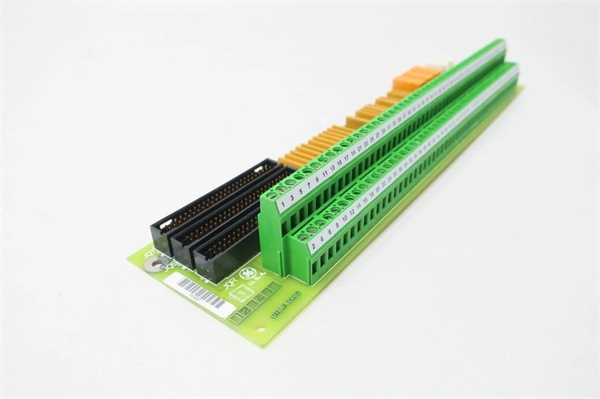
DS200DTBAG1AAA
Technical Deep Dive & Overview
Internally the board is passive copper. Each input hits a 10 kΩ pull-down, a 1 kΩ series resistor, and a 47 V varistor to ground. The signal then exits through the 40-pin J1 connector to the SDCC digital I/O ASIC. No DC-DC, no processor—just dividers and protection—so you can hot-swap with the turbine on turning gear; the SDCC re-scans the new channel states inside 50 ms.
Internally the board is passive copper. Each input hits a 10 kΩ pull-down, a 1 kΩ series resistor, and a 47 V varistor to ground. The signal then exits through the 40-pin J1 connector to the SDCC digital I/O ASIC. No DC-DC, no processor—just dividers and protection—so you can hot-swap with the turbine on turning gear; the SDCC re-scans the new channel states inside 50 ms.