
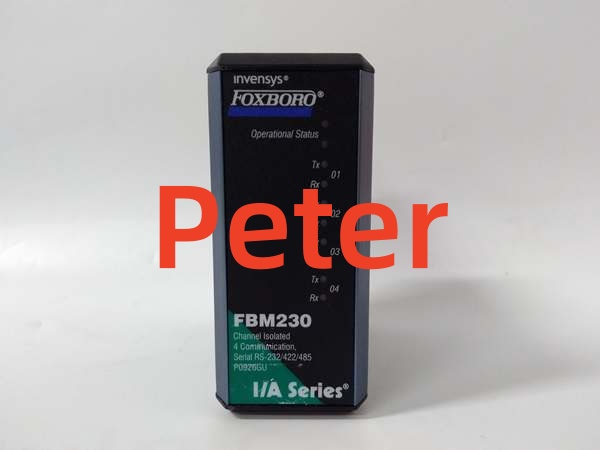

Description
Product Core Brief
- Model: FBM230 P0926GU
- Brand: Foxboro (Invensys / Schneider Electric)
- Series: I/A Series Distributed Control System (DCS)
- Core Function: Acts as a Field Device System Integrator (FDSI) providing serial communication interfaces between single-port field I/O devices and the EcoStruxure Foxboro DCS.
- Product Type: Serial Communication / Modbus Master Field Bus Module (FBM)
- Key Specs: 4 Configurable Ports (RS-232/422/485) | Modbus RTU/ASCII/TCP | Part Number
- Condition: New Original (New Surplus) | Factory Sealed
Key Technical Specifications
| Parameter | Value |
|---|---|
| Module Type | Serial Communication / Modbus Master FBM |
| System Platform | Foxboro I/A Series DCS / EcoStruxure |
| Port Configuration | 4 Independent Configurable Ports |
| Supported Interfaces | RS-232, RS-422, RS-485 (EIA Standards) |
| Supported Protocols | Modbus RTU, Modbus ASCII, Modbus/TCP |
| Data Format | Big Endian or Little Endian (Configurable) |
| Operating Voltage | 24VDC |
| Mounting | Plug-in I/A Series FBM Baseplate |
| Application | Serial Device Integration, Third-Party Equipment |
| Condition | New Original (New Surplus) |
| Warranty | 1-Year Functional Warranty |
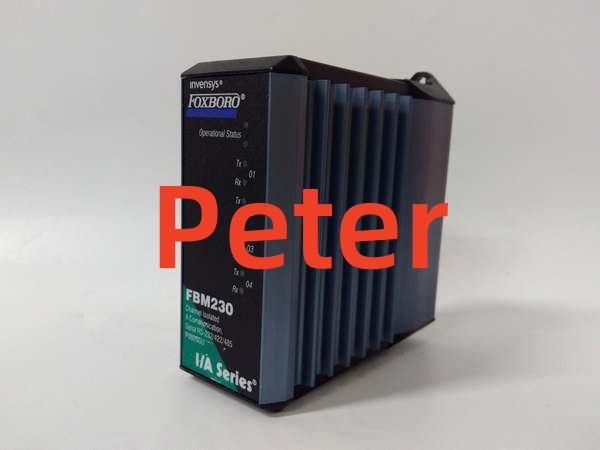
FOXBORO FBM230
Product Introduction
Integrating legacy or third-party serial devices into a modern DCS requires a highly flexible communication gateway, and the is engineered specifically for this task. Functioning as a Field Device System Integrator (FDSI), this module provides the critical serial interface between single-port field devices and the Foxboro I/A Series control system.
Equipped with four independent ports, each of which can be individually configured via software for RS-232, RS-422, or RS-485 physical standards, the offers unmatched wiring flexibility. Whether you are polling flow meters, reading barcode scanners, or integrating third-party PLCs using Modbus RTU, ASCII, or TCP protocols, this module ensures seamless, real-time data exchange without disrupting your core control loops.
Key Selling Points & Differentiators
- Unmatched Port Flexibility: Features four independent ports that can be individually configured in software for RS-232, RS-422, or RS-485, allowing a single FBM to connect multiple similar but distinct serial devices.
- Comprehensive Protocol Support: Natively supports Modbus RTU, Modbus ASCII, and Modbus/TCP protocols, acting as a Modbus Master to seamlessly poll and integrate third-party serial equipment.
- Configurable Data Handling: Accepts both big endian and little endian data formats from connected devices, eliminating the need for external data conversion hardware.
- Verified Functionality: Every undergoes a 24-hour live load test on a dedicated I/A Series test rack before shipping, complete with a signed test report.
- Not Recommended For: Do not use this module for standard analog (4-20mA) or discrete (24Vdc) I/O; it is strictly a serial communication interface. Use FBM201 for analog inputs or FBM207 for discrete inputs.
- Stock Availability: Current inventory is factory-sealed new surplus with traceable lot numbers; typically ships within 48 hours of order confirmation.
- Warranty Backed: Includes a 1-year functional warranty covering manufacturing defects and DOA conditions, with no restocking fees for verified failures.
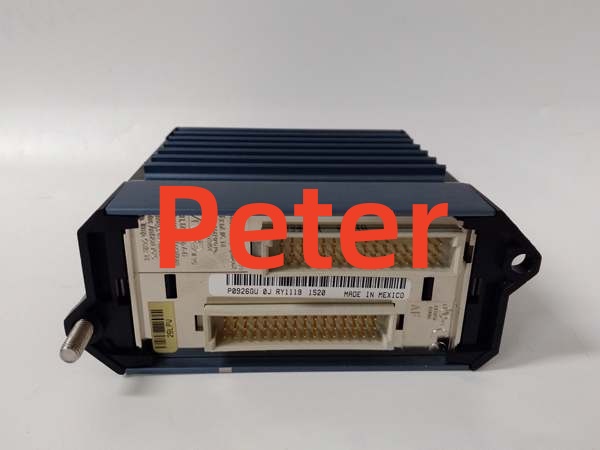
FOXBORO FBM230
FAQ
Yes. All units in stock have passed our 24-hour live bench test and include a signed test report. We ship same-day for orders placed before 2 PM EST, so you’ll have tracking before end of day.
The is designed for standard I/A Series FBM baseplates, but verify your baseplate revision and node processor firmware first. Serial communication modules often require specific firmware levels to properly initialize the Modbus Master stack. Send us your baseplate and node part numbers, and we’ll confirm compatibility within 30 minutes.
How are the 4 ports configured for different RS standards?
The port configuration is handled entirely via software in the Foxboro DCS configuration tool. You do not need to change physical jumpers or DIP switches on the module. This allows you to swap out devices with different serial requirements without hardware modifications.
Do I need to reconfigure the module after installation?
No. The retains its configuration in the I/A Series node processor. Simply plug it into the same slot, and the system will recognize it. However, always verify the serial port parameters (baud rate, parity, stop bits) and Modbus slave addresses in your DCS configuration after replacement.
What if the module fails within the warranty period?
We offer a no-questions-asked replacement for any verified manufacturing defect. Ship the failed unit back with your RMA number, and we’ll send a replacement within 24 hours of receipt. We also provide a loaner program for critical integration points to minimize downtime.
Can this module handle high-interference environments?
Yes. The features integrated electrical isolation designed for industrial environments. However, serial communication is highly susceptible to ground loops. Ensure your RS-485 wiring uses properly shielded twisted-pair cable with correct single-point grounding at the baseplate end. We’ve seen Modbus timeouts traced to poor shielding, not module failure.
Is this a refurbished or new surplus unit?
This is New Original (New Surplus) – factory sealed, never installed, with full traceability to the original manufacturing lot. It is not refurbished, repaired, or pulled from a decommissioned system. We provide the original manufacturer’s lot code upon request for your quality records.
Quality Transparency SOP
- Incoming Verification: Source traceability confirmed via lot code; anti-counterfeit visual inspection; serial number cross-referenced with OEM records; accessories verified.
- Live Bench Test: Dedicated I/A Series test rack; power-on self-check; 4-port serial loopback test; Modbus Master polling simulation; 24-hour continuous load test; signed test report generated.
- Electrical Tests: Insulation resistance verified at 500V megger (>10 MΩ); ground continuity confirmed; port-to-port isolation validated.
- Firmware Verification: Firmware version recorded; DIP/jumper configuration backed up and documented.
- Final QC & Packaging: QC sign-off; anti-static seal applied; shock protection installed; QC Passed label affixed with date and inspector ID.
Test photos and video available upon request. We never claim “100% failure-free” – we provide verified, tested units with documented performance.
Technical Risk Avoidance
- Serial Parameter Mismatch: Risk: Modbus communication failure. Prevention: Verify baud rate, parity, and stop bits match the field device exactly. Field Note: We’ve seen FBM230s report “no response” because the field device was set to 19200 baud but the DCS was configured for 9600. Always verify serial parameters.
- RS-485 Wiring Polarity: Risk: Inverted data signals. Prevention: Verify A and B lead polarity at the terminal block. Field Note: Reversed RS-485 leads caused intermittent Modbus timeouts that mimicked a bad card. Check polarity before powering up.
- Baseplate Seating: Risk: Intermittent communication. Prevention: Ensure the module is fully seated and locked onto the baseplate. Field Note: A partially seated FBM caused random port dropouts. Push firmly until the latch clicks.
- Modbus Address Conflict: Risk: Data collision on the bus. Prevention: Document Modbus slave addresses before removal. Field Note: A duplicate slave address caused the entire RS-485 bus to fail. Take a screenshot of your device list before you pull the card.
- ESD Damage: Risk: Silent serial port failure. Prevention: Use grounded wrist strap and anti-static mat during handling. Field Note: We’ve tested modules that passed power-on but had dead serial ports after 48 hours due to ESD. Handle with care.

