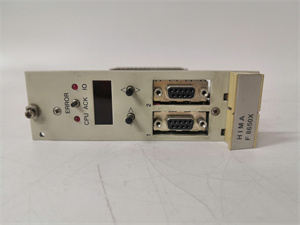
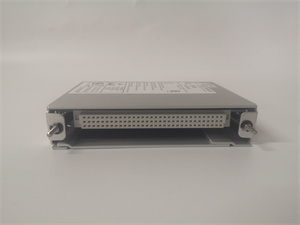
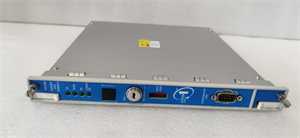
Description
Hard-Numbers: Technical Specifications
- Series: I/A Series Fieldbus
- Input Channels: 2 (independent, isolated)
- Sensor Types: Type J, K, T, E, N, B, R, S thermocouples
- Input Range: ±50 mV (typical TC voltage range)
- Accuracy: ±0.5°C or ±0.1% of reading (whichever is greater)
- Resolution: 16-bit
- Isolation Rating: 1500 VDC channel-to-channel, 1500 VDC channel-to-system
- Cold Junction Compensation: Built-in CJC sensor
- Operating Temperature: -40°C to +70°C
- Storage Temperature: -40°C to +85°C
- Relative Humidity: 5% to 95% non-condensing
- Certifications: CE, UL, CSA, FM, ATEX, IECEx
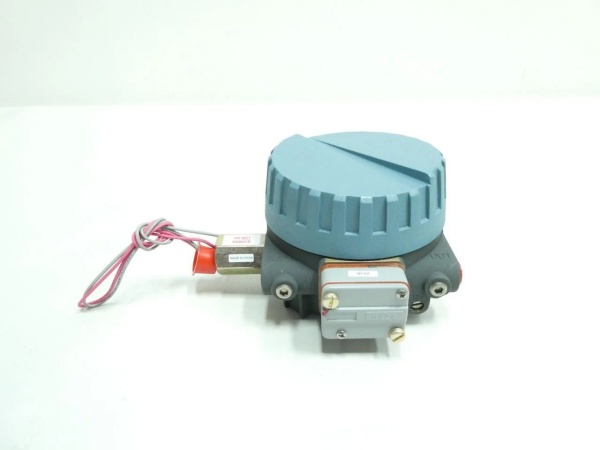
Foxboro E69F-TI2-JRS
The Real-World Problem It Solves
Thermocouple measurements suffer from ground loops, noise, and cold junction errors in industrial environments. Non-isolated input cards let ground potential differences between measurement points corrupt temperature readings. The E69F-TI2-JRS provides channel-to-channel isolation eliminating ground loops, cold junction compensation for accuracy, and digital diagnostic capabilities for reliable temperature measurement across both channels.
Where you’ll typically find it:
- Reactor temperature monitoring in chemical plants
- Distillation column temperature profiling
- Furnace and boiler temperature measurement in power generation
- Heat exchanger temperature monitoring in HVAC and process applications
Bottom line: It delivers accurate, isolated temperature measurement for critical process control.
Hardware Architecture & Under-the-Hood Logic
This temperature input module contains isolated A/D converters, cold junction compensation circuitry, and a microprocessor for signal processing and diagnostics. Each channel has independent isolation barriers, preventing ground potential differences between channels from affecting measurements. The module communicates over the Foxboro fieldbus to the I/A Series control system.
- Thermocouple millivolt signals enter through the terminal block and pass through input filters.
- Internal CJC sensors measure terminal block temperature for cold junction compensation.
- Isolated A/D converters digitize the TC signals and CJC temperatures independently for each channel.
- The microprocessor applies CJC compensation and linearizes the thermocouple curve based on the selected TC type.
- Compensated temperature values are transmitted over the fieldbus to the I/A Series controller.
- Diagnostics circuits monitor open circuits, short circuits, and out-of-range conditions per channel.
- Watchdog timers monitor microprocessor health, triggering fault alerts if system integrity is compromised.
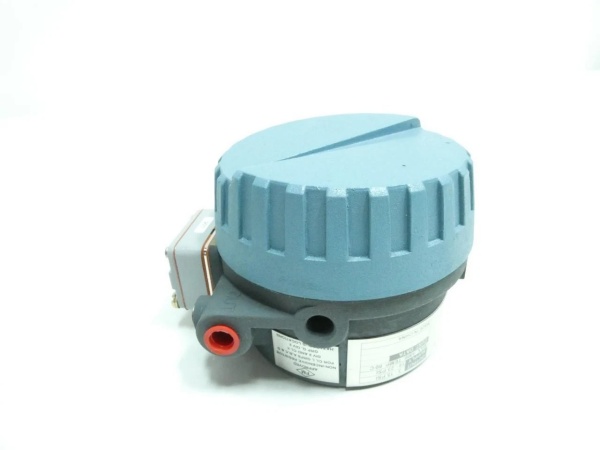
Foxboro E69F-TI2-JRS
Field Service Pitfalls: What Rookies Get Wrong
Incorrect Thermocouple Type ConfigurationRookies configure the channel for the wrong TC type (e.g., Type K instead of Type J). Temperature readings are wildly inaccurate because the linearization algorithm doesn’t match the actual thermocouple material.
- Field Rule: Always verify the TC type installed matches the configuration in I/A Series Configurator. Label both the field device and the channel to prevent confusion.
Improper Extension Wire UsageTechnicians use standard copper wire instead of thermocouple extension wire. This introduces measurement errors because the copper wire’s thermoelectric properties don’t match the TC, causing offset errors that worsen with temperature gradients.
- Field Rule: Use thermocouple extension wire matched to the TC type (e.g., JX extension for Type J, KX for Type K). Never use standard copper wire for TC extension—compensated wire is mandatory for accurate measurements.
Improper Shield Grounding on Multiple ThermocouplesRookies ground thermocouple shields at both the field device and the cabinet. Ground potential differences between locations create ground loops through the shield, corrupting millivolt signals and causing erratic readings.
- Field Rule: Ground thermocouple shields at one end only—either at the field device or at the cabinet terminal block. Follow your plant’s grounding standard consistently. For multiple TCs in the same run, maintain single-point grounding.
Ignoring Cold Junction Temperature DriftNew engineers don’t account for cabinet temperature changes affecting CJC accuracy. If the cabinet gets hot from nearby equipment, CJC errors creep into the measurement, causing drift over time.
- Quick Fix: Ensure adequate cabinet ventilation and avoid installing the module directly above high-heat-generating equipment. For high-accuracy applications, monitor CJC temperature values in the I/A Series system to detect abnormal drift.
Please note: The listed price is for reference only and is not binding. Final pricing and terms are subject to negotiation based on current market conditions and availability.