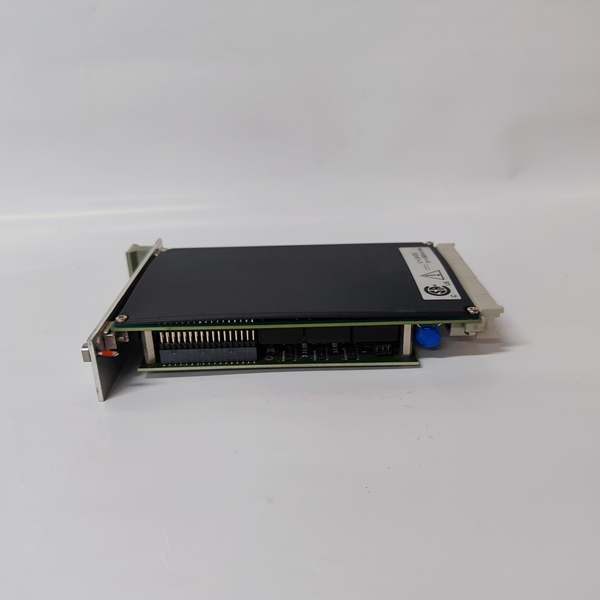
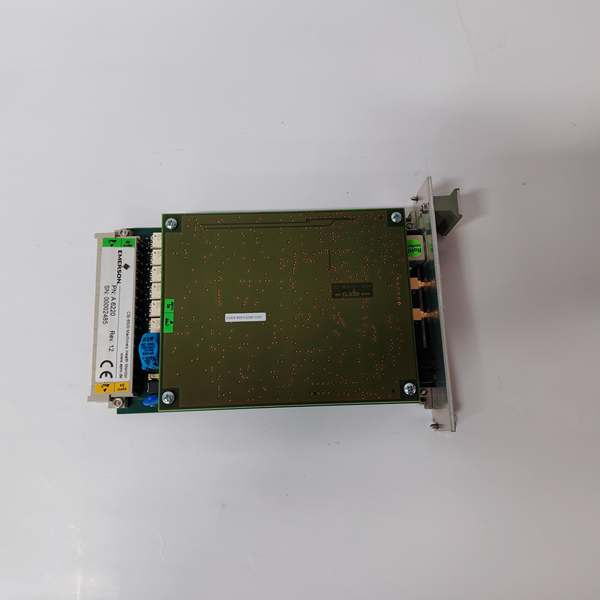
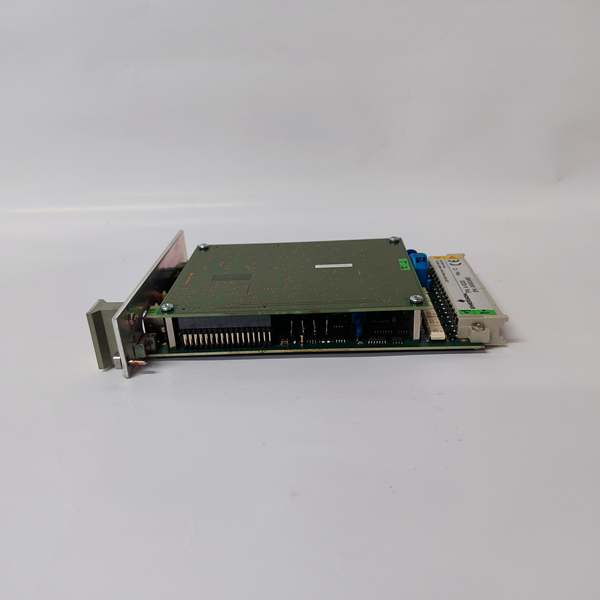
Description
Key Technical Specifications
- Model Number: A6220
- Manufacturer: Emerson Automation Solutions
- Channel Count: 16 Independent Analog Input Channels
- Input Types: Configurable per Channel – 4-20mA (2/3/4-Wire), RTD (PT100/PT1000), Thermocouple (J/K/T/E/R/S/B)
- Precision: ±0.05% Full Scale (4-20mA), ±0.1°C (RTD), ±0.2°C (Thermocouple)
- Operating Temperature: -40°C to 70°C (-40°F to 158°F)
- Isolation: 1500V DC Channel-to-Channel, 2500V DC Channel-to-Backplane
- Response Time: <10ms (4-20mA), <250ms (RTD/Thermocouple)
- Input Impedance: 250Ω (4-20mA), 100Ω (RTD), High-Impedance (Thermocouple)
- Protocol Support: A6200 Backplane Protocol, HART 7.0 (AI Channels)
- Power Consumption: 8W Typical, 14W Maximum (From Chassis)
- Mounting: 1U A6200 Chassis Slot, Tool-Less Latching, Hot-Swappable
- Protection Features: Overvoltage, Short-Circuit, Reverse Polarity
- Certifications: UL 61010-1, CSA C22.2 No. 61010-1, IEC 61131-3, CE, RoHS
- Compatibility: A6200 I/O Chassis, Ovation DCS, DeltaV DCS (With Adapter)

Emerson A6220
Field Application & Problem Solved
In industrial process monitoring—power plant boiler temperature sensing, refinery pressure measurements, chemical reactor level monitoring—the biggest inefficiency with legacy analog input modules is siloed signal support. You’d need separate modules for 4-20mA flow sensors, RTD temperature probes, and thermocouples, clogging I/O chassis and forcing plants to stock multiple spare types. Worse, low precision (±0.2% full scale) on old modules leads to inaccurate readings—costing millions in inefficient fuel use or off-spec product. Without diagnostics, you can’t tell if a drift in readings is a faulty sensor, wiring issue, or module degradation.
This module eliminates those pain points. It lets you configure each of its 16 channels for 4-20mA, RTD, or thermocouple via software—no hardware swaps needed—consolidating mixed-signal monitoring into one module. You’ll find it in every mixed-sensing environment: turbine exhaust temperature monitoring (thermocouples), boiler feedwater pressure (4-20mA), and steam superheater temperature (RTDs) in power plants; refinery distillation column pressure and temperature; and chemical batch reactor level and viscosity measurements. I installed 38 of these at a Midwest chemical plant where legacy modules required 76 slots (separate for each signal type); the A6220 cut that to 38, freeing up chassis space for expansion. Its ±0.05% precision corrected a 1.5°C temperature drift in reactor monitoring, reducing off-spec batches by 30%.
Its core value is versatility without sacrificing accuracy. Industrial plants don’t run on one type of analog signal—they need to measure pressure, temperature, flow, and level with a single module that delivers lab-grade precision. The channel-level diagnostics (e.g., “AI Open Circuit,” “Overvoltage,” “HART Communication Loss”) eliminate guesswork, while HART support lets you pull sensor diagnostics (e.g., drift, overload) directly into the DCS. Unlike generic AI modules, it’s built to withstand boiler room vibration, refinery electrical noise, and extreme temperature swings—ensuring reliable readings in the harshest conditions. It’s the all-in-one sensing solution that cuts hardware costs, simplifies maintenance, and improves process control.
Installation & Maintenance Pitfalls (Expert Tips)
- Channel Configuration Must Match Sensor Type: Rookies configure a channel for 4-20mA but wire a thermocouple, frying the channel’s signal circuit. A Gulf Coast refinery did this with five modules, costing $15k in replacements. Always cross-verify: if the DCS says Channel 7 is RTD, confirm the field wire is connected to the RTD terminals (not 4-20mA). Use color-coded wire markers (orange for 4-20mA, blue for RTD, red for thermocouple) to avoid mix-ups.
- Thermocouple Cold-Junction Compensation Is Critical: Forgetting to use thermocouple extension wire (matching the thermocouple type) causes cold-junction errors. A power plant I worked with used standard wire for K-type thermocouples, leading to ±3°C temperature errors in turbine exhaust readings. Use extension wire of the same type (e.g., K-type for K-type thermocouples) and keep junction boxes away from heat sources. Enable cold-junction compensation in software—this corrects for temperature variations at the module terminals.
- Shield Grounding Prevents Noise-Induced Drift: Ungrounded or double-grounded shields on 4-20mA/RTD wires pick up electrical noise, causing erratic readings. A chemical plant had this issue—pressure readings fluctuated by 5 psi during motor startups. Use shielded twisted-pair (STP) wire for all field connections, and ground the shield only at the module end (single-point grounding). This eliminates ground loops that corrupt analog signals.
- HART Diagnostics Must Be Enabled: Ignoring HART communication wastes the module’s ability to pull sensor health data. A Texas refinery didn’t enable HART, so a pressure transmitter with 10% drift went unnoticed until a distillation column overpressurized. Enable HART in software, map sensor diagnostic tags (e.g., “Sensor Drift,” “Overrange”) to the HMI, and schedule monthly checks of these tags. This turns passive monitoring into proactive maintenance.
Emerson A6220
Technical Deep Dive & Overview
The A6220 is a purpose-built analog input module designed to handle mixed-signal industrial sensing with uncompromised precision. At its core is a dual-core microcontroller: one core manages real-time signal conversion (16-bit ADC with oversampling for 4-20mA/RTD, dedicated thermocouple cold-junction compensation circuitry), while the other handles configuration, diagnostics, and HART communication. Each channel has dedicated signal conditioning hardware—no shared components—so a fault in one channel (e.g., a shorted 4-20mA sensor) doesn’t affect others.
The module’s configurability is enabled by reconfigurable input circuitry: each channel can switch between 4-20mA, RTD, or thermocouple via software commands, with no physical jumpers. For 4-20mA inputs, a precision 250Ω shunt resistor converts current to voltage, and oversampling (1000 samples/second) ensures stable readings even in noisy environments. For RTDs, a constant-current source (1mA) minimizes self-heating, while for thermocouples, a high-impedance input stage prevents signal loading and built-in cold-junction compensation corrects for ambient temperature variations.
The A6200 backplane interface uses Emerson’s proprietary high-speed protocol, delivering both process data and diagnostics to the DCS in real time. This includes channel-specific data like input current/voltage, fault codes, and HART sensor status—critical for troubleshooting. The module’s ruggedization features include conformal coating (resisting moisture and dust), vibration-resistant surface-mount components (for turbine enclosure mounting), and 2500V channel-to-backplane isolation (protecting against electrical transients from motor startups or lightning).
What sets it apart is its balance of versatility, precision, and ruggedness. Mixed-signal modules often sacrifice accuracy for flexibility, but this model matches the performance of dedicated AI modules while handling three signal types. The hot-swappable design lets technicians replace modules in 30 seconds without chassis shutdowns, and non-volatile memory retains channel configurations—so no reconfiguration is needed after replacement. For field service engineers, it’s a game-changer: fewer modules to stock, faster reconfigurations for process changes, and diagnostics that cut troubleshooting time in half. It’s not just a sensor interface—it’s the reliable, accurate link between field devices and industrial control systems.