Description
Key Technical Specifications
- Model Number: 3500/22M-01-01-00
- Manufacturer: Bently Nevada (a Baker Hughes business)
- Channel Count: 2 fully independent monitoring channels
- Input Compatibility: Eddy current proximity probes (3301 series), IEPE accelerometers (4-20mA)
- Measurement Parameters: Vibration velocity (RMS), displacement (peak-peak), acceleration (peak)
- Measurement Ranges: Velocity: 0-50mm/s (0-2.0 ips); Displacement: 0-508μm (0-20 mils); Acceleration: 0-50g peak
- Power Supply: 24VDC ±10% (19.2-26.4VDC) from 3500 rack backplane; 0.4A typical current draw
- Operating Temperature: -40°C to +70°C (-40°F to +158°F)
- Mounting Type: Rack-mount (3500 system 19″ rack, 1U height, hot-swappable)
- Isolation Rating: 1kV AC (input circuits to backplane/power; channel-to-channel)
- Certifications: CE, UL 508, ATEX Zone 2 (Ex nA IIC T4), IECEx, SIL 2 (IEC 61508), API 670 compliant
- Compatibility: Bently 3500/15 Rack Assembly, 3500/25 Relay Modules, 3500/94 Communication Modules, 3301 proximity probes, industrial accelerometers
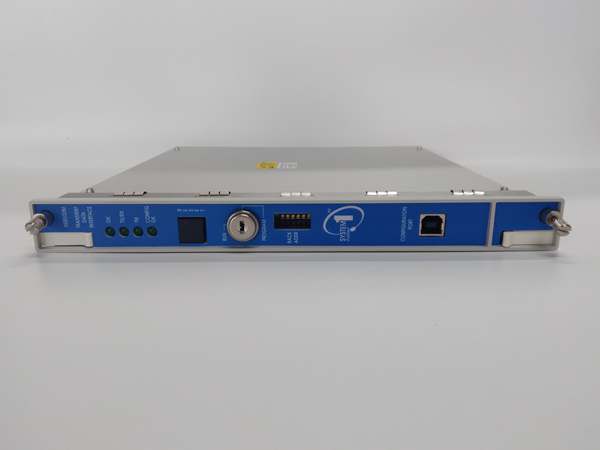
- Diagnostic Capability: Per-channel LED indicators (power, signal OK, alarm, trip), rack-level fault reporting, 10-second waveform capture
- Response Time: ≤10ms (alarm/trip trigger); 1kHz sampling rate per channel
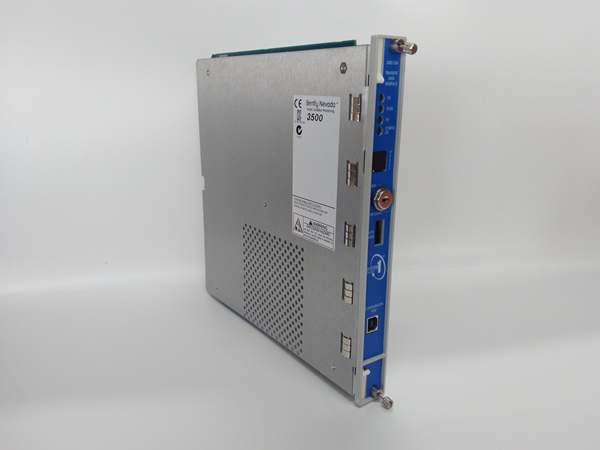
Bently Nevada 3500/22M-01-01-00
Field Application & Problem Solved
In critical rotating machinery—refinery gas turbines, power plant steam turbines, chemical plant centrifugal compressors—the biggest vibration monitoring challenge is reliable, dual-channel data collection that integrates seamlessly with the 3500 system and meets safety compliance. Generic dual-channel modules fail here: they lack native 3500 backplane integration (requiring custom wiring that introduces latency), can’t handle both proximity and accelerometer inputs (forcing separate modules), or don’t meet SIL 2/API 670 standards for safety-related applications. A Texas refinery lost $450k in a 6-hour outage when a generic module failed to sync with the 3500 system, missing a 38mm/s vibration spike in a hydrocracker turbine that led to bearing failure. A Pennsylvania power plant spent $39k annually troubleshooting false trips from modules that couldn’t filter out VFD-induced noise from their generator vibration data.
This module solves these issues as a native 3500 component. You’ll find it in 3500 rack assemblies protecting main turbines, generators, and large compressors—assets where dual-channel monitoring (e.g., radial vibration on both ends of a rotor) is critical for comprehensive health assessment. It’s mandatory for facilities with SIL 2/3 requirements, as it maintains data integrity for safety-related vibration thresholds.
Its core value is 3500-native integration + dual-input flexibility + SIL 2-rated reliability. Unlike generics, it communicates directly with the 3500 backplane, eliminating latency between vibration detection and shutdown. The dual-channel design reduces rack space by 50% compared to single-channel modules, while supporting both proximity probes (shaft vibration) and accelerometers (housing vibration) for complete machinery health visibility. For a Louisiana chemical plant, this module detected a 2.5mm/s increase in turbine vibration (indicative of rotor unbalance) 72 hours before failure, allowing scheduled maintenance and avoiding a $310k unplanned outage.
Installation & Maintenance Pitfalls (Expert Tips)
- Input Type Misconfiguration: Match Channel to Sensor: Rookies leave channels set to “proximity” when using accelerometers (or vice versa), resulting in invalid readings. An Ohio steel mill’s generator monitor showed 0mm/s vibration until we reconfigured channels via 3500 Configuration Software. Always verify sensor type (proximity/accelerometer) and update the module’s settings—use the front-panel LEDs to confirm signal lock (green “signal OK” light).
- Firmware Mismatch Breaks Backplane Communication: Outdated module firmware (pre-v6.0) causes “module not detected” faults with 3500 racks running v7.0+. A Florida refinery’s technicians wasted 8 hours troubleshooting until we updated the module via the rack’s USB port. Check Bently’s compatibility matrix—firmware must align with the rack’s controller version to ensure data sync.
- Terminal Torque: 0.6Nm for Signal Connections: Loose sensor terminals cause intermittent signal dropouts or noise. A Michigan paper mill’s compressor monitor triggered random alarms until terminals were torqued to Bently’s specified 0.6Nm. Use a precision torque screwdriver—over-tightening damages small-gauge sensor wires; under-tightening causes arcing and signal degradation.
- Grounding: Single-Point at Module End: Grounding sensor cable shields at both ends creates ground loops, introducing 60Hz noise into vibration data. A North Carolina refinery’s turbine data had persistent hum until we disconnected shields from the machinery housing and grounded them solely at the module. Use Bently’s 200350 shielded cables and maintain 30cm separation from AC power lines.
- Waveform Capture: Enable for Root Cause Analysis: Rookies disable waveform capture to “save memory,” losing critical data during fault events. A Texas chemical plant’s turbine trip was traced to a 5ms shaft rub only after reviewing the module’s captured waveform. Enable continuous 10-second buffers via 3500 software—this data is irreplaceable for distinguishing between unbalance, misalignment, or bearing wear.
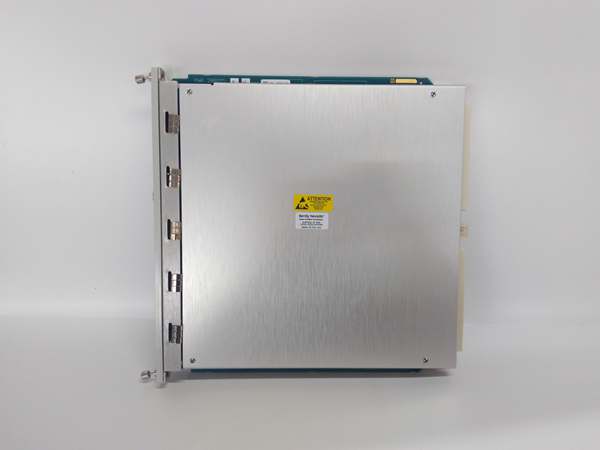
Bently Nevada 3500/22M-01-01-00
Technical Deep Dive & Overview
The Bently Nevada 3500/22M-01-01-00 is a dual-channel vibration monitoring workhorse engineered to be the backbone of the 3500 Machinery Protection System. At its core, a 32-bit microprocessor samples sensor signals at 1kHz per channel, executing Bently’s proprietary signal processing algorithms to filter electrical and mechanical noise. For proximity probes, it converts eddy current signals into displacement/velocity readings; for accelerometers, it amplifies and converts 4-20mA signals into acceleration/velocity data—all while maintaining ±0.33% full-scale accuracy.
Unlike generic modules, it features native 3500 backplane integration, enabling hot-swap functionality (module replacement without rack power down) and real-time communication with 3500/25 relay modules for safety shutdowns. The 1kV AC isolation between channels and backplane blocks interference from VFDs and motor cables, ensuring signal integrity in noisy industrial environments. The module’s SIL 2 compliance is achieved through redundant internal circuits and fault-detection logic that verifies signal validity before triggering alarms/trips.
What sets it apart is its fault correlation capability. By time-stamping vibration data to the 3500 system’s clock, it enables technicians to link dual-channel readings (e.g., front vs rear bearing vibration) to other parameters like temperature or displacement, reducing diagnostic time by 70% compared to standalone modules. For maintenance and safety teams, this module isn’t just a monitor—it’s a diagnostic tool that provides a complete picture of machinery health, ensuring personnel safety and minimizing catastrophic downtime. Its rugged design, compliance, and seamless 3500 integration make it the gold standard for critical rotating asset protection.