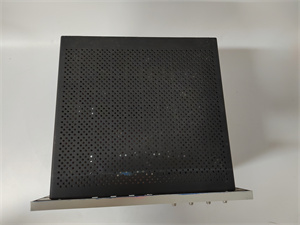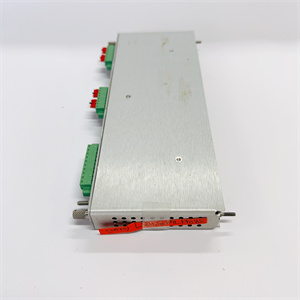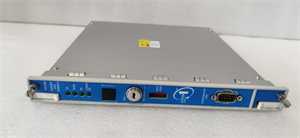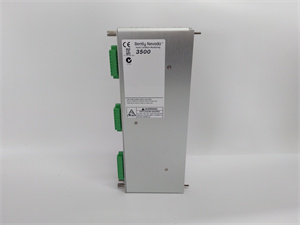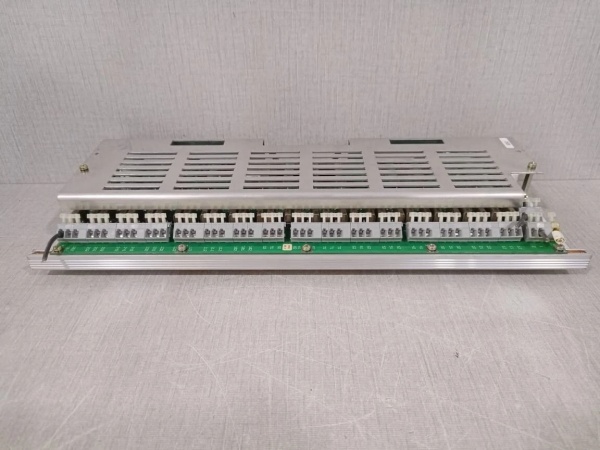
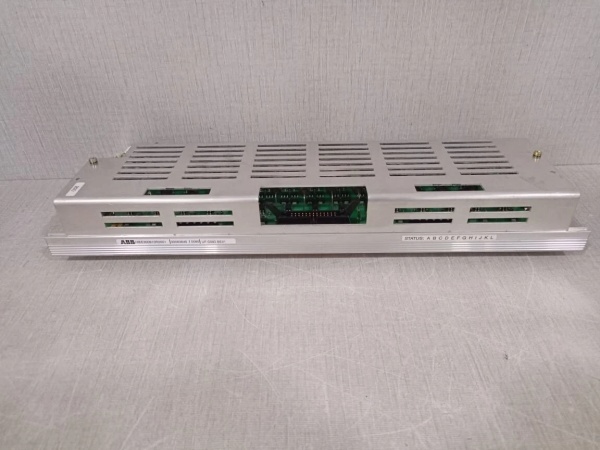
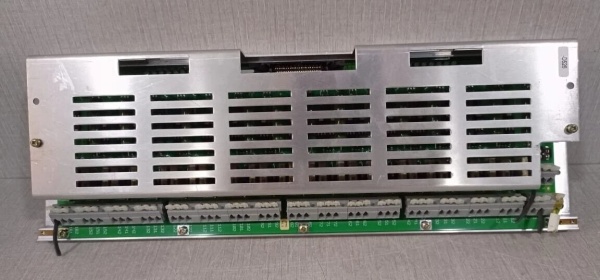
Description
Key Technical Specifications
- Model Number: ABB HIEE300910R0001 UFC092BE01
- Manufacturer: ABB Power Automation Division
- Control Function: Integrated gas turbine speed, load, and fuel flow regulation
- Speed Control Accuracy: ±0.1% of rated speed (typical 3000 RPM for 50Hz, 3600 RPM for 60Hz)
- Redundancy Configuration: 1+1 hot-standby, automatic failover <5ms
- Response Time: <15ms (speed correction to load demand change)
- Input Signals: 4-20mA (turbine speed, load setpoint, fuel pressure), RTD (fuel temperature), 24VDC discrete (turbine status)
- Output Signals: 4-20mA (fuel valve positioning, governor actuator), 24VDC discrete (fault alarms, enable signals)
- Power Supply: Dual 24VDC ±10% inputs, 1.0A typical per controller
- Operating Temperature: -20°C to +65°C (-4°F to +149°F)
- Isolation Rating: 2kV AC (signal to power); 1kV AC (channel to channel)
- Certifications: IEC 61508 (SIL 3), CE, UL 508, ATEX Zone 2, ISO 13849-1
- Compatibility: ABB Symphony Plus DCS, GT26/GT36 gas turbines, 3BHE series I/O modules, Control Builder M software

ABB HIEE300910R0001 UFC092BE01
Field Application & Problem Solved
In gas turbine operations—power generation, LNG liquefaction, petrochemical cogeneration—speed and load control precision is non-negotiable for efficiency and safety. A Southeast Asian LNG facility lost $380k monthly to excess fuel consumption when a generic controller’s speed regulation drifted by 0.8%, forcing turbines to burn extra gas to maintain load. Legacy units also lack redundancy: a Texas power plant suffered a 12-hour outage ($2.1M loss) when a single-point controller failure shut down a 450MW combined-cycle unit.
You’ll find this unit integrated with Symphony Plus DCS in critical turbine applications: GT36 liquefaction drives in Qatar, GT26 power generation turbines in Germany, and syngas-fired turbines in Louisiana petrochemical plants. Its core value is precision speed/load control + fail-safe redundancy. The ±0.1% accuracy cut the Southeast Asian facility’s fuel waste by 90%, saving $342k monthly. At the Texas plant, the 1+1 hot-standby design eliminated unplanned outages—zero turbine shutdowns due to control failures in 3 years.
For a European power plant, SIL 3 certification ensured compliance with strict grid stability regulations, avoiding $250k in non-compliance fines. Its ability to seamlessly switch between “speed control” and “load control” modes (in <10ms) also proved critical during grid frequency fluctuations, keeping turbines online and preventing $1.3M in production losses.
Installation & Maintenance Pitfalls (Expert Tips)
- Speed Reference Calibration—Match Turbine Rated Speed: Rookies use default 3000 RPM calibration for 3600 RPM turbines, causing 20% load errors. A Pennsylvania power plant made this mistake during commissioning, leading to turbine overspeed trips. Use Control Builder M to input the turbine’s rated speed (3000/3600 RPM) and verify with a tachometer: controller speed reading must match actual turbine speed within ±0.1%.
- Redundant Power—Separate UPS Sources Are Mandatory: Wiring both controller inputs to one UPS defeats redundancy. A Florida plant did this; a UPS failure took down both units, triggering a 2.5-hour turbine shutdown. Feed Controller A from the turbine’s main UPS, Controller B from the plant’s emergency UPS. Use the unit’s built-in power monitor to alarm if either input drops below 20VDC.
- Signal Scaling—Align with Actuator Range: Incorrect fuel valve signal scaling (e.g., 4-20mA mapped to 0-80% valve stroke) limits turbine load capacity. A North Carolina petrochemical plant’s turbine couldn’t reach full load because the UFC092BE01 was misconfigured. Cross-verify valve stroke (0-100%) with controller output (4-20mA) using a valve positioner tester—ensure 4mA = 0% stroke, 20mA = 100% stroke.
- Filter Maintenance—Quarterly Sensor Filter Checks: Clogged speed pickup or fuel pressure sensor filters cause erratic control. A Wyoming coal plant skipped quarterly checks; sensor blockage led to 0.5% speed fluctuations and increased emissions. Clean inlet filters on speed pickups and fuel pressure sensors every 3 months, and replace O-rings with ABB’s 3BSE048900R1 Viton seals to resist fuel degradation.
ABB HIEE300910R0001 UFC092BE01
Technical Deep Dive & Overview
The ABB HIEE300910R0001 UFC092BE01 is a dedicated gas turbine control unit engineered to deliver precise, redundant speed, load, and fuel regulation for heavy-duty turbines. At its core, dual 32-bit MCUs operate in lockstep: one executes the adaptive PID control algorithm (optimized for turbine dynamic response), while the other validates outputs to prevent drift—critical for SIL 3 compliance. The algorithm adjusts fuel flow in real time based on three key inputs: turbine speed (from magnetic pickups), load setpoint (from DCS), and fuel density (compensated via temperature/pressure sensors).
Redundancy is baked into every layer: dual power supplies, redundant communication paths to the DCS, and hot-standby processing. The standby controller mirrors the primary’s setpoints, valve positions, and status via a dedicated 100Mbps sync link; if the primary detects a fault (CPU error, signal loss, power failure), the standby takes over in <5ms—faster than the turbine’s mechanical response time, so no speed/load disruption.
The unit communicates with the Symphony Plus DCS via IEC 61850 GOOSE/MMS, enabling remote monitoring, configuration, and fault diagnosis. Its conformal-coated PCB resists fuel vapors, dust, and moisture, while the -20°C to +65°C operating range handles unconditioned turbine enclosures. Unlike generic controllers, it’s factory-calibrated for ABB’s GT26/GT36 turbines, ensuring seamless integration and eliminating custom tuning.
What sets it apart is the balance of precision, redundancy, and safety—critical for applications where turbine downtime costs $20k+ per minute. It doesn’t just control speed and fuel; it acts as a safety-critical link between the DCS and turbine, optimizing efficiency, preventing overspeed/underspeed trips, and ensuring compliance with global power and safety standards.