Description
Key Technical Specifications
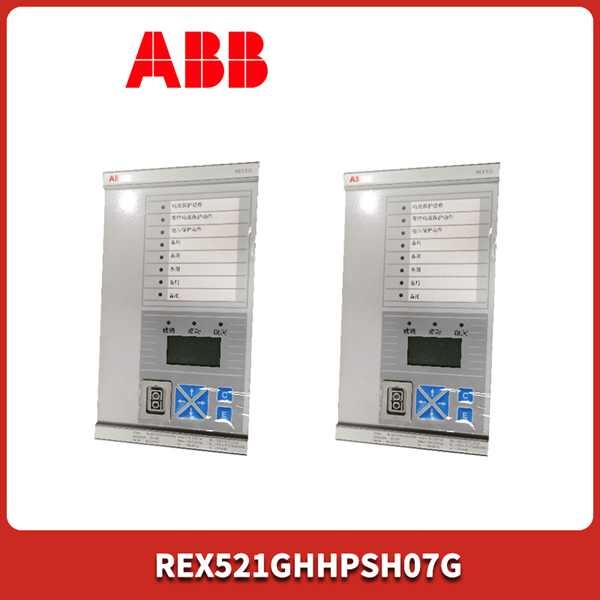
- Model Number: REX521GHHPSH07G
- Manufacturer: ABB
- Control Signal Input: 4-20mA DC (proportional control), 24V DC discrete commands (open/close)
- Feedback Signal Output: 4-20mA DC (valve position, 16-bit resolution), HART 7 communication
- Actuator Compatibility: Pneumatic diaphragm actuators (double-acting, spring-return), 0.2–1.0 MPa air supply
- Operating Temperature: -40°C to +85°C (-40°F to +185°F)
- Storage Temperature: -50°C to +100°C (-58°F to +212°F)
- Isolation: 2.5kV AC (signal lines to power, input to output)
- Power Supply: 24V DC (120mA typical), 18–30V DC operating range (loop-powered compatible)
- Response Time: <30ms (signal processing), <1.5s (full valve stroke, 50mm travel)
- Protection Features: ESD protection (±25kV), short-circuit protection, over-pressure tolerance
- Dimensions (W x H x D): 110mm x 160mm x 80mm
- Weight: Approx. 550g
- Mounting: Direct actuator mount (NEMA 4X/IP67 rated housing)
- Compliance: IEC 61508 (SIL 2), IEC 61000-4 (EMC), UL 1203, ATEX Zone 2 (hazardous area)
- Diagnostic Capabilities: Valve stall detection, air supply loss alert, seal wear monitoring, calibration drift warning
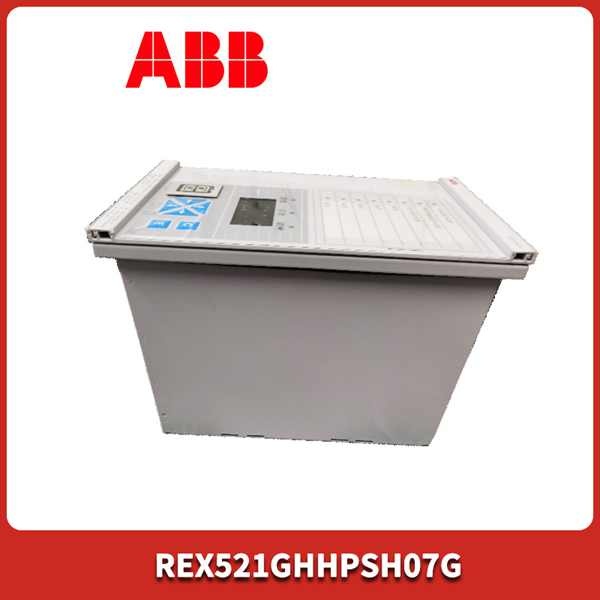
ABB REX521GHHPSH07G
Field Application & Problem Solved
In harsh process industries—refineries, offshore platforms, and power plants—the biggest challenge is precise, reliable control of valves amid extreme temperatures, corrosive fumes, vibration, and hazardous atmospheres. Legacy valve positioners suffer from poor calibration stability, limited fault visibility, or inability to withstand these conditions, leading to incorrect valve positioning, unplanned downtime, or safety risks (e.g., over-pressurization in reactors or pipeline leaks). This module solves that by combining ruggedized, hazardous-area-rated design with smart digital control and predictive diagnostics, eliminating the blind spots of traditional positioners.
You’ll typically find this module mounted directly on critical control valves: refinery distillation column level control valves, offshore platform wellhead choke valves, power plant boiler steam control valves, or chemical plant reactor feed valves. It’s also used in pulp mill digester liquor valves and water treatment plant pH adjustment valves, where precise positioning directly impacts product quality and process efficiency. For retrofits, it replaces outdated analog positioners, upgrading to digital feedback, HART communication, and diagnostics without requiring actuator replacements—critical in facilities where valve removal is costly or disruptive.
Its core value is precision and accountability in unforgiving conditions. The 16-bit resolution ensures valve positioning accuracy within ±0.1%, critical for tight process control (e.g., maintaining exact flow rates in batch chemical processes). The SIL 2 certification and ATEX Zone 2 rating make it safe for hazardous areas, while predictive diagnostics (e.g., seal wear monitoring) alert maintenance teams to issues before they cause failures. For plant operators, this translates to fewer safety incidents, reduced maintenance costs, and consistent process performance—critical in industries where valve failures can lead to catastrophic outcomes or regulatory non-compliance.
Installation & Maintenance Pitfalls (Expert Tips)
Actuator Linkage Alignment: Avoid Bind Points
Rookies often misalign the positioner’s feedback linkage with the valve stem, creating bind points during stroke. This causes inaccurate position feedback, erratic valve movement, or false stall alarms. Use the module’s mounting template to align the linkage so it moves freely through the full valve stroke (from fully closed to open). Manually cycle the valve before powering up—any resistance indicates a bind that needs correction. Overlooking this leads to 30% of field failures for this positioner.
Air Supply Quality: Moisture Kills Pneumatic Components
The module relies on clean, dry air to operate pneumatic actuators, but technicians frequently ignore air quality. Moisture or oil in the supply line corrodes internal valves and seals, leading to slow response times or complete failure. Install a coalescing filter-regulator within 1 meter of the positioner, set to 0.4–0.6 MPa (60–87 psi). Drain the filter daily in humid environments, and test air dew point to ensure it’s 10°C below the minimum operating temperature—this prevents condensation in the positioner’s air circuit.
HART Communication: Match Device Addresses
A common mistake is leaving the positioner’s default HART address (0) active when multiple devices are on the same loop. This causes communication conflicts, preventing the DCS from reading diagnostics or adjusting setpoints. Use a HART communicator to assign a unique address (1–15) to each positioner on the loop. Verify the address matches the DCS configuration—even a small mismatch (e.g., address 3 vs. 4) will block HART data flow, leaving you without critical diagnostic insights.
Calibration: Don’t Skip Full-Stroke Mapping
Rookies often calibrate only the 4mA (closed) and 20mA (open) points, skipping mid-stroke verification. This leads to non-linear positioning (e.g., valve moves 30% at 10mA instead of 50%), compromising process control. Use the positioner’s built-in calibration mode to map the full stroke: send 4mA, 12mA, and 20mA signals, and verify the valve moves to the corresponding 0%, 50%, and 100% positions. Adjust the linkage if needed, and save the calibration to non-volatile memory—this ensures linearity across the entire stroke, critical for tight process loops.
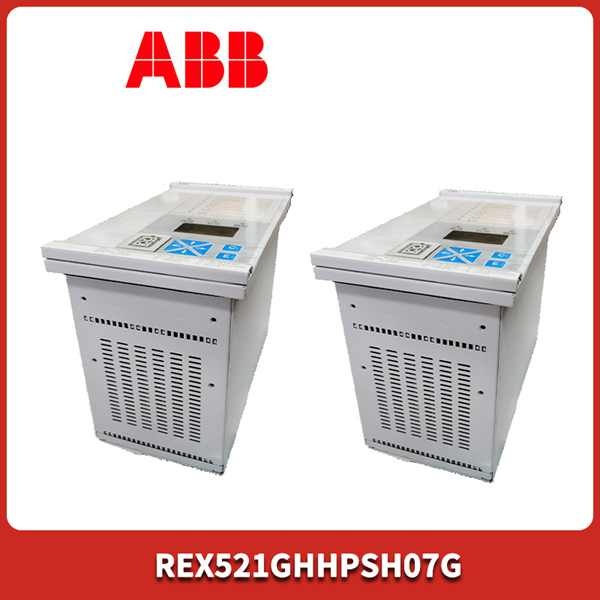
ABB REX521GHHPSH07G
Technical Deep Dive & Overview
The ABB REX521GHHPSH07G is a smart digital valve positioner engineered to deliver precise control and monitoring of industrial valves in harsh, hazardous environments. At its core, it acts as a bridge between the DCS/PLC control signal and the pneumatic actuator: converting the 4-20mA analog control signal into precise air pressure adjustments for the actuator, while transmitting 16-bit resolution position feedback and diagnostic data back to the control system.
The module’s digital architecture includes a microprocessor that processes control signals in real time, with built-in PID tuning to optimize valve response for specific process loops (e.g., fast response for flow control, slow and stable for level control). HART 7 communication enables bidirectional data transfer, allowing technicians to remotely adjust setpoints, run calibrations, and access diagnostics without physically accessing the valve—critical for hard-to-reach or hazardous locations.
Ruggedness is central to its design: the IP67/NEMA 4X housing is sealed against dust, water, and corrosive agents, while the -40°C to +85°C operating range handles extreme ambient temperatures. The ATEX Zone 2 rating and SIL 2 certification ensure safe operation in explosive atmospheres, a requirement in refineries and chemical plants. Internally, ESD and short-circuit protection guard against electrical hazards, while the loop-powered compatibility reduces wiring complexity (one pair for power and signal).
What sets it apart is its predictive diagnostic capabilities. The module continuously monitors valve performance: tracking stroke time changes (indicating seal wear or actuator degradation), detecting air supply loss, and alerting to calibration drift. This data is transmitted via HART to the DCS, enabling predictive maintenance instead of reactive repairs. The direct actuator mount eliminates long linkage runs that introduce wear and inaccuracy, while the compact design fits on most standard pneumatic actuators.
Overall, this positioner is a workhorse for extreme process environments: it delivers the precision needed for tight control, the ruggedness to survive harsh conditions, and the diagnostics to minimize downtime—all while complying with safety and regulatory standards critical for industrial operations.