Description
Key Technical Specifications
- Model Number: ABB PP875
- Manufacturer: ABB Industrial Automation Division
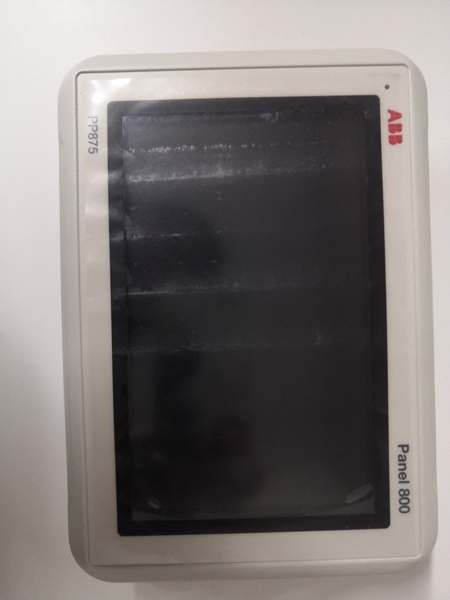
- Display Configuration: 7″ TFT LED, 800×480 WVGA resolution, 350 cd/m² brightness
- Touch Technology: 4-wire resistive (glove-compatible, dust/water-resistant)
- Processing Hardware: 1GHz ARM9 CPU, 512MB DDR2 RAM, 2GB eMMC flash (1.5GB user-accessible)
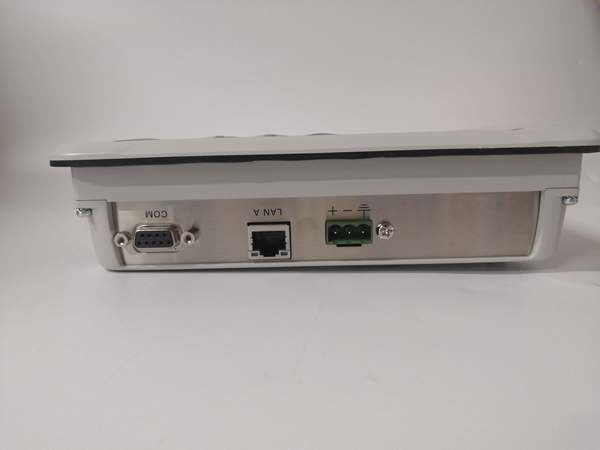
- Communication Ports: 1×10/100Mbps Ethernet (RJ45), 1×USB 2.0 (Type-A), 2×RS485, 1×RS232/RS422 (configurable)
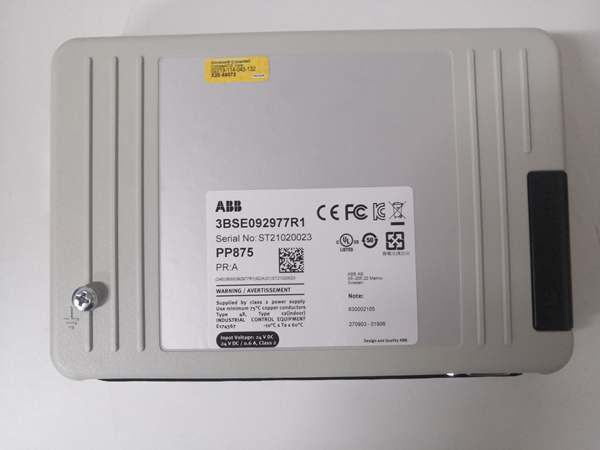
- Power Requirements: 24VDC ±10% (18-32VDC), 0.6A typical current draw (14.4W)
- Environmental Ratings: Operating temp -10°C to +60°C; 5-85% RH (non-condensing); IP65 front/IP20 rear
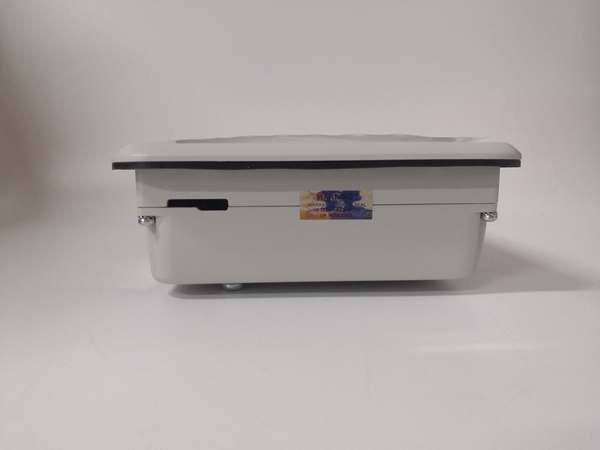
- Mechanical Design: Diecast aluminum housing, panel mount (187×126mm cutout), VESA 75×75 compatible
- Certifications: CE, UL 61010-2-201, Marine (DNV/ABS/KR), RoHS 2.0
- Protocol Support: Modbus TCP/RTU, Profinet, OPC UA, IEC 61850 (GOOSE), DNP3
- Compatibility: ABB 800xA, Symphony Plus, AC800M DCS; third-party PLCs (Siemens, Rockwell)
- Software: ABB Panel Builder 800 (configuration/visualization)

ABB PP875
Field Application & Problem Solved
In industrial operations—refineries, power plants, paper mills—operator interfaces face two fatal flaws: fragility in harsh conditions and poor integration with ABB control systems. A Texas refinery lost $90k in a single shift when a generic HMI’s unprotected front shorted after exposure to chemical vapors, halting a distillation unit. Legacy HMIs also force plants to use costly protocol gateways: a Wisconsin paper mill spent $30k on converters to connect a third-party HMI to their AC800M DCS, leading to 2 hours of monthly downtime from gateway failures.
You’ll find this HMI mounted on control panels in mission-critical areas: boiler control rooms in Pennsylvania coal plants, offshore platform control stations in the Gulf of Mexico, and pulp mill process lines in Minnesota. Its core value is ruggedness tailored for industrial abuse + ABB-native integration. The IP65 front and corrosion-resistant aluminum housing eliminated the Texas refinery’s vapor-related failures—zero replacements in 4 years. At the paper mill, built-in support for ABB’s native protocols replaced three gateways, cutting downtime to 10 minutes monthly.
For a North Sea offshore vessel, the marine-certified variant withstood salt spray and temperature swings (-15°C to +55°C) that destroyed two generic HMIs in 12 months. Its resistive touchscreen also works reliably with gloved operators, a must in cold or hazardous environments where bare-hand use is unsafe.
Installation & Maintenance Pitfalls (Expert Tips)
- Power Redundancy: Don’t Daisy-Chain Inputs: Rookies connect both power terminals to a single 24VDC source, defeating the HMI’s redundant power design. A Louisiana chemical plant did this; a UPS failure took down the HMI, forcing manual process control for 3 hours. Feed Terminal 1 from the main UPS and Terminal 2 from a backup battery—verify with a multimeter that both sources are active before power-up.
- Shielded Cables Are Non-Negotiable: Unshielded Ethernet/serial cables pick up EMI from motors or VFDs, causing data dropouts. A Michigan steel mill’s HMI froze daily until we replaced unshielded Cat5e with ABB-certified shielded Cat6. Ground the shield at the HMI end only (single-point grounding) to avoid noise loops.
- Firmware Must Match DCS Version: Installing the latest HMI firmware without checking DCS compatibility causes communication failures. A Florida power plant updated their PP875 to v5.2 while running Symphony Plus v7.0—lost 4 hours of production when the HMI couldn’t sync. Use ABB’s compatibility matrix to match firmware versions (within ±1 release) and update via USB or Ethernet.
- Panel Cutout Precision Saves IP Rating: A 1mm deviation from the 187×126mm cutout ruins the IP65 seal. A North Carolina pulp mill’s HMI let water seep in after a makeshift cutout—cost $800 in repairs and 2 hours of downtime. Use the ABB template for cutting, and torque mounting screws evenly (4Nm) to maintain a tight seal.
ABB PP875
Technical Deep Dive & Overview
The ABB PP875 is a purpose-built industrial HMI engineered to balance usability and ruggedness for harsh environments. At its core, a 1GHz ARM9 processor handles real-time visualization of process data, executing custom interfaces created in ABB’s Panel Builder 800 software. The 512MB RAM supports concurrent data logging and communication with multiple devices, while the 2GB eMMC flash stores application code and historical data (with wear leveling for 10-year lifespan).
The resistive touchscreen is designed for industrial use—unlike capacitive screens, it works with gloves, dirty fingers, or light moisture, critical for refineries or paper mills where operators can’t always clean their hands. The diecast aluminum housing and conformal-coated PCB resist chemical vapors, dust, and vibration, while the IP65 front rating protects against water jets (common in washdown areas).
A dedicated multi-protocol communication chipset eliminates the need for external gateways, supporting ABB’s native protocols (800xA, Symphony Plus) and industry standards (Modbus, Profinet, OPC UA) out of the box. This chipset processes communication independently of the main CPU, preventing lag even when polling 300+ I/O points.
What sets it apart from generic HMIs is seamless ABB DCS integration—no custom drivers or scripting required. It’s factory-calibrated to communicate directly with AC800M controllers and Symphony Plus I/O, reducing commissioning time by 50% compared to third-party units. For facilities where downtime costs $10k+/hour, this HMI isn’t just a display—it’s a reliable link between operators and control systems, built to survive the harshest industrial conditions.