Description
Key Technical Specifications
-
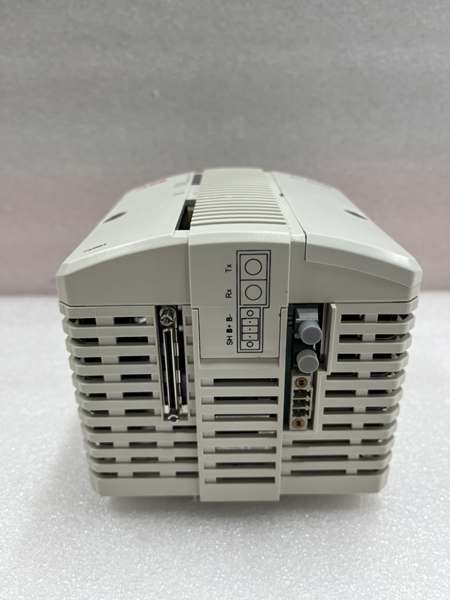
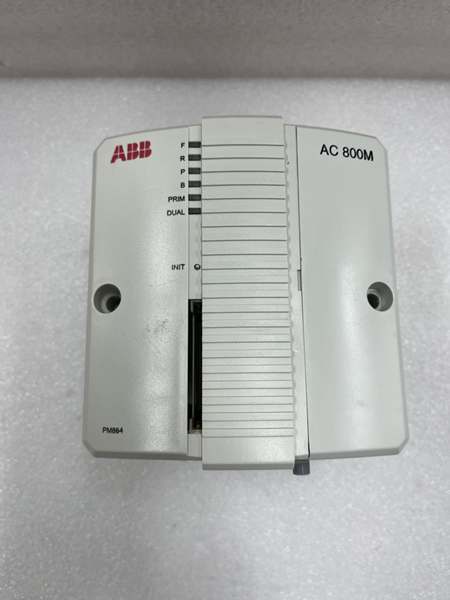
Model Number: ABB AC800M PM864
-
Manufacturer: ABB Process Automation Division
-
CPU Configuration: Dual-core PowerPC e500mc, 800MHz
-
Memory: 256MB RAM (battery-backed), 1GB flash (firmware/programs), 32MB non-volatile RAM
-
Redundancy: 1+1 hot standby (automatic failover <10ms), dedicated sync link
-
Scan Time: 1ms minimum for 10,000 I/O points; 5ms typical for complex control loops
-
Communication Protocols: IEC 61850 (GOOSE/MMS), Modbus TCP, Profinet IRT, DNP3.0, HART
-
Compatibility: AC800M I/O modules (AI810, AO810, DI810), AC800M communication modules (CM572), ABB System 800xA HMI
-
Power Supply: 24VDC ±10% from DCS backplane; 0.8A typical (single CPU), 1.5A max (redundant pair)
-
Operating Temperature: -20°C to +60°C (-4°F to +140°F)
-
Isolation Rating: 2kV AC (CPU to backplane); 1kV AC (communication ports)
-
Certifications: IEC 61508 (SIL 3), CE, UL 508, ATEX Zone 2, IEC 61131-3
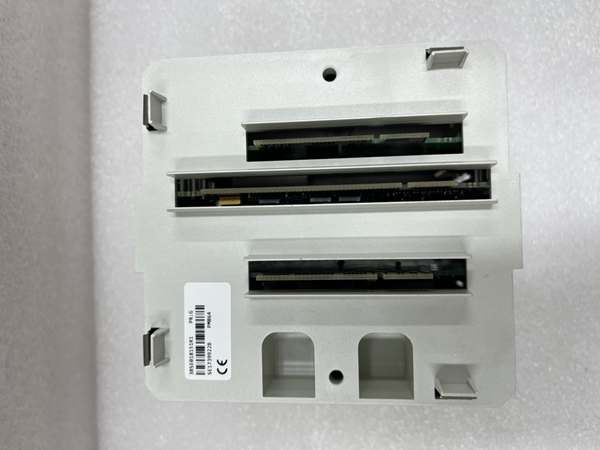
ABB AC800M PM864
Field Application & Problem Solved
In critical processes—like a Texas refinery’s crude distillation unit or a Louisiana LNG plant’s liquefaction train—CPU failure means disaster. A 2022 outage at a Gulf Coast refinery cost $2.4 million in 12 hours when its legacy non-redundant CPU crashed during a lightning storm. Even “reliable” single-core CPUs struggle with modern demands: scan times of 10ms cause control loop instability, leading to product quality issues (e.g., off-spec gasoline) that cost $50k/ batch. Another pain point: older CPUs can’t integrate with IEC 61850-based smart instruments, forcing plants to use clunky gateways that add latency.
You’ll find the PM864 as the “brain” of AC800M DCS racks in these high-stakes environments. It’s not just a CPU—it’s a fail-safe control hub. Its core value is zero unplanned downtime plus speed. The 1+1 redundancy fixed the Gulf Coast refinery’s issue: when a lightning strike fried the primary CPU, the standby took over in 8ms—no process upset, no downtime. The dual-core 800MHz processor cut scan times from 10ms to 2ms at a Pennsylvania chemical plant, stabilizing their reactor temperature control and reducing off-spec product by 90%.
Its IEC 61850 compliance is a game-changer for modernization. A California power plant used it to replace 15-year-old CPUs, integrating directly with new smart breakers and turbines without gateways. This cut communication faults by 100% and simplified troubleshooting—technicians now pull real-time data from instruments via the CPU, not via 3rd-party software.
Installation & Maintenance Pitfalls (Expert Tips)
Redundancy Sync Link—Use ABB’s Proprietary Cable (No Substitutes)
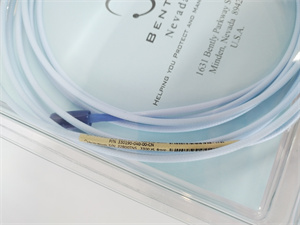
Rookies use Cat5e Ethernet cable for the CPU sync link—big mistake. The PM864’s sync requires shielded, twisted-pair cable (ABB part 3BSE013249R1) to avoid noise interference. A Louisiana chemical plant used generic Cat5e; during a motor startup, electrical noise corrupted the sync signal, causing both CPUs to go “active” (split brain) and trip the process. Replacing with ABB’s cable fixed it.
Firmware Must Match Across Redundant Pair & I/O Modules
Mismatched firmware (e.g., CPU A v5.1, CPU B v5.0) causes failover failures. A Texas LNG plant updated one CPU but not the other—when the primary failed, the standby rejected the handoff, triggering a 4-hour shutdown. Always use ABB’s System 800xA Engineering Studio to flash both CPUs simultaneously, and verify I/O module firmware (e.g., AI810) is within 1 version of the CPU.
Battery Backup—Replace Every 2 Years (Not When It Dies)
The PM864’s RAM battery (3BSE030220R1) keeps process data during power outages. Waiting for the “low battery” alarm is risky—batteries fail suddenly in extreme heat. A Wyoming refinery ignored the alarm; a power dip erased 2 hours of batch data, costing $30k in rework. Schedule annual inspections, replace every 2 years, and test after replacement by pulling the power.
Grounding—Dedicated Path to Plant Ground Grid
Daisy-chaining the CPU’s ground to I/O modules causes noise in analog signals. A Florida pharmaceutical plant’s pH sensor readings fluctuated by 0.5pH until we ran a 6mm² copper wire from the CPU chassis directly to the plant’s ground grid (not the cabinet ground). Use 360° shield clamps to ensure solid contact—loose grounds = unstable control.
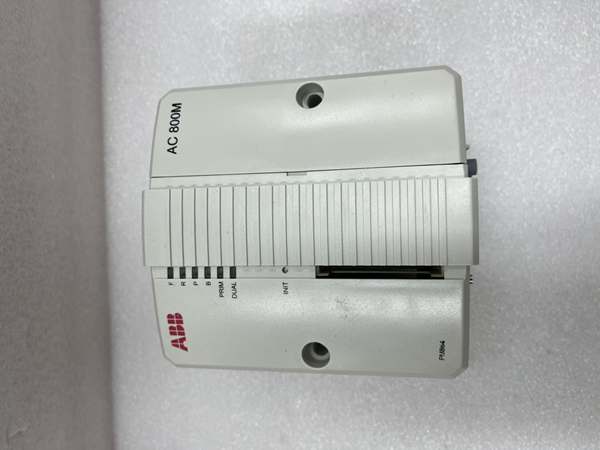
ABB AC800M PM864
Technical Deep Dive & Overview
The PM864 is the high-performance CPU for ABB’s AC800M DCS, built for critical control where failure isn’t an option. At its core, dual PowerPC e500mc processors run in parallel: one executes control logic (Ladder Logic, Function Block Diagrams) while the other handles communication and I/O data processing—eliminating the “bottleneck” of single-core designs. The 256MB battery-backed RAM preserves process variables during outages, and 1GB flash stores firmware and application code.
Redundancy is its defining feature. Two PM864s operate in hot standby: the primary CPU sends real-time status updates to the standby via a dedicated sync link (100Mbps). If the primary detects a fault (e.g., power loss, processor error), the standby takes over in <10ms—faster than most process dynamics, so the loop never deviates. The CPU communicates with I/O modules via a 1Gbps backplane, ensuring fast data exchange with sensors and actuators.
Ruggedization is built in: conformal-coated PCBs resist oil and dust (critical for refineries), and the -20°C to +60°C operating range handles unconditioned control rooms in arctic or desert locations. Its IEC 61850 stack supports GOOSE messages for real-time control (e.g., tripping a breaker in 1ms) and MMS for data logging—integrating seamlessly with smart grid and Industry 4.0 systems. This isn’t a “one-size-fits-all” CPU; it’s engineered for the moments when every millisecond and every redundant component counts.